Brooks Houck booked into Oldham County prison processing center

– 4 min read


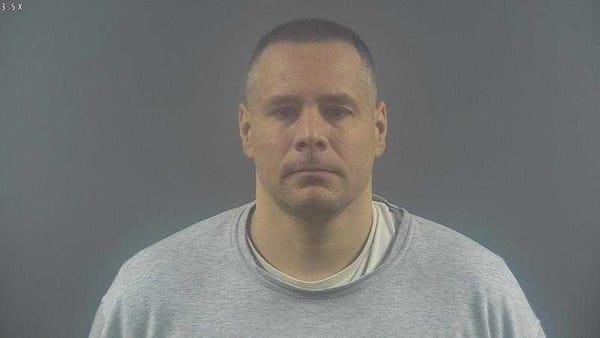
Houck had been in an Eastern Kentucky jail before being transferred to the Roederer Assessment Center this week.
"I'm Shay McAlister, and this is Shay Informed: an independent, ad-free platform dedicated to honest journalism with compassion and clarity.
Are you new here? Sign up for the free weekly newsletter or subscribe to support our mission and access behind-the-scenes content, podcasts, and in-depth stories reserved for paid subscribers.
Brooks Houck has been transferred yet again within the Kentucky prison system- this time closer to home. He was booked into the Roederer Assessment Center this week.
Houck will soon be assigned to a state prison to serve his life sentence for the 2015 murder of Crystal Rogers. A jury found him guilty on all charges over the summer and sentenced him to life.
Do to Kentucky law, there is no 'life without parole' penalty in the state so he will be up for parole after serving 20 years. With two years served waiting for trial, he was 18 more years before his case goes before the parole board.
 Shay McAlister
For now, the Crystal Rogers case is closed, and complete in the court system. Both Joseph Lawson and Steve Lawson have indicated in previous court filings they intend to file appeals with the Kentucky Court of Appeals but neither have officially filed at this time.
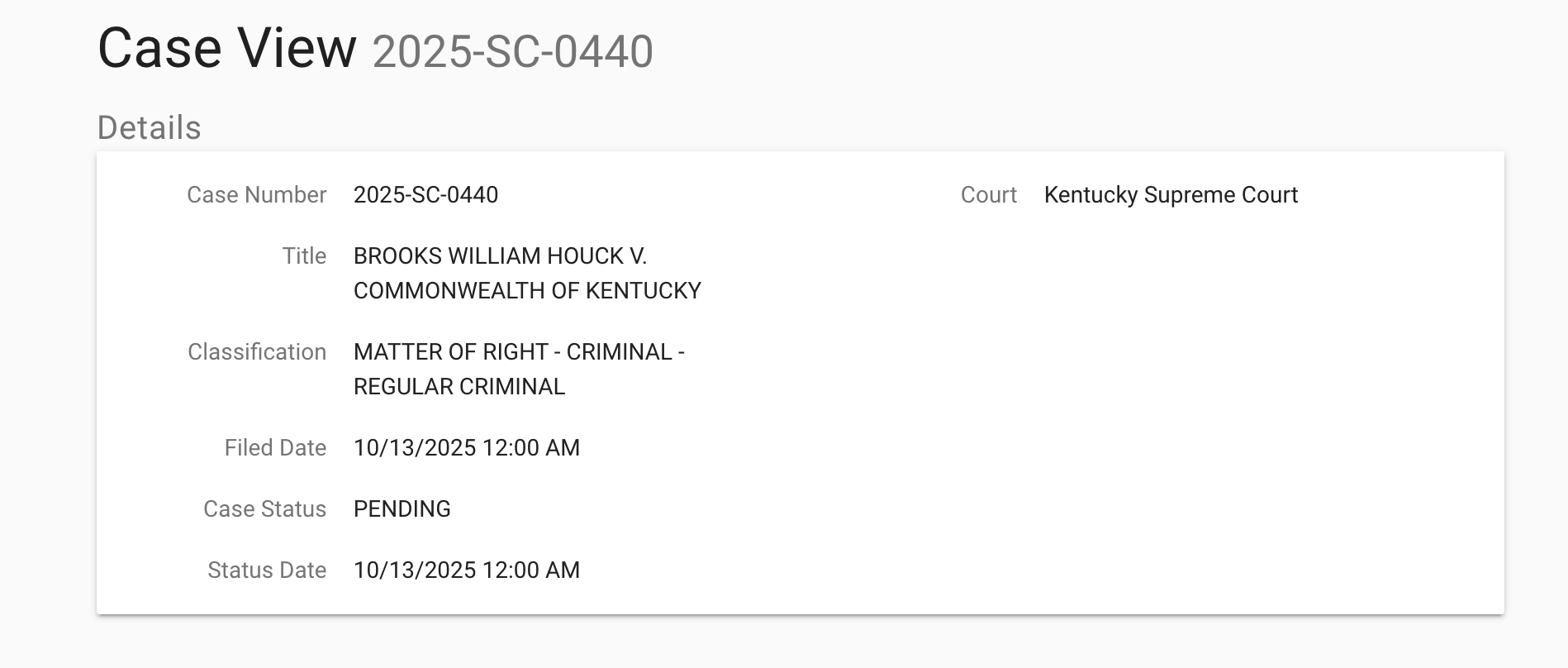
Houck has also filed a notice that he intends to appeal his conviction. The initial paperwork was filed on October 13th. The official appeal has not yet been filed.
Louisville Attorney Nick Mudd has followed the Rogers case closely and was able to identify several potential grounds for appeal that appeal attorneys are likely to pursue. He has had discussions with the criminal defense attorneys who worked on the Lawsons' cases, so he knows where they will point to get the appeals attorneys started.
For Steven Lawson: The strongest issue appears to be what Mudd calls the "workman issue"- essentially arguing that prosecutors made a deal with Lawson that they later revoked. Mudd imagines the attorneys saying, "Look, you know, we relied on that. That's why we talked, and then it was played in court, obviously used against him."
There's also the matter of hair follicle testing that was discussed but never completed, which defense attorneys believe could be significant. Steve Lawson's attorneys wanted to test hairs that were found in Crystal Rogers' vehicle, and not similar in characteristic to Crystal, Joseph Lawson, Steve Lawson, or Brooks Houck. Judge Charles Simms did not allow the testing because he argued there was no sample to compare it to, and it would have significantly delayed the trial.
For Joseph Lawson: Defense attorneys for Joseph Lawson maintain his innocence. They have told me personally they believe in their heart of hearts he was not involved in the death of Crystal Rogers. Of course, their personal feelings won't be part of the appeal; instead, Mudd said they are focusing heavily on cell phone tower data and a belief that the expert testimony used at trial was inaccurate. Mudd also admitted he is skeptical about this approach: "When you're just arguing the evidence or a piece of the evidence, that's not a really strong appeal issue, usually."
Joseph Lawson's case will bypass the Kentucky Court of Appeals entirely and go straight to the Kentucky Supreme Court, Mudd explained. He is facing more than 20 years in prison, which is the threshold for this move.
 Shay McAlister
While appeals wind their way through the courts, the question of parole looms large for the families of victims and the convicted men themselves. Mudd's analysis of parole prospects is particularly stark.
Steven Lawson (sentenced to 17 years): Must serve 85% of his sentence, making him eligible for parole in approximately 14.5 years, accounting for time already served.
Joseph Lawson (sentenced to 25 years): Will serve 20 years before becoming eligible for parole- the standard for any sentence of 24 years or more in Kentucky. Lawson was serving time on another crime when he was first arrested in the Rogers' case, so it's unclear how much 'time served' he has under his belt.
Brooks Houck (sentenced to life): Eligible for parole after 20 years, and with two years served, it will be 18 years from now. But Mudd's assessment is blunt: "He's not getting out in 20 years. That's just not going to happen."