Ethan’s Law was supposed to protect Kentucky’s animals. So why isn’t it being used?

– 7 min read



One year after Kentucky made the intentional torture of a dog or cat a felony, the man who fought for the law says the real battle is just beginning.
"I'm Shay McAlister, and this is Shay Informed: an independent, ad-free platform dedicated to honest journalism with compassion and clarity.
Are you new here? Sign up for the free weekly newsletter or subscribe to support our mission and access behind-the-scenes content, podcasts, and in-depth stories reserved for paid subscribers.
On January 29, 2021, someone left a dog in the parking lot of a Louisville animal shelter. He was barely alive- covered in urine and feces, unable to move, his body wrecked by starvation and neglect. The staff who found him didn't even think he was still alive.
Jeff Callaway, then the shelter’s facility director at the time, got a call: Can you check the camera? Someone dropped a dead dog off in the parking lot.
But the dog wasn’t dead. Not yet. A family dropping off donations had spotted him in the lot after a 12-year-old boy named Tatum saw him from the car window. They called it in, and staff rushed the dog inside.
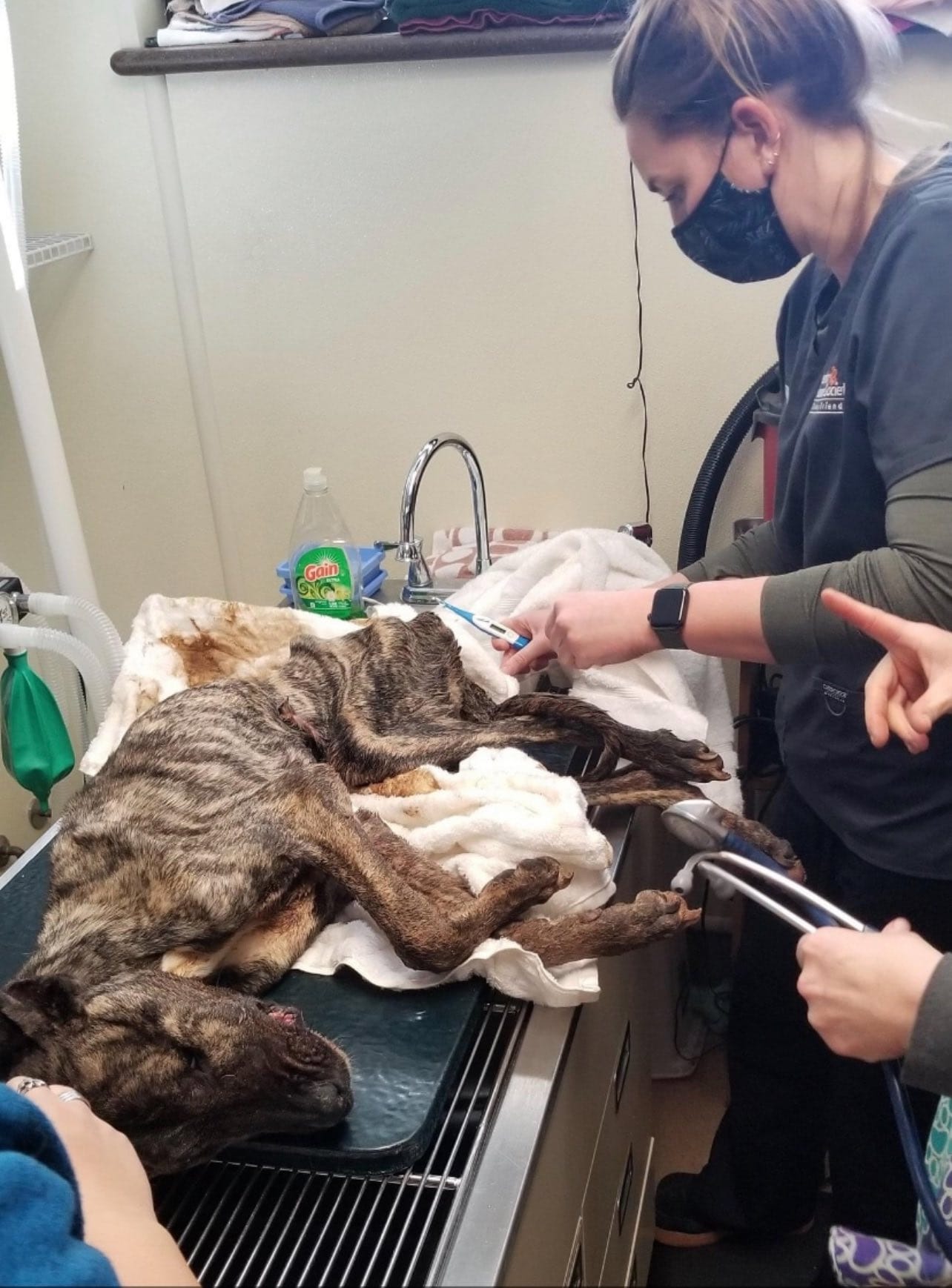
Jeff popped his head into the vet services area to see for himself. What he saw changed the course of his life.
“They told me he’s probably not going to live- less than a 10% chance,” Jeff said. “And I said, I don’t care. That dog is going to know that someone cares about him before he dies.”
The dog seized that night. He spent days unable to walk. For two weeks, Jeff came back to the shelter every evening to clean him up, change his bandages, give him medication, and take him outside. Even then, the dog would just wander aimlessly- his mind not right, his body broken.
But eventually, Jeff brought him home to be around his five other dogs. And slowly, something shifted. The dog started to play. He barked for the first time.
They named him Ethan.
Jeff started a social media page to update the thousands of people who had sent prayers, donations, and support. But as Ethan’s following grew, Jeff saw an opportunity to do something bigger than tell a feel-good rescue story.
“I thought, okay, we can use this story,” he said. “We can use his face and his story to make a much bigger difference.”
At the time, Kentucky had no felony charge for torturing a dog or cat- unless it involved dog fighting. People who committed horrific acts of abuse were typically charged with second-degree animal cruelty, a misdemeanor that often resulted in little to no real punishment. Even those charges could get knocked down further.
So Jeff, along with a network of advocates he calls Ethan’s “extended family,” launched a three-year campaign to change the law. They organized email and phone campaigns, visited the Capitol so many times that security started waving them through, and spent an entire summer meeting with state senators one by one to ask what it would take to get a bill through.
Other animal advocates had been working toward the same goal for the better part of a decade before Jeff and Ethan joined in.
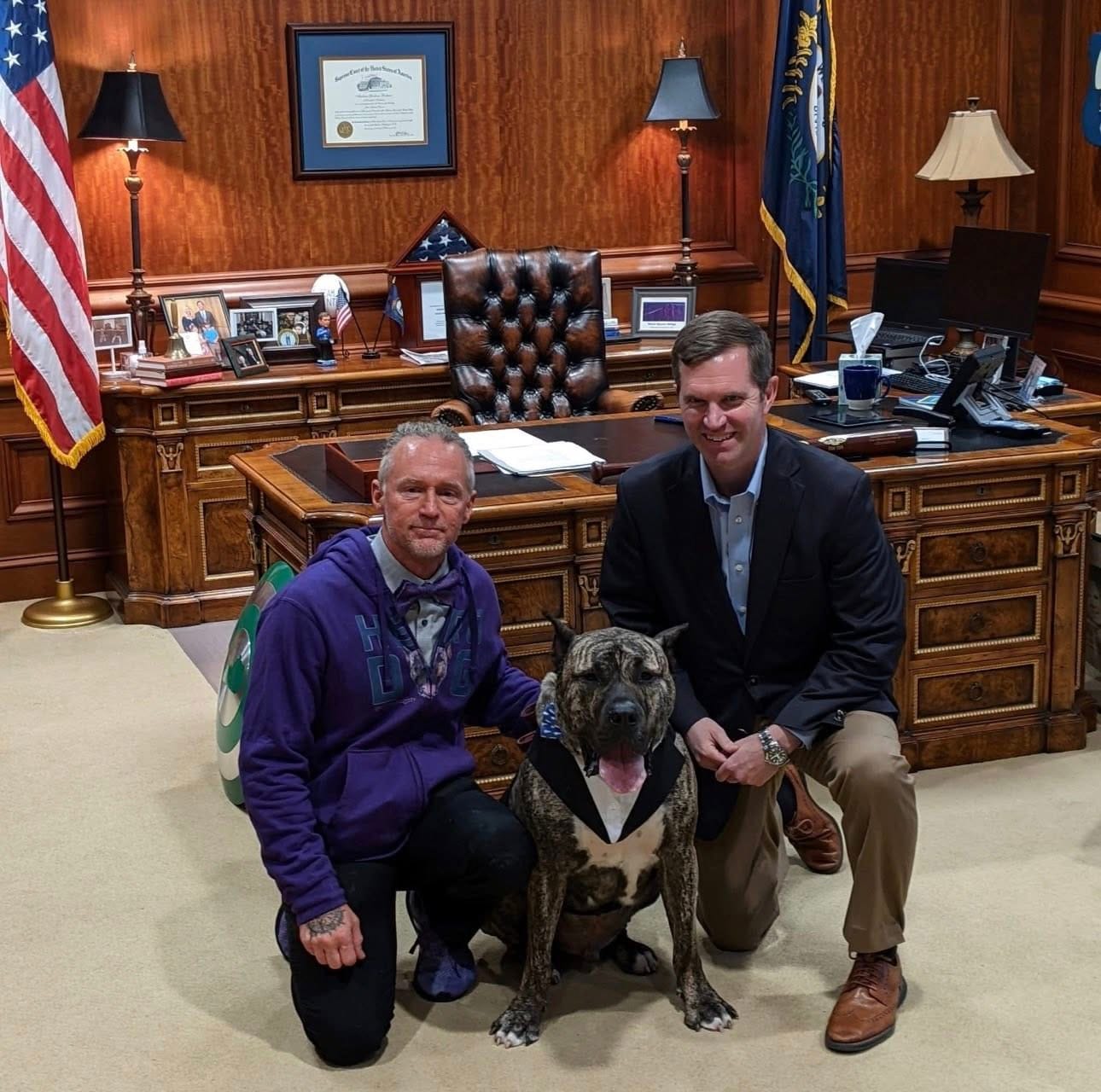
On April 4, 2024, Governor Andy Beshear signed House Bill 258 into law. Known as Ethan’s Law, it makes the intentional torture of a cat or dog a Class D felony on the first offense- no longer requiring a prior conviction to elevate the charge.
The law defines “torture” broadly: it covers the intentional infliction of extreme physical pain, serious injury, or death, whether through direct violence or through restraint- locking an animal in a cage, sealing it in a bag, chaining it without food or water, or abandoning it in a building for three or more days without provisions.
For Jeff, the day it passed was euphoric. “You immediately are overjoyed,” he said. “And you think, this is really going to help animals in Kentucky.”
Then they sat back and waited. And nothing happened.
“No one was being charged with it,” Jeff said. “And the biggest excuse we got was: no one knew about it.”
That part stunned him. A brand-new felony statute was on the books, and across the state, county attorneys and Commonwealth attorneys simply hadn’t heard of it- or hadn’t bothered to read the page-and-a-half law.
So Jeff and his team started doing the education themselves. They set up booths at the county attorney conference and the Commonwealth attorney conference in Lexington, handing out copies of the statute, explaining its language, and bringing Ethan along to draw attention.
But awareness alone hasn’t solved the problem. Even in cases that seem tailor-made for Ethan’s Law, Jeff says he keeps watching prosecutors settle with lower penalties, and offenders skirting jail time. The law makes the torture of a cat or dog a Class D felony, which in Kentucky is punishable by a one to five-year prison sentence.
Jeff rattled off several cases from memory, happening all across the state, where the crime he believes prosecutors failed to hold abusers accountable. “They’re almost perfect examples of why that law was needed,” he said. “And they’re not using it.”
In Boyle County, Kenneth Wingard was charged with torture of a dog or cat and tampering with physical evidence in September of 2024 after police say he killed a beagle. According to court documents, he "shot the dog while being very intoxicated," and after killing it, he hid it in the floorboard of his truck and left the area. Wingard was sentenced to diversion.
In Christian County, Martin Hartwig pleaded guilty to animal torture charges, along with animal cruelty, after police say he slammed a small dog, killing it. According to court documents, he was angry because the dog had peed on the couch. The prosecutor in this case settled on a plea deal that included three years of probation, and no jail.
So what’s behind the gap? Jeff sees three main problems.
First, there was the initial ignorance- prosecutors who genuinely didn’t know the law existed. That’s gotten better with the education efforts, but hasn’t disappeared.
Second, there’s the property issue. In Kentucky, dogs and cats are legally considered property. And Jeff says that mindset runs deep- not just among pet owners, but among some of the people tasked with prosecuting these crimes.
“I’m okay with having a discussion about that,” Jeff said, “as long as they can agree that your dog and your car are two different things. They’re both your property. I can go outside and beat the crap out of my car with a baseball bat, and that’s not a crime. I do it to my dog- that should be a crime.”
He recalled sitting in a Pulaski County courtroom where a man was accused of biting the ears completely off a cat. The defense attorney stood up and asked the court: Who are we to tell him how to discipline his cat?
Third- and Jeff suspects this is the biggest factor- is convenience. Pursuing a felony charge takes more work. If prosecutors keep it as a misdemeanor, they can offer a quick plea, avoid circuit court, and move on.
“Some people are just lazy,” Jeff said plainly. “If we just keep this as a misdemeanor, I can offer them this, they’ll definitely agree to it because there’s no jail time. We move on. It takes a little bit more work to do that.”
Jeff and his board didn’t stop at getting the law passed. They’ve become something Kentucky’s animal welfare system doesn’t have: a watchdog.
He and a fellow board member from the Ethan Almighty Foundation now travel the state tracking active animal cruelty cases. Ethan has been inside roughly 60 Kentucky courtrooms. Sometimes Jeff drives three hours each way for a two-minute arraignment.
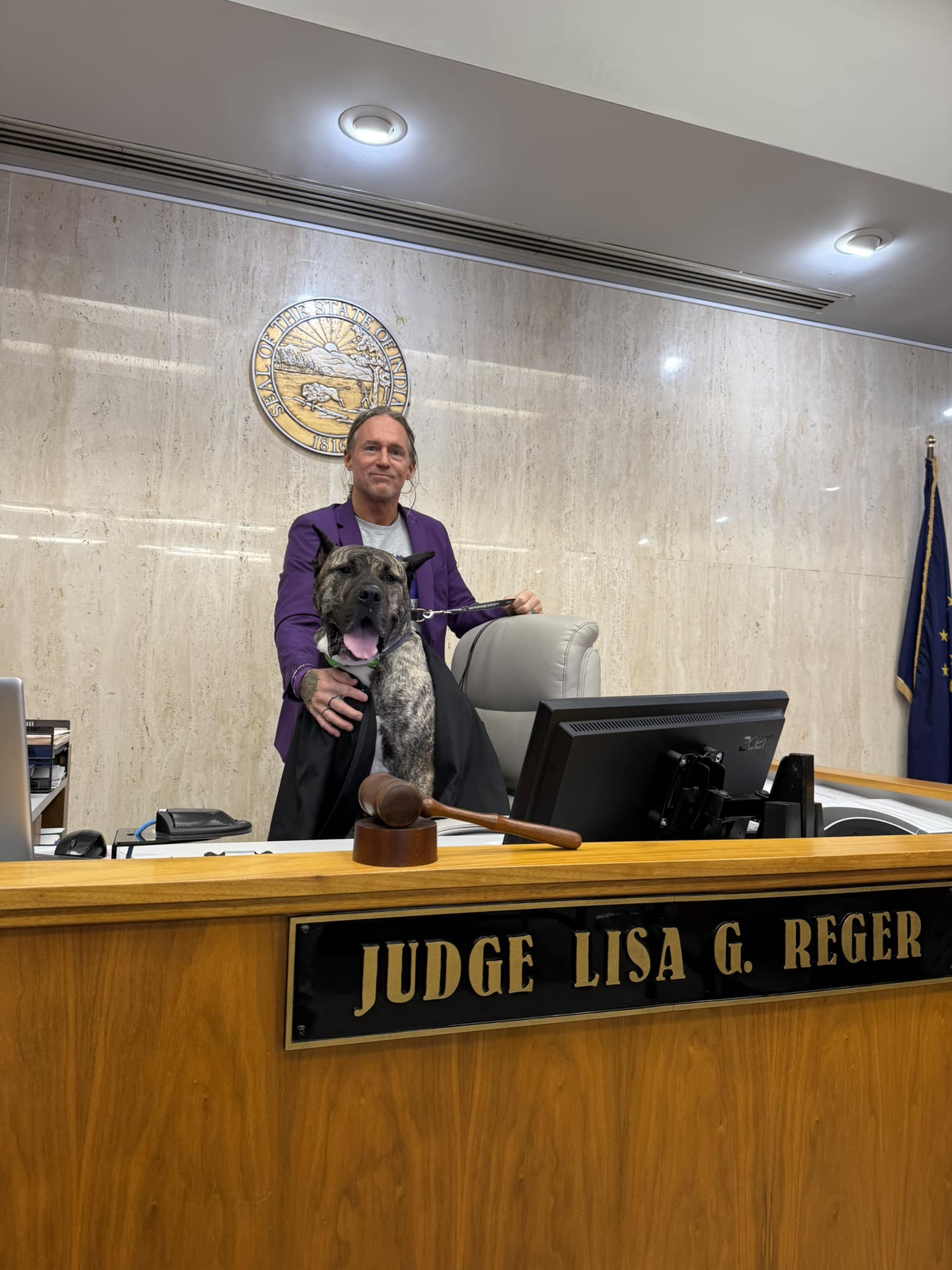
“Some of these cases- I can honestly say they would have been dropped or lowered if they didn’t know there were eyes watching it,” he said.
Jeff has also begun filing motions to serve as a court-appointed animal advocate in active cases- modeled after CASA, the court-appointed special advocates who represent children. The results have been mixed. In Scott County, a judge dismissed the motion without letting him speak. In Jefferson County, it was denied on the grounds that because the dog was dead, there was no animal to advocate for.
“That doesn’t make any sense,” Jeff said. “Especially now- let’s say the animal could speak. Well, it’s dead. It can’t speak for itself. Someone’s got to be there.”
Jeff is now pushing for Kentucky to recognize animal victims under the state’s violent offender statute. As written, if a felony results in a victim being killed or seriously injured, the offender falls into violent offender status- meaning no diversion, no probation, and a requirement to serve 85% of the sentence.
“Kentucky has now said there is an animal victim in these cases,” Jeff argued. “So I’ve spoken with several prosecutors about putting these people in violent offender status. Everyone thinks it’s interesting. No one can give me a reason why not.”
He also continues to push for a formal court-appointed animal advocacy system, similar to what exists in parts of the Northeast, and he’s connected with a national animal defense team out of Washington, D.C. that has offered to train Kentucky attorneys, judges, and advocates for free.
Meanwhile, the Ethan Almighty’s Blessings Foundation- the nonprofit Jeff started in Ethan’s name- helps pay vet bills for people who can’t afford them, so no family has to choose between euthanizing or surrendering a pet because of money. The foundation also partners with Louisville Metro Animal Services to provide free spay and neuter services on the last Sunday of every month.
Ethan was named the American Humane Hero Dog of the Year in 2022. He has an exhibit at the Frazier History Museum in Louisville and a banner on the Marriott downtown. He’s a long way from the parking lot where they weren’t sure he was breathing.
But for Jeff, the banner and the trophy were never the point.
“It was never good enough to just get his name on a law,” Jeff said. “We had to follow through.”
He paused.
“All we’ve ever asked is: if it falls within this statute, let it go to a grand jury and let the people in that county decide whether it’s acceptable to them or not. That’s it. That’s all we’re asking.”
Like what you see? Learn more about Shay Informed here! This is honest journalism with compassion and clarity.