From foster mom to fighting for change: a Louisville mom's battle to reform Kentucky's child protection system

– 11 min read



Armed with child fatality records, a lawsuit, and a proposed bill Jen Mortenson is demanding accountability from Kentucky's child protection system.
"I'm Shay McAlister, and this is Shay Informed: an independent, ad-free platform dedicated to honest journalism with compassion and clarity.
Are you new here? Sign up for the free weekly newsletter or subscribe to support our mission and access behind-the-scenes content, podcasts, and in-depth stories reserved for paid subscribers.
For a decade, Jen Mortenson opened her Louisville home to children who needed safety. Dozens of foster children came through her doors, each one carrying trauma she worked to heal. But after years of watching the same failures repeat themselves, of seeing kids returned to dangerous situations in the name of keeping families together, Mortenson made a decision that changed everything.
She's put her foster license on hold and picked up a different kind of fight.
"I've done the individual starfish and picked them up," Mortenson said. "I changed lives, hopefully, of many kids. But I think we have the potential here to make some systemic change that'll change the lives of countless kids. We can stop kids from dying."
To understand why this fight matters so deeply to this mom, you have to understand her family. She has 12 children- six biological and six adopted. Five of her adopted children came into her home as foster children. She has seen the system from the inside out.

Mortenson is a co-founder of Hope's Closet, joining fellow foster mom Angela Bischoff's mission to help foster children get better access to basic essentials like clothing and school supplies.
And she was just named Kentucky Mom of the Year, by American Mothers. Something she called "an honor and very humbling."
Now, Mortenson is suing the Kentucky Cabinet for Health and Family Services, armed with child fatality records that she says reveal disturbing patterns the state has failed to address. She's identified what she believes are critical gaps in the system meant to protect Kentucky's most vulnerable children, gaps she says are costing lives. She's also working with lawmakers to propose new legislation, she says would address at least one of those gaps.
At the heart of Mortenson's concerns is what she sees as a fundamental misunderstanding of what protecting children should mean.
"The cabinet's definition of prevention is preventing a child from entering foster care, whereas my definition of prevention is preventing a child from being abused or neglected," she explained. "Those are very different things."
That difference, she argues, has deadly consequences. Earlier this year, Mortenson filed an open records request with the state of Kentucky, asking to review fatality and near-fatality case files from the last two years.
According to the Kentucky Child Fatality and Near Fatality External Review Panel, there were 219 cases in 2024, 70 of which were fatal. The organization has not yet released its report for 2025.
Mortenson received thousands of documents in response to her request. Though she noticed documents were missing. Documents that should be included in these kinds of cases. So she went back to the state and started asking questions. Sometimes they told her she had everything, sometimes they provided more. That's where her lawsuit comes in... more on that later.
But first- what she found.
Through reviewing multiple child fatality records, Mortenson says she discovered a troubling pattern: social workers making the same decisions, the same errors, and the same excuses again and again.
Mortenson has identified four specific areas where she believes Kentucky's child protection system is failing:
Federal law requires that when babies are born exposed to drugs, social workers must create a "plan of safe care." But Mortenson says records show these plans aren't working, or aren't being created at all.
In one case, a baby born in October of 2023 tested positive for methamphetamine at birth, but was able to leave the hospital with her mom, because the test results came back a couple of days after discharge. According to documents provided to Mortenson from the state, the 'plan of safe care' was for the maternal grandmother to provide supervision of the mom and the infant, even though they did not live in the same house.
The social worker reported that, despite multiple trips to the house, she could not locate the mother or the infant, and the maternal grandmother was unaware of their whereabouts. State Police troopers found the infant dead, buried under debris in the home months later.
Perhaps most disturbing, Mortenson says gaps in policy allow a child's death to be overlooked when determining whether other children should remain with the same caregivers or family members.
"They haven't died, we have to be able to protect them still," she said, referring to surviving siblings and other children in a family system where one child has already been lost.
Another case Mortenson reviewed was a baby born prematurely at just 23 weeks in July of 2023. The infant spent four months in the NICU, and during that time, hospital staff reported the parents only visited one time. They would go weeks without being able to reach the infant's parents and feared the child had been abandoned. They called the social worker on the case, and she was able to get the mom to go to the hospital when it was time for discharge.
The infant was on oxygen, which required special medical training. The mother needed to stay at the hospital to pass a 48-hour training before the baby could be discharged. According to state documents, the mom did not pass the training, failing to wake for care on three occasions. The social worker asked the hospital to give her another chance. There was no record of her passing the second test, but she was allowed to leave with the infant. Within weeks of bringing the baby home, the child was dead. The autopsy ruled the death "consistent with complications of prematurity." According to documents, the mother told investigators she laid him down for an afternoon nap, and when she checked on him after three hours, she found the oxygen mask was off his face, he was blue, and not breathing.
Documents noted the baby's "fingernails and toenails were black with dirt. He also had green and black fungus on his penis. The mother admitted to drinking three bottles of alcohol on this date while she was in the caretaking role of the children."
Two other children were also in the home the day the baby died. Staff noted one of the children had a lice infection so extreme that she had blisters on her scalp. The other had a live flea on his body. According to documents, the home, "was found to be in horrific conditions", including "a large number of roaches and fleas".
The other two children were placed with family members after the infant's passing and then reunited with the mother months later. She relocated to West Virginia, and the case was turned over to social services in that state.
Time and again, Mortenson says she's seen children placed with relatives who have their own histories of substance abuse or who enable dangerous behaviors by the child's parents.
"The cabinet often doesn't identify or recognize the familial cycle of abuse and neglect, especially when it comes to substance abuse," she said.
Mortenson showed me a case file from a child fatality in July of 2024. The child was supposed to be with his grandmother, only seeing his parents during supervised visitations. But on the day of his death, he was at his parents' house. Documents from the case filed noted, "it appeared the child was living with the parents, not just visiting."
The documents also specified that the child was not supposed to be around the father. The mother and father took the child to the hospital after discovering he was unresponsive and seeing blood on the pillow he was lying on, according to the documents. The father left the hospital and "refused to return despite requests from police", according to the documents.
The child's legal guardian at the time, his grandmother, was described as "under the influence and uncooperative" while at the hospital.
In this case, the child shouldn't have been alone with the parents, according to the documents. Mortenson says she hears of situations like this one all the time, with grandparents putting children back in harm's way.
Mortenson has found that while the cabinet notifies law enforcement at the beginning of a case when there's a fatality or near fatality, there appears to be no requirement to loop them back in at the end with findings from the investigation.
"Maybe if prosecutors recognized the domino effect that lack of prosecution has on protecting other children, they'd be a little more likely to get involved," she said. "When they're not prosecuting, there's no legal recourse to help protect other kids."
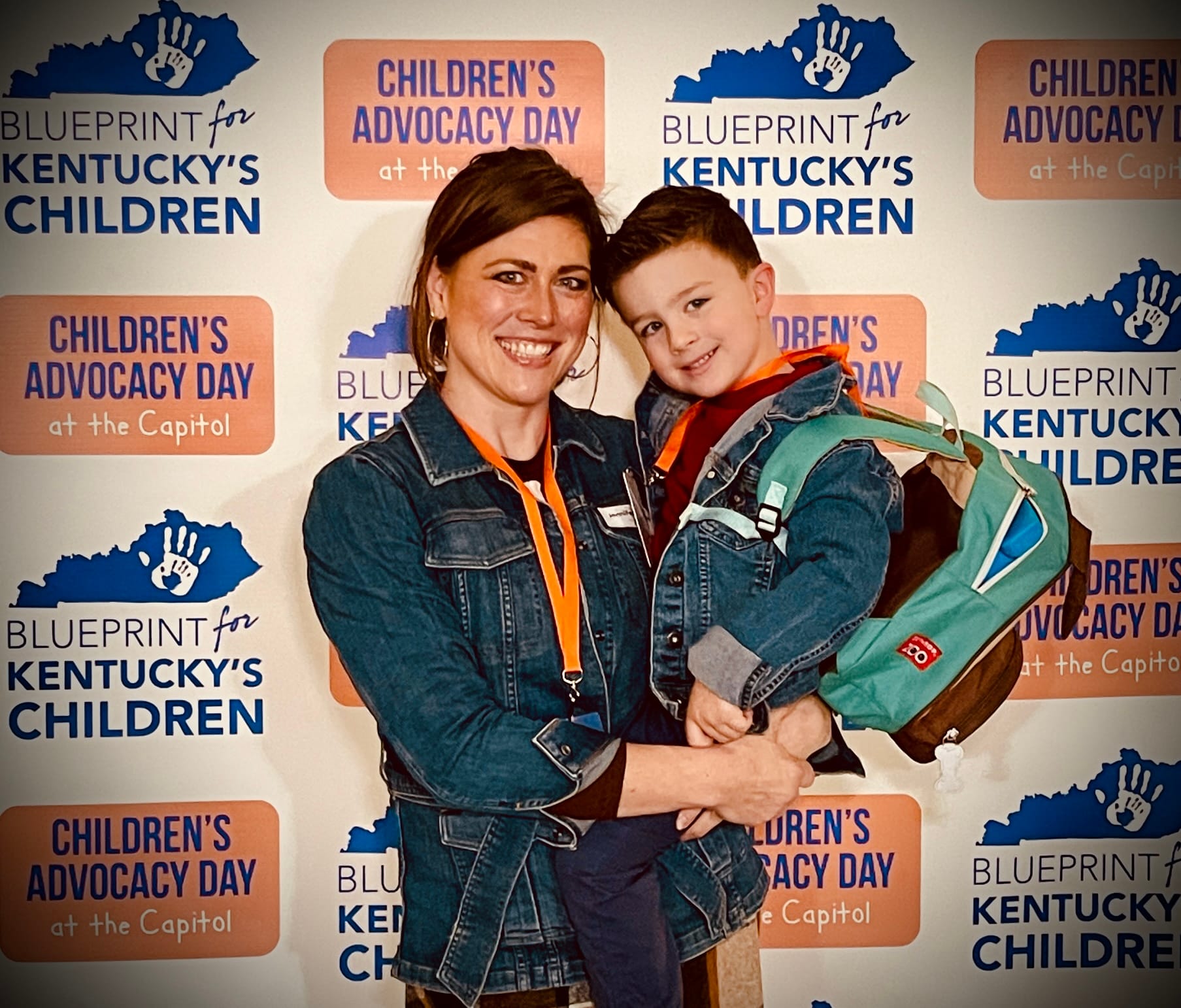
Mortenson isn't just identifying problems, she's drafting solutions. She's written proposed legislation she calls the "Fatality Gap Bill" that would fundamentally change how Kentucky handles high-risk births.
The bill would require hospitals to check a centralized abuse and neglect registry when a baby is born. If either parent has a history of a prior child's death, near-death, or has had parental rights terminated, the birth would automatically trigger a mandatory investigation.
"Right now, there's no requirement to notify law enforcement at the end of a case," Mortenson explained. "We need our law enforcement and child protective services to make friends again. They need to start working together to help protect kids."
Under current law, babies born exposed to drugs should receive "plans of safe care," but Mortenson says those plans aren't effective. She points to Kentucky Moms Matter, a state-funded organization in every county specifically designed to help implement these plans, but told me they're barely getting referrals from the people who are supposed to be making them.
Her proposed legislation would make the process automatic rather than discretionary. No more cases falling through the cracks because someone forgot to make a call or check a box.
The bill includes safeguards, she's careful to note. A registry hit wouldn't create a presumption of abuse or change the burden of proof in court. Parents would be notified and given the right to challenge registry information. But it would ensure that high-risk situations are actually investigated rather than overlooked.
"We don't want to prevent after abuse and neglect," she said. "We want to prevent abuse and neglect from happening."
She's working with someone connected to legislators to get the bill introduced, though she's realistic about the timeline. "I doubt it'll pass this session, but at least we can get eyes on it and start the process."

While writing legislation for the future, Mortenson is also fighting a legal battle over access to the past.
On December 23, she filed a lawsuit against the Cabinet for Health and Family Services in Franklin Circuit Court, alleging the agency has systematically violated Kentucky's Open Records Act in responding to her request for child fatality and near-fatality records.
The lawsuit paints a damning picture of delay and obstruction. After requesting all child fatality and near-fatality records from January 2024 to present, Mortenson says the cabinet failed to respond within the required five business days. Then came what she calls eight unauthorized extensions, pushing deadlines repeatedly, with the cabinet sometimes requesting more time just before a deadline expired.
When the records finally arrived, she said they were heavily redacted, sometimes entire pages blacked out or removed completely.
"There was one point where they literally produced pages that were completely white," Mortenson said. "Not redacted, just blank. The content was entirely removed."
Even after multiple productions totaling thousands of pages, Mortenson says the cabinet is still withholding entire categories of records, things like full case files, internal fatality reviews, quality assurance reports, and communications between supervisors.
She's calculated that based on publicly available data from the state's External Review Board, there should be records for at least 410 fatality and near-fatality cases within her request timeframe. She said the cabinet has produced records for only 99 cases.
The lawsuit asks the court to order the cabinet to comply with previous court rulings, including a 2015 Kentucky Court of Appeals decision that specifically outlined what fatality-related records must be disclosed. That case, brought by the Courier-Journal, resulted in substantial penalties against the cabinet for willful withholding.
Mortenson is requesting similar penalties, up to $25 per day per withheld record, using the same calculation method the courts approved in the Courier-Journal case.
"This isn't about money," she's clear to emphasize in the petition. "But Kentucky courts have recognized that meaningful sanctions are often the only effective mechanism to secure compliance. The Courier-Journal case shows that the cabinet didn't achieve meaningful compliance until after the court imposed monetary sanctions."
She notes the irony that the same records she's struggling to obtain through open records requests are supposedly already being compiled and provided to the state's External Review Board. If the cabinet can't consistently produce complete records to a public requester, she wonders, how can anyone be certain the oversight board is getting complete information?
"The harm extends to the integrity of Kentucky's child welfare oversight system itself," she wrote in her petition.
Mortenson's decision to fight publicly hasn't come without risk. She's experienced retaliation before and sees it regularly among other foster parents who raise concerns. That's why she put her foster license on hold, she can't afford to worry that speaking out might affect the care children in her home would receive.
"I feel this battle's bigger, and I can't be fearful of retaliation," she told me.
After ten years in the system, why did Mortenson choose now to step back from direct care and into advocacy?
"I don't know how we've missed these gaps for so long," she said. "And why are people so hesitant to try to make these changes?"
She believes the only way to force real reform is through public pressure. The cabinet doesn't respond to concerns raised privately, she says. They respond when the public is watching.
"I can't do it all on my own," Mortenson said. "Getting it out there publicly is going to be a key component to making any changes. That's where the cabinet feels pressure."
For Mortenson, the math is simple: she helped dozens of children in her home over the last ten years of foster care. If she can change the system, she could help protect countless more.
The children who might have come to her home will have to find safety elsewhere. For now, she's fighting to make sure that when they do, the system designed to protect them actually works.

A spokesperson with the Cabinet for Health and Family Services provided the following statement:
The Cabinet for Health and Family Services’ top priority is the health and safety of the Kentuckians we serve - especially children - and we remain committed to doing that work transparently and in accordance with our state laws.
Following its commitment to transparency, the Cabinet has provided extensive records in response to the open records request and has continually informed the requester of its ongoing review of records and the time needed to complete the review.
The Cabinet has provided reviewed records on a rolling basis so that the requester receives records as the process continues. In each of its responses with records provided, the cabinet has informed the requester of necessary redactions to protect the privacy of individuals, including children, and to comply with statutory mandates of confidentiality. At this time, the Cabinet has provided about 8,800 pages or records with necessary redactions and is reviewing between 12,000 to 14,000 additional records.
The Cabinet will respond to the complaint according to all the rules of the court.
Like what you see? Learn more about Shay Informed here! This is honest journalism with compassion and clarity.