Her son's eye tilted slightly. It turned out to be cancer. This Bardstown mom wants every parent to know the signs.
– 6 min read


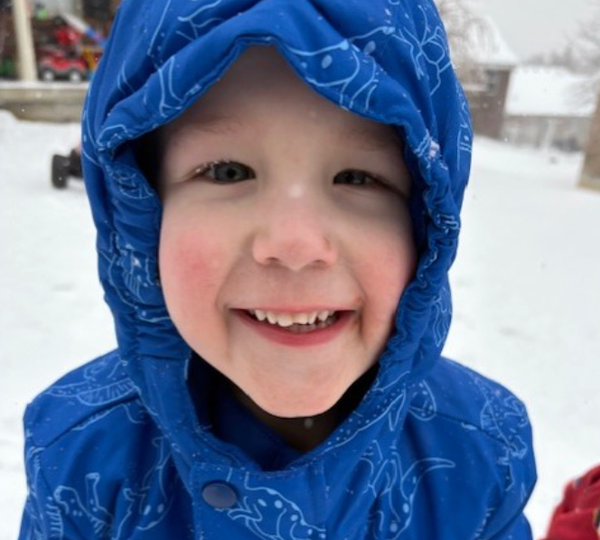
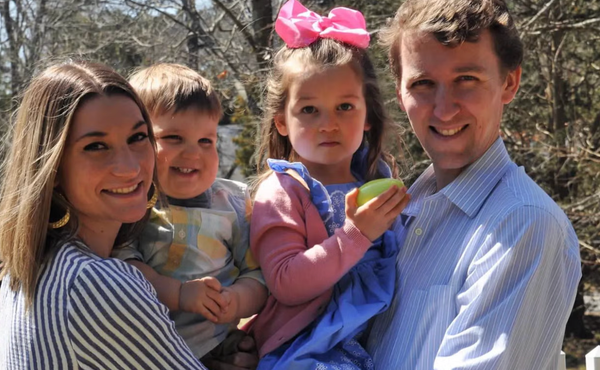
Hayden Rouse showed almost none of the classic warning signs. As families head back to school, Terra Bockting is urging other parents not to skip the eye exam that caught her son's retinoblastoma.
"I'm Shay McAlister, and this is Shay Informed: an independent, ad-free platform dedicated to honest journalism with compassion and clarity.
Are you new here? Sign up for the free weekly newsletter or subscribe to support our mission and access behind-the-scenes content, podcasts, and in-depth stories reserved for paid subscribers.
When Terra Bockting took her son Hayden in for what she assumed would be a quick, forgettable checkup last May, she wasn't worried. It wasn't even required yet- his preschool in Bardstown had told her she had until fall to get it done. She just happened to already be at the eye doctor's office in E-town for something unrelated and figured she'd knock it out early.
"I have the paper," she remembers telling the doctor. "Let's just do it."
Doctors now believe that decision caught a fast-growing childhood cancer before it was too late.
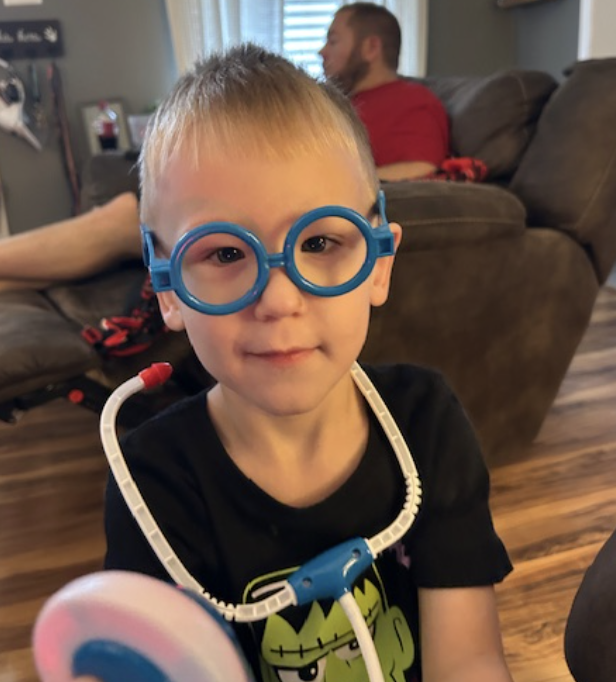
Hayden was born eight weeks premature, so when the eye doctor noted that his retina looked underdeveloped, it didn't raise many alarms. Preemies often have vision quirks. The doctor referred Hayden to a specialist in Lexington, mostly, Terra says, "just to check that box."
It took nearly four months to get the appointment. When they finally saw the physician at UK Advanced Eye Care in Lexington, the exam took less than a minute before the doctor looked up and said, "I think I see a mass."
Imaging confirmed it. It was retinoblastoma- a rare, fast-moving childhood eye cancer. With this particular cancer, doctors don't even biopsy it. If there's a mass, it's cancer.
"It was just kind of like a gut punch," Terra said. "I'm sitting here thinking that's a preemie thing... They'll tell us to do this or tell us to do that, and we'll go right back about our business."
Instead, she received direction to get to Wisconsin- fast. There was a specialist there who was considered the best in the country for this specific cancer. Within days, the family was driving eight hours north. Hayden started chemotherapy four days later.
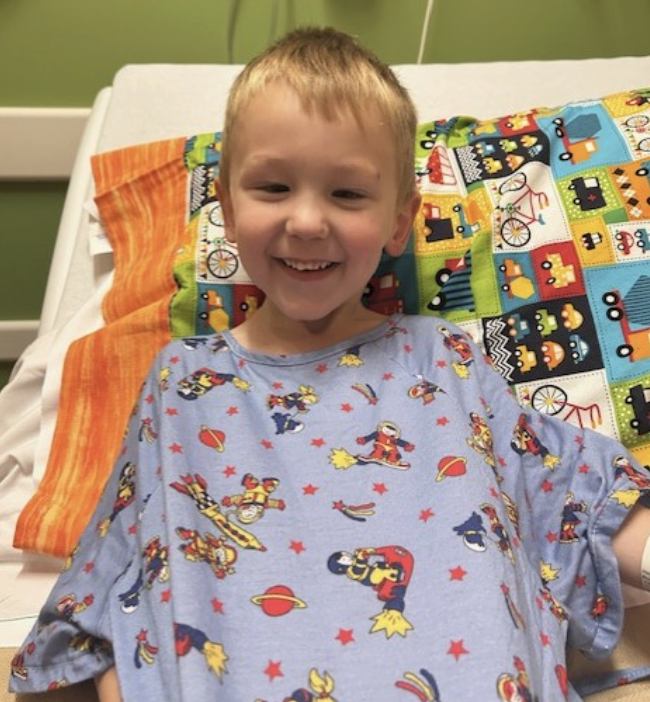
Retinoblastoma tumors can double in size in as little as 14 days. Between the initial exam in May and the diagnosis in September, roughly five months had passed- time Terra now thinks about with a shudder. By the time doctors got a full look, the tumor measured about 9 millimeters, and Hayden also had what doctors described as massive vitreous seeding: cancer cells that had broken off the tumor and spread into the jelly-like substance filling the eye.
Because that part of the eye has no blood supply, standard chemotherapy can't reach those cells. So Hayden's treatment became a layered, grueling process. First came intra-arterial chemotherapy- chemo delivered directly through an artery in his leg, threaded up into the vessels of his eye, under anesthesia, followed by four to six hours of mandatory "flat time" so his body could recover from the procedure. He did that every four weeks from September through December.
Then came intravitreal injections, chemo delivered straight into the eye itself to chase down the seeded cancer cells- a process complicated by the fact that not all the seeds mature at the same rate, meaning some injections could kill half the visible seeds while others multiplied in the background. It became, as Terra put it, "chasing the cell cycle over and over and over again."
By March, progress had stalled, and physicians offered something they'd been developing for a long time: a clinical trial using tiny chemo-releasing plaques glued to the surface of Hayden's eye for eight weeks.
The trial worked. But the road to knowing that wasn't simple. Swelling and then bleeding inside the eye made it impossible for doctors to fully confirm the tumor was gone. In July, with the eye visibly unhealthy and shrinking, experts made another suggestion: remove the eye completely.
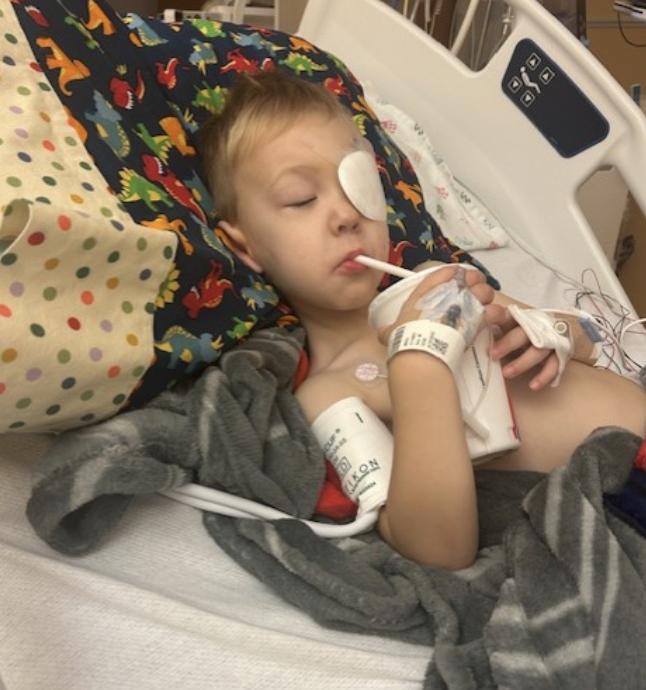
Results on a final round of testing were still pending when the family drove up for what they expected to be surgery to remove Hayden's eye. Thirty minutes from the Ronald McDonald House, they received a call: the results were back. Hayden was cancer-free.
The family chose to move forward with removing the eye anyway. Hayden hadn't been using it for vision in months, and doctors couldn't guarantee the cancer wouldn't resurface behind scar tissue they couldn't see through.
"He's four," Terra said. "Just take it out and let him move on with his life."
The surgery happened earlier this month. The pathology report came back 100% clear.
Hayden will need glasses, mostly to protect his one healthy eye going forward. Terra says he'll still be able to drive and pursue almost any career he wants- with two exceptions doctors flagged: he can't be a school bus driver, and he can't fly for the Air Force. Everything else is open.
Here's the part that keeps Terra up at night: there were almost no warning signs.
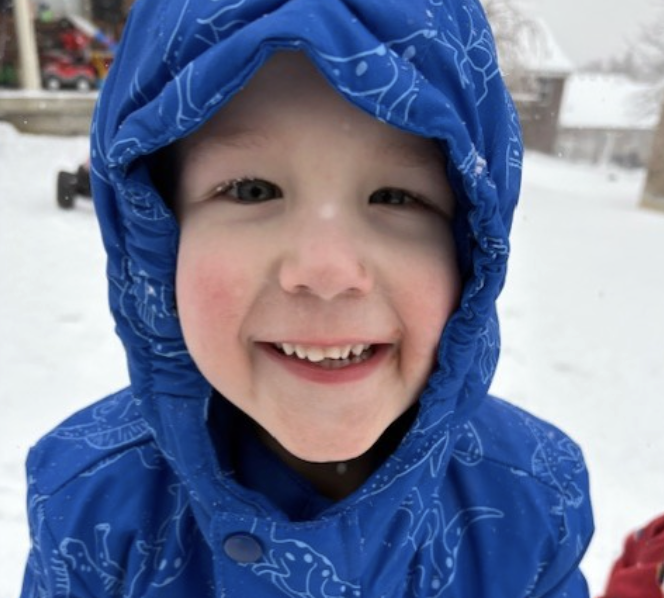
The most well-known indicator of retinoblastoma is a white glow in a child's pupil in photos, instead of the usual red-eye effect- sometimes called "the glow," and the subject of an awareness campaign called Know the Glow. Hayden never had it, at least not that his family noticed before diagnosis. The only clue, in hindsight, was a slight inward tilt in his eye, a mild strabismus that everyone- including an earlier eye doctor- chalked up to a cosmetic issue, maybe something glasses would fix down the road.
Retinoblastoma typically shows up around age two, usually before age five. Hayden was three.
"Would have had no idea," Terra said. "He didn't show the super classic signs that something was wrong."
The only reason it was caught was a school-required eye exam Hayden almost didn't do.
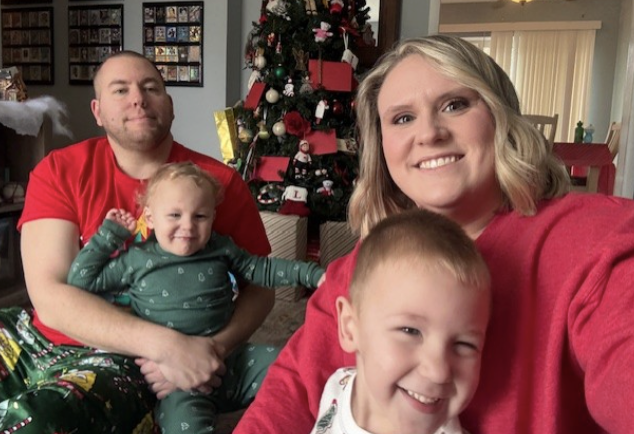
With so many parents currently checking boxes for back-to-school physicals and vision screenings, Terra has one clear ask: don't skip the eye exam, even when it feels unnecessary.
"Even if it's not required, just do the eye exam," she said. "It's not invasive. It's a basic eye exam." A doctor found Hayden's tumor with nothing more than a handheld lens.
She's also pushing for something less obvious: make sure whatever an eye doctor notices actually follows the child through the referral process. When Hayden was later referred back to the specialist in Lexington for an unrelated concern, she mentioned that if the original note about his underdeveloped retina- not just the eye tilt- had been clearly flagged, she would have gotten him in sooner.
"If that had been better communicated in his referral," Terra said, "she would have gotten him in quicker."
Hayden starts his next year of preschool this week, a week late because of the surgery. Terra says that after everything, he hasn't missed a beat- proof, she believes, that he'd stopped seeing out of that eye long before anyone removed it.
"Your eyes are just as important as the rest of your body, if not more," she said. "That's how you see the world."
Hayden's family is raising funds to take him and his younger brother, Parker, to Disney World through a campaign called One at a Time. Their goal is $5,500 to cover a week-long family trip after nearly 11,000 miles of travel to Wisconsin and more than 60 hours under anesthesia over the past 10 months. If you'd like to learn more or donate, you can do so here.
Like what you see? Learn more about Shay Informed here! This is honest journalism with compassion and clarity.