Kentucky lawmakers push to criminalize child grooming before abuse occurs

– 7 min read


The legislation would fill a gap in the current law, targeting predatory behavior that leads to sexual abuse.
"I'm Shay McAlister, and this is Shay Informed: an independent, ad-free platform dedicated to honest journalism with compassion and clarity.
Are you new here? Sign up for the free weekly newsletter or subscribe to support our mission and access behind-the-scenes content, podcasts, and in-depth stories reserved for paid subscribers.
Kentucky lawmakers are taking aim at a gap in state law that currently leaves children vulnerable to predatory grooming behavior- the manipulative process predators use to build trust before sexual abuse occurs.
State Representative Marianne Proctor (R) filed House Bill 4 on Tuesday, legislation that would make it a crime for adults to engage in grooming behavior directed at minors. The bill has already garnered strong support from law enforcement and prosecutors who say they've watched cases unfold where warning signs were clear, but their hands were tied until physical abuse occurred.
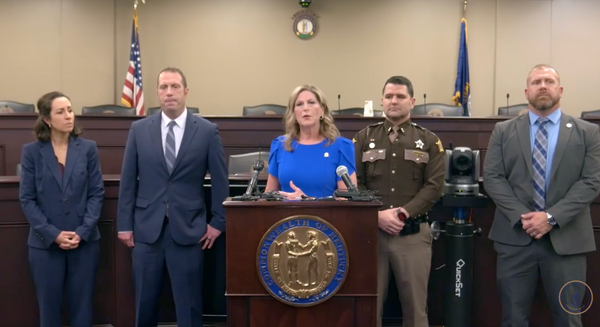
"Right now, we do not have any statutes that protect our children from this predatory behavior that occurs prior to physical sexual abuse," Proctor told reporters at a Tuesday press conference. "With House Bill 4, not only will we criminalize it, but we will hold the offenders accountable."
The need for such legislation became painfully clear to some Shelby County community members last month.
In December, Hayley Weddle, a 2014 Martha Layne Collins High School graduate, filed a written complaint with Shelby County Schools detailing what she described as an inappropriate relationship that began when she was 17 and serving as a team manager for basketball coach Chris Gaither.

Weddle told me she had carried this for a decade before coming forward. When she filed her complaint on December 4th, the district opened an investigation—but five days later, Gaither was still teaching and coaching. Frustrated that it seemed her complaint would be "swept under the rug," Weddle posted her statement publicly on social media.
Within hours, multiple people contacted the district with additional information. Only then was Gaither suspended. He is no longer coaching but remains on paid suspension while the investigation continues.
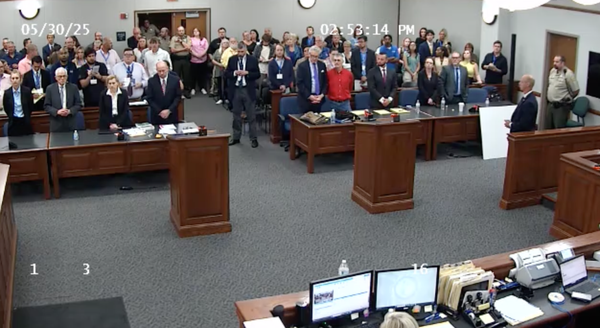
At a contentious December 12th school board meeting, community members packed the room with specific demands, including one that speaks directly to House Bill 4: "explicitly defining grooming behaviors, and staff and student training on them."
Former student Laura Wills-Coppelman told the board that night: "Secrecy is what allows abuse to thrive. Choose to act before another student is harmed."
 Shay McAlister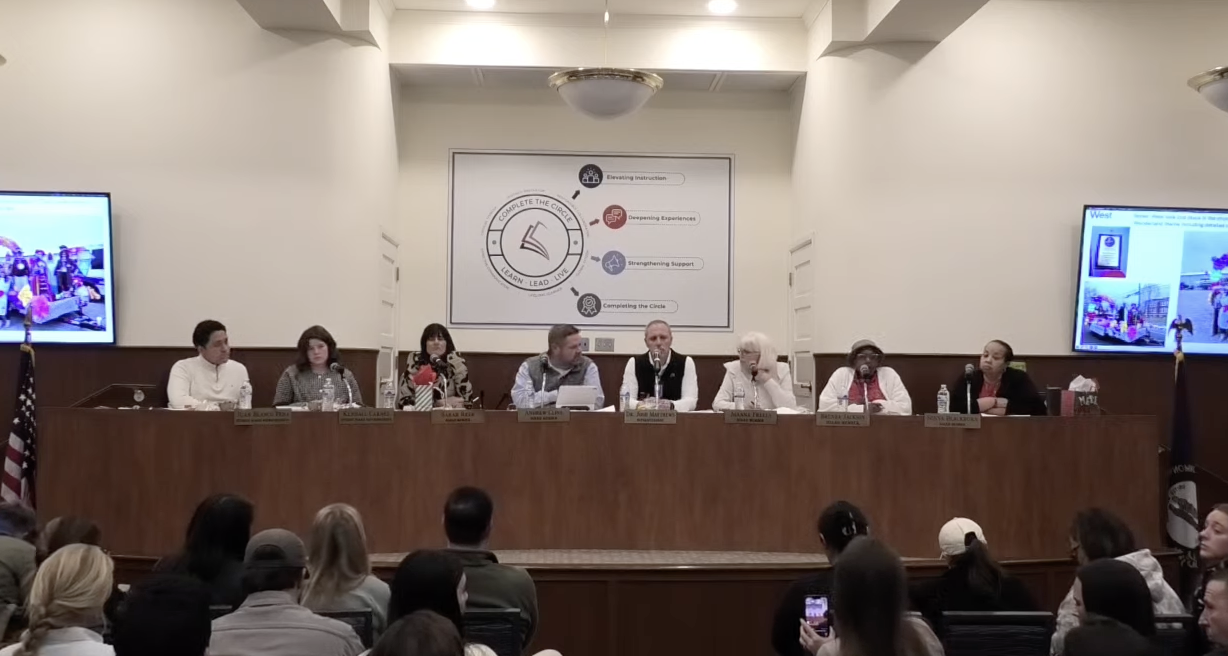
The case illustrates exactly what prosecutors say House Bill 4 could address- behavior that may not rise to the level of criminal sexual solicitation or assault under current law, but is "nevertheless clearly inappropriate and clearly designed to lead to such things," as Commonwealth Attorney Louis Kelly put it.
The legislation creates a two-tiered approach based on age and the relationship between the adult and child.
For adults who are not in positions of authority- grooming behavior directed at children under 14 would be a Class A misdemeanor, escalating to a Class D felony if the victim is under 12.
For adults in positions of authority or special trust, the law would apply to any minor under 18. Those violations would be Class D felonies, or Class C felonies if the victim is under 12.
Commonwealth Attorney Louis Kelly said his office just sentenced someone to 15 years in prison for sexual assault who had engaged in grooming behavior for years beforehand.
"Had we known, and had we had these laws, we could have maybe prevented that or stopped that," Kelly said. "We find ourselves with a lot of gaps, and recently, we have found ourselves a big gap in behavior that doesn't rise to the level of an actual sexual solicitation or doesn't result in a sexual touch or assault, but is nevertheless clearly inappropriate and clearly designed to lead to such things."
When asked about the scope of the problem, Proctor said she's hearing stories "from all over the place" across Kentucky. "Those are the people who are brave enough to reach out to me," she said.
The bill defines "grooming behavior" as a pattern of conduct directed at a minor that's intended to establish an emotional connection through manipulation, trust-building, or influence to facilitate future sexual acts or to normalize sexual conduct. The behavior can occur online or in person, and doesn't require an in-person meeting or sexual act to be completed.
But proving it will require a high bar. Prosecutors must demonstrate both intent and a pattern of behavior.
Kelly emphasized the bill has been carefully crafted to avoid criminalizing innocent conversations. "This has a high burden on law enforcement and a high burden on prosecution to make sure we are targeting people who should know better, who shouldn't be doing this, and are clearly doing it for inappropriate reasons," he said.
The legislation includes specific exemptions for lawful communications, including sex education curriculum, communications by healthcare providers, job-related duties, and age-appropriate conversations between parents and children about puberty.
The bill's two-tiered approach reflects both the vulnerability of younger children and the reality of existing relationships.
For people not in positions of trust, the under-14 threshold accounts for scenarios like a 19-year-old texting a 17-year-old who might have been in school together. "That's not necessarily what we're looking at," Kelly explained. "But if you are in a position of trust, it's any minor."
Boone County Attorney Jordan Turner highlighted what makes grooming particularly insidious: "What makes quote, unquote grooming difficult is it looks so different when we're talking about victims who are children versus victims who are adults," she said. "Grooming toward children looks like building relationships, being kind, making children trust you."
The legislation builds on existing Kentucky law that restricts how teachers can communicate with students electronically. Senate Bill 188, passed last year, established specific channels for school-related communications.
"What happens in my communication with superintendents and teachers is many times people go outside of those channels, and that's where a lot of this activity begins," Proctor said. "So we're trying to eliminate that."
But the law extends beyond schools to any adult in a position of authority or trust with children.
The bill cannot be applied retroactively- prosecutors could only charge grooming behavior that occurs after the law takes effect if passed.
Kelly compared the legislation to Kentucky's strangulation law passed in 2019, noting that once law enforcement began looking for that specific behavior, they found it was far more prevalent than initially thought.
"I'm guessing that we haven't really been looking at the grooming behavior, because at this point, our main tool is once it got to the point of solicitation or assault," Kelly said. "My guess is we're going to find out this is a lot more prevalent."
For communities like Shelby County, House Bill 4 could provide both legal recourse and institutional clarity when concerning behavior is identified.
Under the proposed law, adults in positions of authority or special trust- like coaches- who engage in grooming behavior with students under 18 could face criminal charges, even if no sexual solicitation or assault occurs. That would give law enforcement and school districts a tool to intervene earlier.
Weddle, reflecting on her experience, told me the recent policy changes proposed by Shelby County Schools are "a really good start," but she's still waiting for more details on timelines and implementation.
The district has proposed adding an anonymous reporting system with two-way communication, using third-party investigators for sexual misconduct cases, and partnering with law enforcement for prevention education- all direct responses to community demands at a recent school board meeting.
But those are still just proposed recommendations, not implemented policies.
House Bill 4 wouldn't solve every problem highlighted by the Shelby County case, but it would give prosecutors and school officials legal grounds to act on grooming behavior before it escalates- potentially preventing situations where victims carry trauma for years before coming forward.
The bill is modeled after legislation Ohio passed last year. Proctor said the feedback has been overwhelmingly positive. "I've yet to meet a person who doesn't like it," she said. "The first person that is in opposition to it will be the first one that I've met."
When asked about potentially expanding the legislation to include other vulnerable populations like adults with disabilities, Proctor said the focus for now is on getting this "well-crafted legislation" passed. "This is relatively new," she said. "Let's define it. Let's address it, and then if we find that this is an issue, certainly be happy to look at that."
The bill also amends multiple sections of Kentucky law related to professional licensing boards, requiring that grooming violations be included among the grounds for disciplinary action against teachers, healthcare providers, massage therapists, social workers, and other licensed professionals who work with vulnerable populations.
You can read the proposed legislation here.
Like what you see? Learn more about Shay Informed here! This is honest journalism with compassion and clarity.