Kentucky passed a lot of laws this session. Here's what actually matters.

– 8 min read


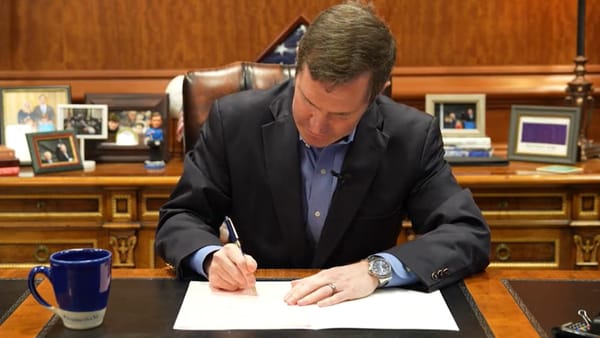
Kentucky lawmakers are currently on a break while Governor Andy Beshear signs or vetoes bills sent to his desk.
"I'm Shay McAlister, and this is Shay Informed: an independent, ad-free platform dedicated to honest journalism with compassion and clarity.
Are you new here? Sign up for the free weekly newsletter or subscribe to support our mission and access behind-the-scenes content, podcasts, and in-depth stories reserved for paid subscribers.
The Kentucky General Assembly sent nearly 80 bills to final passage in the final hours before the governor's veto period began. Now, lawmakers are on a ten-day break- but don't let the quiet fool you. What happens between now and April 14th could shape Kentucky's laws, its health care system, and even its courts for years to come.
Here's your guide to what passed, what's already been vetoed, what got overridden, and what's still hanging in the balance.
The way Kentucky's legislative process works, bills that cleared both chambers before the veto period started on April 3rd are considered "veto-proof"- meaning if Governor Andy Beshear vetoes them, the Republican supermajority can override him when they return for the final two days of the session on April 14th and 15th. That's not a small thing. Republicans hold at least 80% of the seats in both chambers, and overriding a veto only requires a simple majority. So for most of what passed, Beshear's pen is more symbolic than decisive.
Bills passed after April 14th, however, are a different story. If Beshear vetoes those, the veto sticks. There's no time to override.
Lawmakers have been busy- sending more than 100 bills to Beshear's desk. But here are some of the big ones I think you should know about.
The biggest lift of any session is the state budget, and this year lawmakers got it done- just barely. According to Louisville Public Media, the GOP supermajority passed the two-year executive branch spending plan, House Bill 500, on the final day before the veto period, allocating more than $31 billion in General Fund revenues. Republicans framed it as restrained and disciplined. Beshear framed it differently, criticizing the final version for underfunding Medicaid and other essential services.
There's also the judicial branch budget, House Bill 504, which is drawing its own attention- and not in a good way. According to Louisville Public Media, despite pleas from Kentucky Supreme Court Chief Justice Debra Lambert, the legislature passed the judicial branch budget without the funds Lambert said the courts need to maintain services. Lambert said she is "deeply disappointed" by the final budget and that significant layoffs are coming.
Then there's House Bill 2, the Medicaid overhaul that Republicans made a top priority this session. The legislature passed House Bill 2, putting parts of the new federal Medicaid law into Kentucky statute- including work reporting requirements and co-payments. The bill went through significant changes on its way to passage. According to Louisville Public Media, the amended version that passed lowered co-pays to $5 for health care services and $1 for prescription drugs, pushed back implementation dates (to 2028), and preserved hardship waivers for poorer counties. These waivers allow states to exempt certain areas from standard federal rules.
The Medicaid bill matters beyond the numbers. Critics warn that work requirements and stricter eligibility checks- even with the Senate's softening amendments- will create paperwork barriers that knock eligible Kentuckians off their coverage. Supporters say the bill simply aligns Kentucky with federal law and adds necessary program oversight.
And then there was a flurry of activity around gambling. According to Louisville Public Media, House Bill 904 was a late-amended bill among the last to clear both chambers, carrying 150 pages of changes to Kentucky's gambling statutes. One of the major changes raises the legal age for sports wagering from 18 to 21. The bill also, for the first time, regulates and taxes fantasy sports, while moving oversight of charitable gaming into the Kentucky Horse Racing and Gaming Corporation. The bill also takes aim at prediction markets where people bet on future events- by preventing companies with horse racing or sports betting licenses from affiliating with them
Even before the veto period officially began, Beshear was sending bills back. He's vetoed several high-profile measures, though whether those vetoes hold depends on whether Republicans choose to take them up on April 14th.
On guns, Beshear vetoed two bills. House Bill 78 would have expanded liability protections for gun manufacturers and dealers- and would have punished people who sued gun-related businesses in violation of those shields. The bill came as a Louisville lawsuit over the 2023 Old National Bank mass shooting remains active. In his veto message, Beshear wrote that the legislation "prioritizes immunity for gun dealers over the safety of the Commonwealth's citizens." He also vetoed House Bill 312, which would have lowered the concealed carry age from 21 to 18. Beshear pointed out that Kentuckians under 21 can't rent a car, buy alcohol, or even serve in the state legislature- yet this bill would have let them carry concealed deadly weapons.
The pesticide liability bill, Senate Bill 199, also drew a Beshear veto- but that one didn't stick. The bill blocks failure-to-warn lawsuits against pesticide makers, stating federal warning labels are sufficient. Critics pointed to ongoing national litigation over Roundup and its links to cancer. Beshear wrote that the bill "tries to shield makers of dangerous pesticides from being held accountable for the harm their products cause Kentuckians." The Senate voted to override his veto, and according to the Kentucky Lantern, the House followed.
House Bill 1, the education school choice bill, also saw its veto overridden quickly. The bill opts Kentucky into a federal tax credit program that lets people donate to scholarship organizations for private or public schools and receive up to $1,700 back on their federal taxes. Beshear argued public tax dollars should go only to public schools. The Republican supermajority disagreed, and the override moved fast.
Not everything coming out of this session has been a fight. Beshear has also signed a number of bills into law- including a package his office highlighted on Good Friday focused on children with special needs.
Senate Bill 69 establishes the Autism Spectrum Disorder Trust Fund to help fuel research and support for Kentuckians living with autism. Senate Bill 85 creates a special needs trust within the Kentucky state retirement system, giving families a way to financially plan for children or other family members with special needs. And House Bill 562 requires the Kentucky Department of Education to create a diploma for students with special needs who otherwise would not have received one. "These are children of God, and they deserve all the opportunities Kentucky has to offer," Beshear said in a statement from his office.
Earlier in the session, Beshear signed several education and safety bills in March, including a measure directing school districts not to increase administrator pay by a higher percentage than classroom teachers receive, a bill encouraging schools to purchase locally grown food, and a student transportation safety measure. He also signed House Bill 657, requiring national and state background checks for specialty providers.
In February, Beshear signed Senate Bill 172 to help lower utility costs for Kentucky families. And earlier this year, he signed Senate Bill 11, which establishes a residential safe room rebate program to help protect eligible Kentuckians from severe weather.
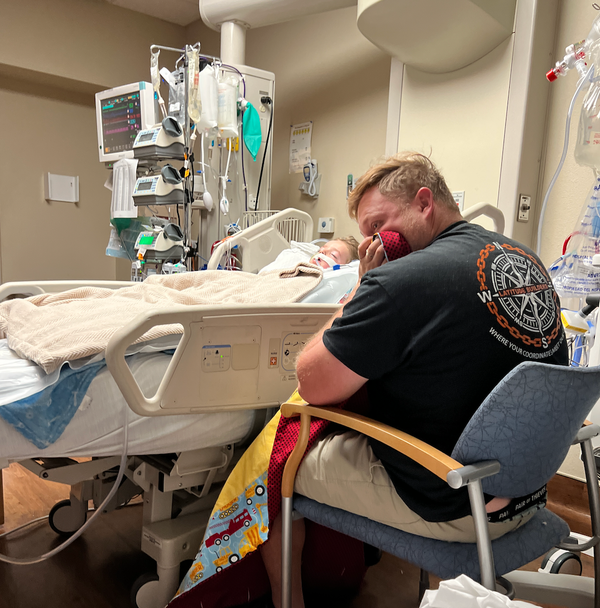
He also signed "Logan's Law" in honor of Logan Tipton, with the child's father by his side.
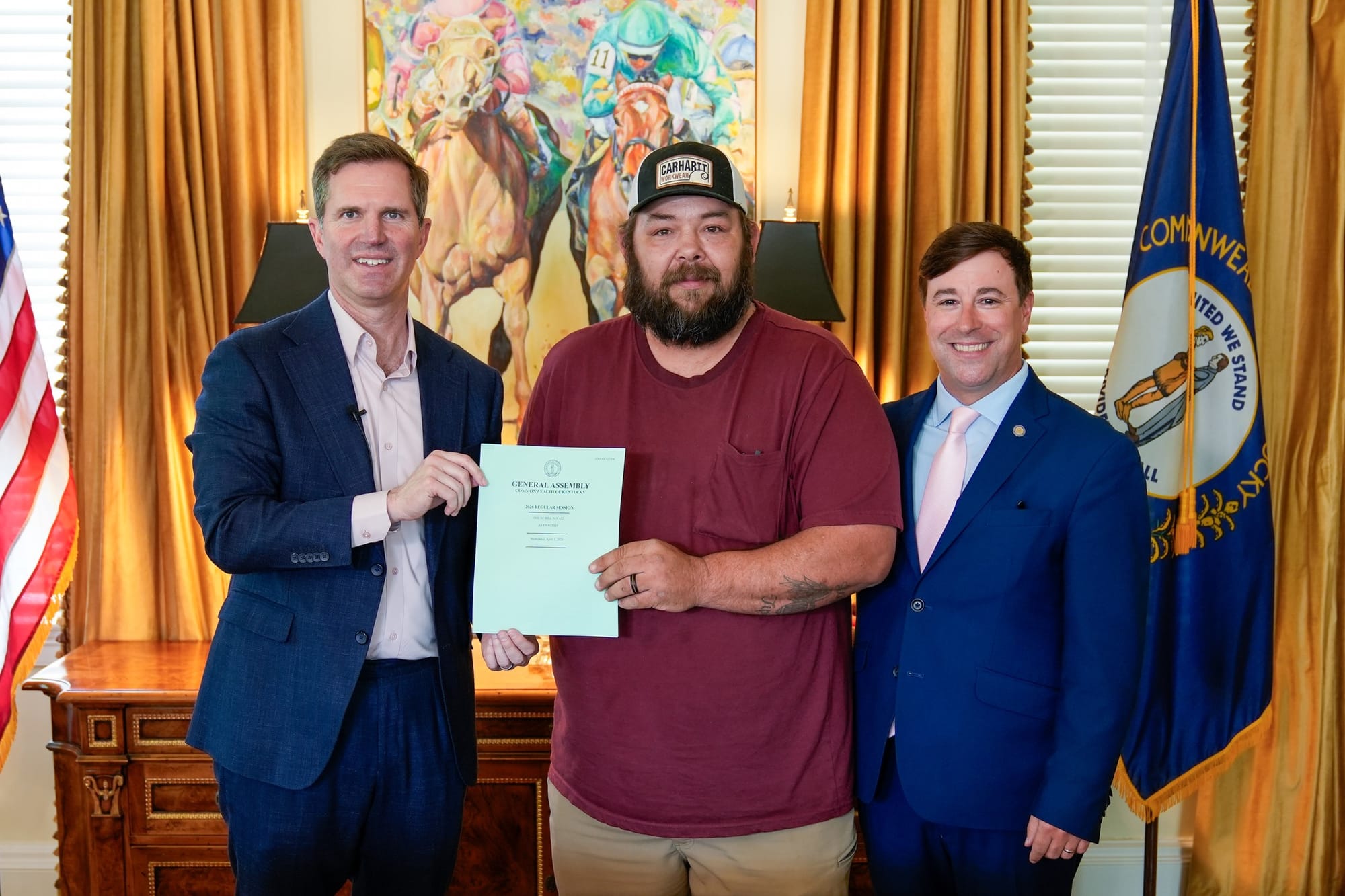
Beshear shared the above image on social media, writing, "Logan Tipton was a six-year-old whose life was cut short through a senseless and violent act. His family has worked in his honor to ensure no family has to suffer like they have. Today, with Logan's dad by my side, I signed Logan's Law. This will strengthen Kentucky's sentencing and parole laws to make our commonwealth safer and ensure Logan's legacy lives on forever."
 Shay McAlister
A handful of bills didn't make it through before the veto period but aren't technically dead yet. They could still pass in the final two days- they just couldn't survive a veto if Beshear chose to use one.
Senate Bill 156 would end child marriage in Kentucky entirely, drawing a clear line at 18. Despite a 2018 law that was supposed to address the issue, some children are still getting married in the state- some in direct violation of that law. Beshear would be unlikely to veto this one if it passes.
House Bill 658, which would have shifted driver's license issuance back to counties and away from the Transportation Cabinet, fell short- though the broader frustration that inspired it (long wait times at regional offices) did result in funding for three new offices in the transportation budget.
And House Bill 593, which would have put regulatory guardrails on energy-intensive data centers to protect existing utility customers from absorbing their costs, also didn't make it. The bill made it to the Senate floor but was never taken up, and an attempt to attach its language to another bill in the House also went nowhere. Louisville Gas & Electric and Kentucky Utilities lobbied hard against it.
 Shay McAlister
This is one of the more consequential sessions in recent memory- and not just because of the budget. The Medicaid changes could affect hundreds of thousands of Kentuckians who rely on the program. The gambling overhaul reshapes a rapidly evolving industry. The judicial budget fight is raising real alarms about the courts' ability to function. And the vetoes still pending- on gun liability and concealed carry age- will tell us something about whether Republicans choose to spend their final two days in Frankfort putting those fights on the record.
The session isn't over. But we now know most of the shape of it. The question left is what Beshear does between now and April 14th, and what Republicans decide is worth fighting for when they return.
Like what you see? Learn more about Shay Informed here! This is honest journalism with compassion and clarity.