Louisville Mayor, Dare to Care sound the alarm as SNAP cuts push Louisville families to the brink

– 6 min read



Dare to Care has served more people in the last two years than in any other stretch of its 50-year history- and CEO Vincent James says the worst may still be ahead.
"I'm Shay McAlister, and this is Shay Informed: an independent, ad-free platform dedicated to honest journalism with compassion and clarity.
Are you new here? Sign up for the free weekly newsletter or subscribe to support our mission and access behind-the-scenes content, podcasts, and in-depth stories reserved for paid subscribers.
More than 10,000 people in Jefferson County- including 3,000 children- have lost SNAP benefits since federal changes took effect last year. And according to Dare to Care Food Bank, the number of Kentuckiana families showing up at food pantries for the first time is climbing at a pace the organization has never seen in its 50-plus-year history.
Mayor Craig Greenberg stood with Dare to Care President and CEO Vincent James this week to call for the restoration of SNAP funding, warning that Louisville and its nonprofit partners cannot absorb the loss of federal food assistance on their own.
"No child, family, or person in need in Louisville should have to worry about whether they can afford groceries or put food on the table," Greenberg said. "We will continue doing everything we can to support our neighbors, but cities and nonprofit partners like Dare to Care cannot do this work alone. Here in Louisville, we will keep doing our part- but Washington must do theirs."
The mayor recently joined more than 200 mayors from across the country in urging federal leaders to fully fund SNAP and protect eligibility for the families who depend on it.

During a recent conversation with Dare to Care CEO Vincent James, James told me his organization served more than 200,000 people across its service area over the past two years- a number the organization has never recorded before. Just three years ago, that figure sat around 126,000, a 16% increase.
Even more striking, James said, is who's showing up. Nearly 38% of the people coming to Dare to Care are visiting a food pantry for the first time in their lives- and many are working families who are doing everything they're supposed to do and still can't make ends meet.
"These are people who are going to work every day, who are budgeting, who are doing all the right things, and they still can't find the means to be able to support their families fully and totally," James said.
James pointed to rising gas prices and grocery costs as the most visible drivers, but he believes something bigger is at play in the broader economy- something reflected in the sheer speed of the increase over just the past two years.
James also described the emotional toll the crisis is taking. Many first-time visitors arrive feeling embarrassed or ashamed, he said, believing that needing a food pantry somehow means they've failed. Some wait until they have no other option before walking through the door.
"They'll come and they'll tell us, 'Thank you for this experience because I was so hesitant to come. I almost didn't come today. I needed to because I need food for my family, but I didn't want to come and I was embarrassed,'" James said.
These new findings come from Feeding America's Map the Meal Gap study. According to the research, 203,770 people across Dare to Care's service area are now experiencing food insecurity. That number is up from 186,350 food-insecure
individuals reported the previous year and represents a 62% increase since 2021.
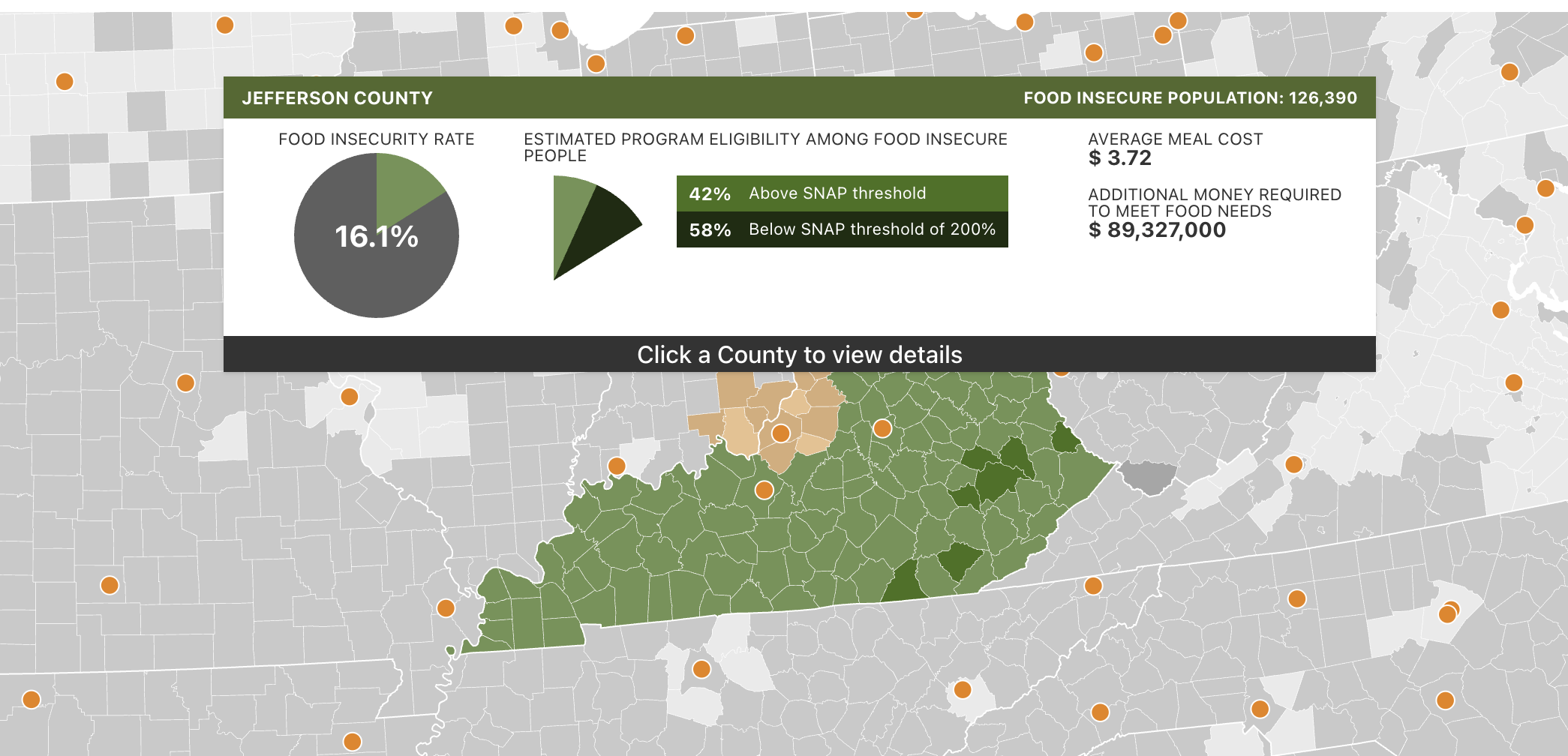
James noted that Dare to Care's numbers reflect conditions from roughly two years ago, meaning the true scope of the crisis today, after the most recent SNAP policy changes, is likely worse than what the data shows.
He said the organization is already seeing families borrow money, use credit cards, and turn to payday loans just to buy groceries.
"I even hate to talk about this, but it's where we are," James said. "People are borrowing money to go to the grocery store. They're putting groceries on credit cards. They're going to payday loans to get food, and that's just digging even a deeper hole for families."
Asked to explain the impending SNAP cuts in simple terms, James said families who once received $160 to $200 a month in benefits are now being approved for as little as $20 to $50- for the same household situation. He also pointed to new work requirements and more complicated paperwork, which he said are causing some people to give up on applying altogether.
"With the work requirements and the addition in terms of the cumbersomeness of the paperwork, and just remaining eligible for the benefits while you're on them, it's going to become even more challenging," James said. "People don't fully understand what has changed, and even as they are attempting to do things, they just give up."
James said he can't predict exactly how many more people will turn to food pantries in the coming months, especially with SNAP administration shifting more responsibility to states- some of which are already operating with budget deficits.
"I believe it's going to be staggering," he said.
The federal changes come as Louisville families also navigate other rising costs and policy shifts. Due to recent changes to Medicaid, more than 50,000 adults and 10,000 children in Jefferson County have lost health coverage.
In response, Greenberg pointed families toward existing local resources, including:
Greenberg thanked Dare to Care, community ministries, and other nonprofit partners for their continued work supporting Louisville families, while reiterating that federal action is still needed.
James said Dare to Care is bracing for change in how it operates, leaning more heavily on the local community than ever before.
"The government can't do it by itself. Even with the cuts, they couldn't do it, and Dare to Care can't do it," James said. "It's really going to take a collective effort in the community to feed people."
James also pushed back on the idea that struggling to afford food is always a short-term emergency. Historically, he said, people turned to food pantries temporarily- after a job loss or a medical bill- and moved on. That's changing.
"Now today it's no longer temporary. It's a way of life for many people, unfortunately, because they can't afford the cost of living," James said.
He also addressed the broader political debate over SNAP eligibility data and concerns about misuse of benefits, saying that while misuse exists in any system involving people, it represents a small percentage of cases- even though it tends to draw outsized attention.
"I believe there ought to be higher levels of accountability, but I don't believe that we ought to be so intrusive that we're getting details and misusing the information," James said. "We have to be realistic about what's being reported and what's being asked."
Behind every number in the data, James said, is someone's real life.
"Behind each one of those numbers, it represents a parent's meals because their children- so their children can eat, or seniors choosing between groceries and medication, and working families who are doing everything right, but they still can't make ends meet," James said. "That's what those numbers represent."
You can donate to Dare to Care or sign up to volunteer.
Like what you see? Learn more about Shay Informed here! This is honest journalism with compassion and clarity.