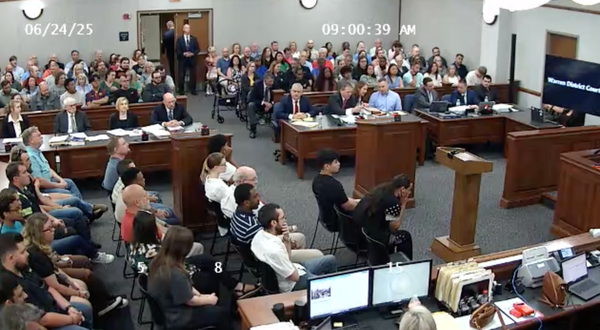
She lost her son at a rural railroad crossing; now she's taking on the industry

– 5 min read



34 states require railroads to clear vegetation, but Kentucky isn't one of them. Now, Tanya Serna wants to change that.
"I'm Shay McAlister, and this is Shay Informed: an independent, ad-free platform dedicated to honest journalism with compassion and clarity.
Are you new here? Sign up for the free weekly newsletter or subscribe to support our mission and access behind-the-scenes content, podcasts, and in-depth stories reserved for paid subscribers.
Tanya Serna remembers April 28, 2020, in vivid detail.
It was a beautiful evening. She'd just finished mowing the yard. Her husband Robert was building a raised garden bed in the backyard. Their 19-year-old son Hunter had left about 45 minutes earlier to meet up with his longtime friend. They were planning to hit the gym.
Around 8 o'clock, the sun was setting when her phone rang.
Her nephew, a 911 dispatcher, had taken a call that would shatter her family. Hunter had been in a collision with a train at a rural crossing in Hardin County. He was being airlifted to Louisville.
"We're in such disbelief," Tanya recalled. "He had just left our house."
Because of COVID-19 restrictions, the family waited outside the hospital. When staff finally brought them into a private room, Tanya knew.
Hunter didn't make it.
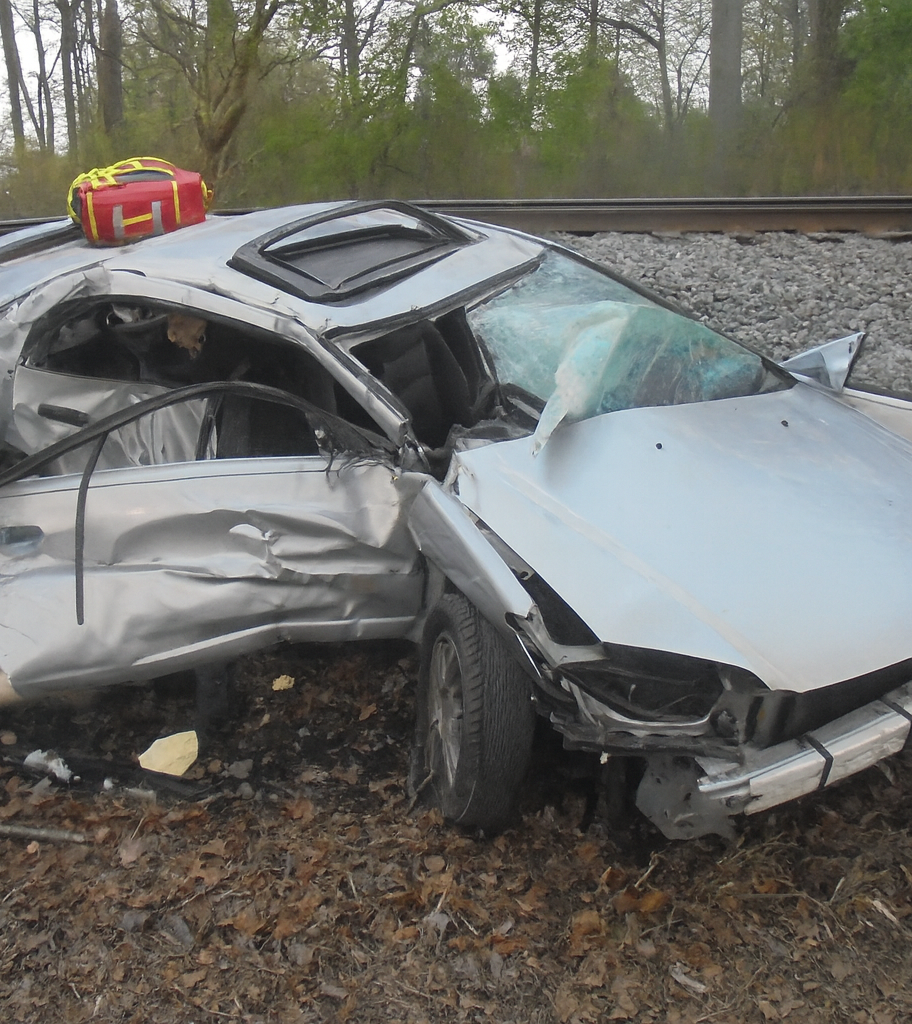
In the days that followed, Tanya learned details that transformed her grief into something else entirely: a mission.
Hunter wasn't driving. He was a passenger. The person behind the wheel, who survived, said he didn't see the train approaching because overgrown vegetation blocked his view. The train couldn't see the car either.
"My sister went out to that site. My sister-in-law also went out to the site," Tanya said. "You couldn't see if a train was approaching. You literally had to go right up to the tracks to be able to see anything."
The police report stated the driver failed to yield. But according to Tanya, even the yield sign was obscured by vegetation.
Through the litigation process that followed- which has since been settled with a confidentiality agreement- Tanya discovered something that still stuns her: Kentucky has no law requiring railroad companies to clear vegetation at their crossings.
"Kentucky does not have a statutory law requiring railroad companies to clear vegetation at their lines of sight at all," Tanya said. "There are 34 states that have some sort of statutory law. Tennessee, Indiana, and Ohio- states all around us have something. Kentucky doesn't."
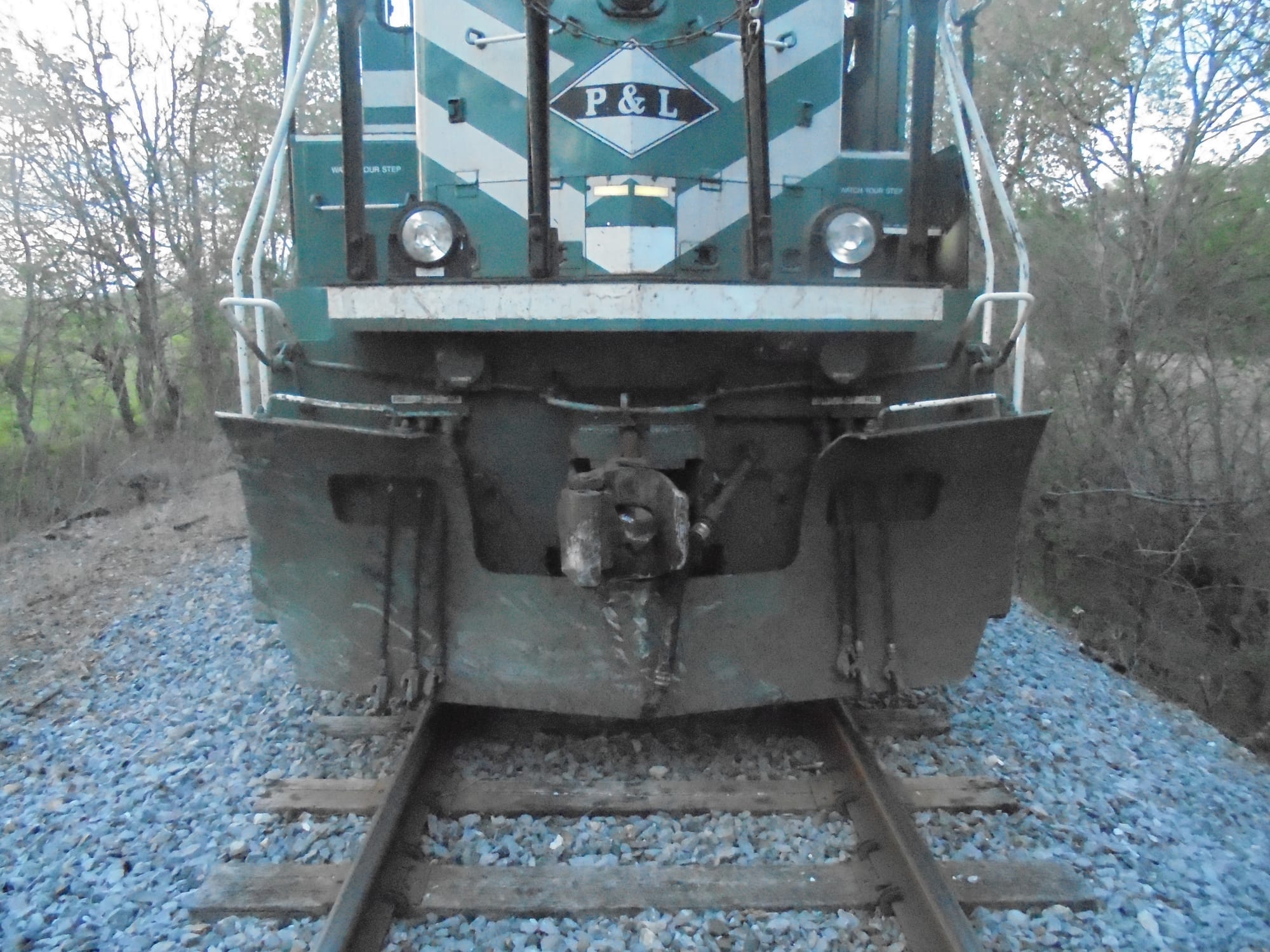
That realization sparked what Tanya calls "Hunter's Purpose"- a years-long campaign to change Kentucky law.
Now in its third year, the effort has produced House Bill 311, sponsored by Representative Josh Callaway with Representative Nancy Tate as co-sponsor. The bill is straightforward: railroad companies would be required to remove trees, brush, and other obstructive vegetation for a distance of 250 feet from any intersection with a public road- as long as it's not on private property.
If they fail to do so, state or local officials can send a written notice giving the railroad 10 days to comply. If the vegetation still isn't cleared, officials can remove it themselves and bill the railroad company for the cost. The railroad company would have the opportunity to petition to waive or modify the removal requirements if they believe removal of vegetation is impossible, impractical, or unnecessary.
"It's a common-sense bill for the Commonwealth," Tanya said. "They're not losing anything. Railroad companies are allocated funding for safety. This isn't coming out of their profits."
After initial pushback in previous legislative sessions, Tanya says railroad company lobbyists have indicated they'll remain neutral on this version- so long as the language aligns with Federal Railroad Administration guidelines.
"To me, that's acceptable," she said. "If they're not going to do it, the Transportation Cabinet can do it, or public works can do it, and send the railroad company the bill."
Tanya recently retired from her job as a school secretary to focus on this fight full-time. She's spending her weeks at the Capitol, meeting with lawmakers- sometimes seven or eight in a single day.
"I have to fight," she said. "I'm going to do everything I can to make sure that no other parent has to go through what we're going through because of a law that should have already been implemented."
Hunter was a University of Louisville student studying to become a chemical engineer, following in the footsteps of his older brother. He worked at Walmart alongside his father. His favorite breakfast was a bacon, egg, and cheese bagel- something Tanya made for him every time he came home from college on weekends.
He would have turned 25 last August.
"I always told him he came out roaring like a lion, and he never stopped," Tanya said, holding a small lion figurine she keeps close. "He's my lion. And I'm not going to give up."
During a September meeting with the Transportation Committee, Tanya was told not to lose hope- that it might take five years, but to keep fighting. Several legislators have privately told her they support the bill.
House Bill 311 was filed in early January and was assigned to the Transportation Committee in early February. This week, the bill passed a first reading and is scheduled for a second in the House of Representatives. It could still face an uphill battle in the Senate.
Tanya is cautiously optimistic but realistic about the road ahead.
"We are dealing with a huge entity that's had a lot of control for, gosh, centuries," she acknowledged. "Kentucky's constitution regarding railroad companies hasn't really been revised since the 1920s."
But she's not backing down. Not when the alternative means another family might get a phone call like the one she received that April evening.
"I promise myself, and I promised Hunter- he wouldn't die in vain," Tanya said. "I want to make sure that nobody else has to go through what we're going through because of something that should have been prevented."

Like what you see? Learn more about Shay Informed here! This is honest journalism with compassion and clarity.