"They made us feel like they had our backs": Inside Ford's sudden abandonment of 1,600 Kentucky workers

– 4 min read


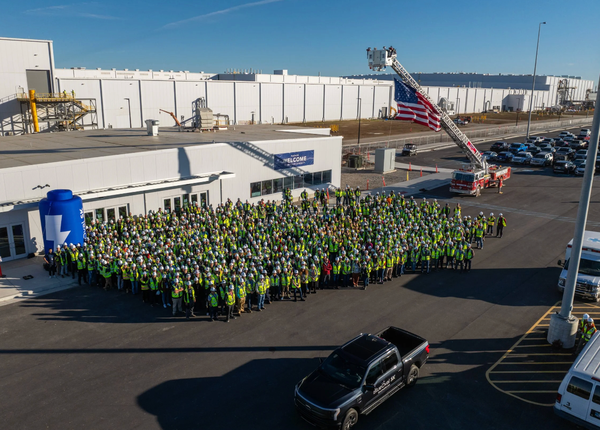
Melissa thought the Glendale battery plant job would be her family's future. Then she found out on the news she was laid off.
"I'm Shay McAlister, and this is Shay Informed: an independent, ad-free platform dedicated to honest journalism with compassion and clarity.
Are you new here? Sign up for the free weekly newsletter or subscribe to support our mission and access behind-the-scenes content, podcasts, and in-depth stories reserved for paid subscribers.
Melissa's voice cracks as she recounts the moment her world turned upside down. It was supposed to be just another shift at the BlueOval SK battery plant in Glendale- holiday chatter with coworkers, plans for time off, the ordinary rhythm of a job she'd uprooted her entire life for less than a year ago.
Instead, just hours after leaving work, she learned that shift would be her last. "Most of us found out on the news. It was pretty shocking," she says, her words tumbling out between tears.
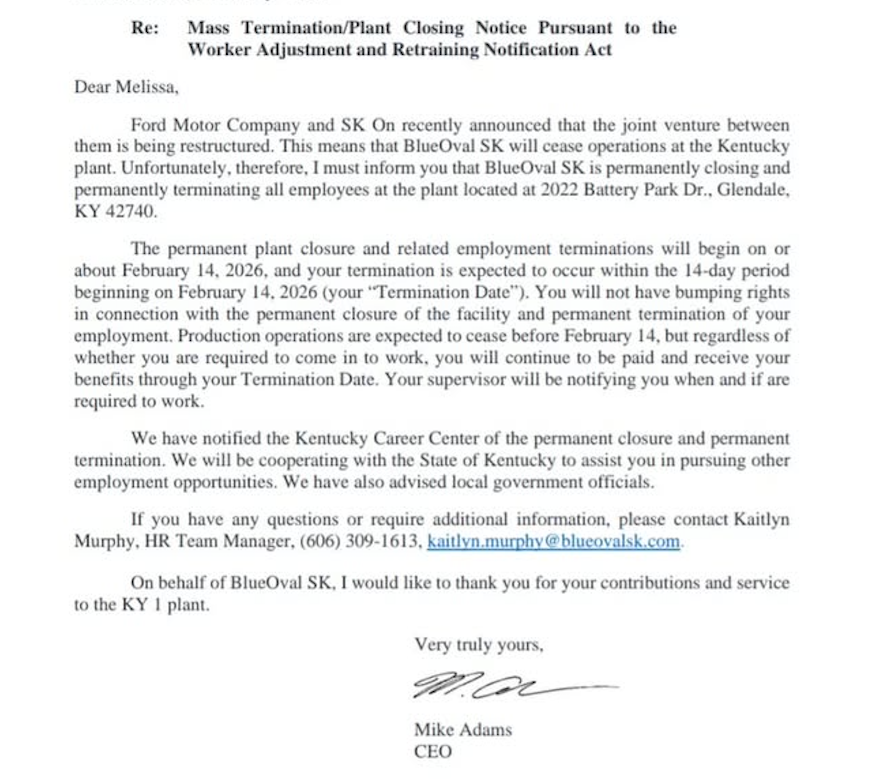
Even her supervisors didn't know, according to Melissa. They first heard about the layoffs on the news, and then received an email from the CEO hours later, confirming they were part of the "mass termination."
Ford Motor Company confirmed this week that approximately 1,600 workers at the Glendale battery plant will be impacted as the automaker abandons its original plans for the facility. The workers, who were part of what was supposed to be a transformative partnership between Ford and BlueOval SK, will be laid off but can reapply for positions as Ford repurposes the Kentucky plant for an entirely different mission: manufacturing large-scale battery storage systems for data centers and electrical grids instead of EV batteries.
It's a stunning reversal for a project that state and local leaders had celebrated as a game-changer for the region.
The 1,600 workers now facing layoffs at the Glendale facility weren't just employees- they were believers. They'd bought into Ford's promise of a transformative EV future, a vision that Kentucky Governor Andy Beshear had championed as a leader in EV battery production.
For Melissa, who asked to be identified only by her first name, that belief came with a steep price. She and her husband both worked at the plant. They moved from Bullitt County to Elizabethtown. Their two kids changed schools. It was all part of betting on what seemed like a sure thing.
"I thought it would be good for us, we could grow with this company," she says. "Never imagined this would happen."
When Ford and SK On announced the BlueOval SK partnership, the promise was clear: thousands of good-paying jobs manufacturing batteries for Ford's electric vehicle future. The Glendale facility in Hardin County was supposed to be humming with activity, churning out batteries to power Ford's electric truck lineup and brimming with opportunity for people willing to work hard.
"We thought this was our future. I feel dumb for that now," Melissa told me.
Instead, several factors, including changes in White House administration, have left the plant failing to meet expectations. Ford is now dissolving the BlueOval SK joint venture entirely. Under a new agreement, Ford subsidiaries will independently own and operate the Kentucky battery plants.
"This is a customer-driven shift to create a stronger, more resilient, and more profitable Ford," CEO Jim Farley said in announcing the changes.
Melissa had started at BlueOval SK in January 2025- barely a year ago. The job felt thrilling, she says. She was excited to learn. She was even learning some Korean.
During that last shift, her coworkers were talking about the holidays, making exciting plans. Now they're worried. "It's not a great job market right now," Melissa says. "Just not knowing- it's scary."
The way Ford handled the layoffs has left her feeling not only unemployed but also betrayed.
"They could have done this better," she says. Workers were warned not to speak to the media- and then that's how they found out they'd lost their jobs. "Just sending emails is so cold, impersonal."
She still hasn't been able to retrieve her belongings from her locker. They were supposed to go back to collect their things, but then the supervisors told them not to report.
"They made us feel like they had our backs," Melissa says.
For the 1,600 workers facing layoffs, the ability to reapply for positions under the new battery storage operation offers a lifeline- but not necessarily a guarantee. The skills required for manufacturing large-scale grid storage systems may differ from EV battery production, and there's no assurance that all 1,600 positions will be replaced.
Governor Beshear's office has confirmed the job impact numbers but hasn't yet detailed what support might be available for affected workers or how many positions the retooled facility might ultimately employ. He did say his office is working with those impacted to find new employment opportunities.
Melissa is working on her resume. She expects her pay to run through February 14th, according to an email she received from Blue Oval SK. But she won't be applying for another job with Ford.
"I am too scared to trust them ever again," she says.
She's one of 1,600 workers now facing that same fear- people who moved their families, changed their kids' schools, and believed in a promise that Ford has now walked away from. The company says the battery storage business could be operational within 18 months, but for workers like Melissa, the damage is already done.
She's still trying to figure out how to explain to her children why they might have to move again. And she's still grappling with a question that has no good answer: How do you trust again when a billion-dollar company makes you feel this small?
Like what you see? Learn more about Shay Informed here! This is honest journalism with compassion and clarity.