"We felt like we were in the dark": Prosecutor explains the process behind the Ronald Exantus release

– 9 min read



Commonwealth's Attorney Kelli Kearney explains the 202A process, the limits of confidentiality law, and why a 20-year sentence rarely means 20 years.
"I'm Shay McAlister, and this is Shay Informed: an independent, ad-free platform dedicated to honest journalism with compassion and clarity.
This story is a 'Shay Original', which is available to paid subscribers only. You can become a member for $4.99/month and gain access to all of my work, including full interviews, behind-the-scenes content, and my weekly podcast.
For weeks, I asked Commonwealth's Attorney Kelli Kearney the same question, over and over: was Ronald Exantus going to be involuntarily hospitalized instead of released?
She couldn't tell me. Legally, she wasn't allowed to.
Now that Exantus has been released, Kearney agreed to explain what happened- what the law required, what her office could and couldn't do. She also explained the process behind the confidentiality wall that kept the public guessing for weeks.
If you are unfamiliar with this case, start here for background.

Kelli Kearney didn't prosecute this case originally. She wasn't the Commonwealth's Attorney back in 2018, when a jury found Exantus not guilty by reason of insanity on the murder charge and guilty but mentally ill on assault charges for attacking Logan Tipton's family. She followed it as a resident of Scott County, the way most people did- through media coverage of what she called "a very brutal murder."
Her office's direct involvement started only after Exantus's first release last October- and even then, not right away.
 Shay McAlister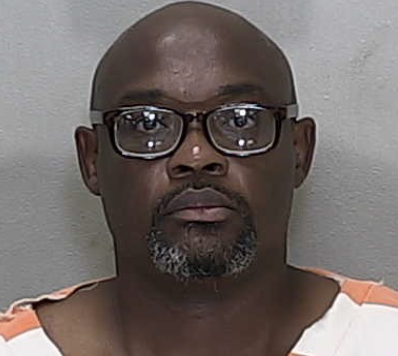
"His initial release, the Department of Corrections did not notify us that he was being released early. I found that out actually through the media," Kearney said.
It wasn't until Exantus was back in custody, after his Florida arrest, that her office got pulled directly into the case. That's when general counsel for the Department of Corrections reached out with his release date and outlined the options on the table.
One of those options was a proceeding under KRS Chapter 202A- the law I've referenced repeatedly over the past few weeks without fully explaining what it actually involves. Kearney walked me through it.
Because Exantus was found not guilty by reason of insanity, Kentucky law required the court to consider whether he should be involuntarily hospitalized instead of released outright.
"If you have such a verdict, the court is required to follow either 202A or 202B proceedings prior to him being released," Kearney said. "That is a confidential proceeding, and we cannot say whether we did or did not [pursue it]. But I can say that the statute states that that shall happen, and it's not something that's discretionary."
That's a meaningful clarification. This wasn't an option her office could choose to pursue or ignore- the law required the court to at least consider it. With that in mind, it's likely Kearney's office did file the petition, and it was dropped once it was out of her hands.
Here's how the process works, according to Kearney: anyone can file a 202A petition against someone they believe is mentally ill and a danger to themselves or others. In a typical case, that's handled in district court. But because of the specific statute that applied here, any petition would have gone to the same court that held the original trial. This trial went in front of a jury in Fayette County.
From there, a judge reviews the petition and can sign an order for an evaluation, which must occur within 24 hours. Two medical professionals evaluate the person- Kearney said one is typically a mental health professional and the other a physician, though she cautioned she wasn't certain of the exact credentials required.
The evaluators are looking for four specific things, and all four have to be met:
"If the evaluators find that those factors are met, then you would have a hearing," Kearney explained. "The person would be sent for hospitalization, and you would have a probable cause hearing to determine if that is in fact the case. Now, if those factors are not met, then the petition has to be [withdrawn], because there's no cause to hold the person for treatment, and that person would be released."
Whether that process was ever initiated in Exantus's case remains something Kearney says she legally cannot confirm.

I asked Kearney at what point her office realized there was no legal path left to keep Exantus in custody.
"We knew the steps that we could legally take, and our office knew Wednesday afternoon that Mr. Exantus would no longer be detained by the state," she said.
That timeline lines up with when her office's final statement went out- the same afternoon he was released.
This is where the interview took an unexpected turn.
I asked Kearney directly whether the confidentiality surrounding 202A proceedings makes it harder for victims' families and the public to understand what's happening in high-profile cases like this one.
"We have to provide that ethical duty, no matter how egregious we think the crime is," she said. "Thankfully, in the state of Kentucky, we do have what's called Marsy's Law, so the victims do have a constitutional right to know what's going on, and that also includes the 202A proceedings. So our office was able to keep the victim's family up to date, and we were keeping them informed every step of the way of any processes that we were taking with our office."
That stopped me. Dean Tipton and his family have told me -repeatedly, on the record- that they felt left in the dark. That they were learning about developments in this case through the news and social media, not through direct contact from the state.
I told Kearney that directly. Her response acknowledged the gap, but with an important distinction.
"I can't tell you what happened prior to us getting involved, prior to right before his release from custody," she said. "We did make it very clear that this was confidential, and they were not to release any information. So that may have been something that they have said because we had told them that this is confidential and they cannot repeat anything to the media or to the general public about what's going on."
In other words: even if the family knew more than they let on publicly, Kearney's office had instructed them not to share it.
She added a caveat, though.
"That could very well be them being in the dark, because we did feel like we were kind of in the dark too in some of this process, because we don't know everything," Kearney said. "So I don't want to invalidate their feeling that they do not know what was going on, but we didn't inform them of every- all the information that we had- and what steps our office was taking throughout the process, or not taking."
Even Kearney's own office, in other words, didn't have full visibility into everything happening in this case.

Some of the most striking parts of this conversation had nothing to do with confidentiality at all- they were about how little control anyone, including prosecutors, has over how much time a sentence actually amounts to.
I asked Kearney about the penalty Exantus was sentenced to and how it started as 20 years but ended up only being 11, because of "meritorious good time" credit- the discretionary credit that contributed to Exantus' early release.
"Once they are sentenced, we have no discretion whatsoever," she said. "We don't know what they'll get good time credit for. We don't know what's considered good time credit... the meritorious credit is awarded at the discretion of the [Corrections Commissioner]."
She read the relevant statute, KRS 197.045, aloud: credit awarded for "performing exceptionally meritorious service or performing duties of outstanding importance in connection with institutional operations and programs," capped at seven days per month, at the Commissioner's discretion.
That led to one of the most quotable moments of the entire interview- Kearney explaining, in plain terms, just how disconnected a jury's sentence can be from the actual time served.
"Twenty years doesn't really mean 20 years, and we don't know what it actually means, because they get good time credit while they're incarcerated," she said. "And on top of that, it doesn't even mean that either, because you have a 20% parole eligibility or an 85% parole eligibility. So you have these victims that think, 'we've got the sentence.' In reality, that's not the sentence, and we really don't know what the sentence will actually end up being."
I asked whether she believes juries fully understand this when they hand down a sentence.
"The juries understand the parole eligibility, because that's part of the penalty phase; we do go over that with them," Kearney said. "But I don't think they would understand the amount of credit that an inmate would get."
Kearney's public statement, released the day of Exantus's release, called the outcome "deeply disappointing and frustrating" for her office.
"It's been a little frustrating, because we are bound by the ethical duties- certain things are confidential, and I understand that the public wants to know and they deserve to know, but we're handcuffed in a situation like this where we can't provide all the information," she said. "You just have to trust that the public knows you're doing the most that you can do."
She was careful to draw a boundary around what her office was and wasn't responsible for.
"We're coming in on the back end of this. Our exposure to this case is very limited. We had nothing to do with the trial, nothing to do with the sentencing or the investigation. I'm not putting any blame or doubt into how those things were done, but we're just coming in on the back end and trying to clean up and do the best we can for the public and for the family", Kearney explained.
She grew reflective when the conversation turned to the Tipton family directly.
"Our hearts go out to the Tipton family, because I know this is just more that they deal with," she said. "We can close this case in a day, saying that we did the most that we could to keep Mr. Exantus out of the general public- but the pain and the grief that the Tiptons have to go through every day, that's never-ending."
 Shay McAlister
I asked Kearney whether her office has any continued involvement with Exantus now that he's out.
"We are finished with that case, unless the Tipton family needs something from us- needs services or any help from our office. Then that would be our only dealings with this case", she explained.
I also asked whether this case exposed any legal gaps beyond what Logan's Law already addressed- legislation Kearney acknowledged doesn't apply retroactively here.
"I think the amount of credit an inmate can get while serving needs to be looked at, based on the amount of credit this individual got and how much earlier he was released," she said. "I think that's something that deserves to be looked at, at least in certain types of cases."
Kearney's closing thoughts focused on public awareness- the idea that most people don't think about how Kentucky's sentencing and parole system actually works until they're personally affected by it.
"Most people don't have exposure to the criminal justice system until you're actually in it, as a victim or a defendant," she said. "I think it's good for the public to be paying attention to things like sentencing laws, what qualifies as a violent offense- because if it's a violent offense, that affects when they can be parole eligible. It'd be 85% rather than 20%. Just the laws that are set in place to help keep our community safe- I think the general public needs to be paying attention to those."
Like what you see? Learn more about Shay Informed here! This is honest journalism with compassion and clarity.