Blue wave reaches Kentucky’s statehouse: Two longtime Louisville Republicans fall
– 5 min read


Kentucky was not spared Tuesday night’s national swing. The national trend flowed into the Bluegrass state, and took out long-time Louisville lawmakers with it.
I'm Shay McAlister, and this is Shay Informed: an independent, ad-free platform dedicated to honest journalism with compassion and clarity.
I believe some stories are too important to stay behind a paywall. That's why I'm making this piece free to read for everyone. Informed communities make better decisions and that can only happen when people have access to honest, thorough reporting.
Shay Informed is 100% reader-funded. No ads. No corporate backing. Just journalism that answers to you. If you'd like to help keep this work going, please consider subscribing.
Tuesday night, Kentucky Democrats flipped a congressional seat Republicans have held for more than a decade, and they knocked off nine Republican-held seats in Frankfort, including two longtime Louisville-area lawmakers.
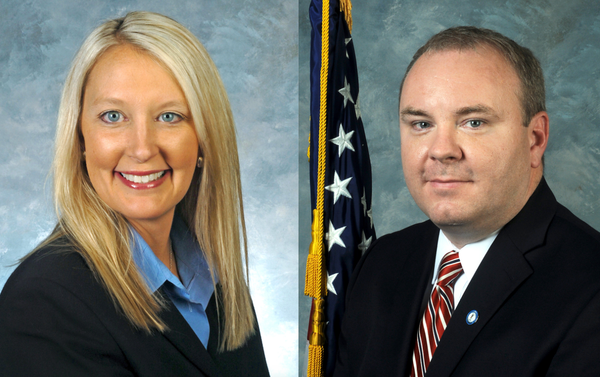
In the state Senate, Sen. Julie Raque Adams, a Louisville Republican who has held the District 36 seat since 2015, lost her re-election bid to Democrat Sarah Cole McIntosh. Adams, a former member of Senate GOP leadership, lost despite a large spending edge. Kentucky Public Radio reported that about $1.2 million in spending backed her in the general election, while McIntosh, a former Jefferson County Board of Education member, had spent less than $10,000 as of two weeks before Election Day.
Over in the state House, Rep. Jason Nemes, the majority whip, lost to Democrat Jennifer Hardin, a small business owner, by roughly 500 votes. Nemes had held the District 33 seat, which covers parts of Oldham, Jefferson and Shelby counties, since 2017.
Dr. Stephen Voss, an associate professor and political science researcher at the University of Kentucky, wasn’t surprised that the wave reached the Kentucky General Assembly. What caught him off guard was that Democrats had the message to ride it.
“I had done quantitative analysis suggesting that some of the Republican incumbents were vulnerable, but I wasn’t sure that the Democrats had really successfully put enough resources behind those state legislative candidates to carry through on what the situation made possible,” Voss said.
He said the losses of Adams and Nemes fit a familiar pattern.
“One of the sad ironies of American elections is that when the voters turn against a party for being too extreme, whether that’s too conservative or too liberal, the people in the party who suffer for the excesses of their party are often not the ones who are themselves most extreme,” Voss said. “It’s often the people who are somewhat more moderate, people who are in the swing districts.”
In Kentucky’s case, he said, “the candidates who got punished were Republicans who were not especially conservative, and I would include those Louisville area Republicans.”
Adams and Nemes weren’t the only incumbents to fall. Democrats took seven GOP-held seats Tuesday night, according to Kentucky Public Radio’s tally.
The other five:
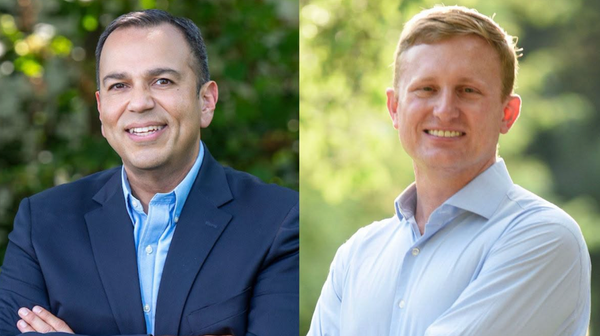
Democrats also flipped two seats outside Louisville. In Northern Kentucky’s House District 65, Aaron Currin defeated Rep. Stephanie Dietz of Edgewood by six points. Currin said he raised about $30,000 for the race, compared with more than $200,000 for Dietz. In suburban Lexington, Ryan Staford beat Rep. Matt Lockett of Nicholasville by just 200 votes.
Republicans picked up one seat. Tanner Hesterberg beat Democrat Johnny Ray Turner in House District 95, according to Secretary of State results, taking Democrats’ last remaining seat in eastern Kentucky, a region that was once a party stronghold.
Even with the 'blue wave' hitting Kentucky, don't expect a dramatic shift in Frankfort. Republicans will still hold a 74-26 supermajority in the House and a 30-8 edge in the Senate when the 2027 session convenes, down from 80-20 and 32-6.
Voss said Democrats’ gains don’t automatically translate into policy wins, because of how the legislature is run. “The rules followed by Kentucky’s legislature give a lot of power, a lot of agenda control to the leadership of the chamber,” he said. Even if a coalition of Democrats and some Republicans could pass a bill, “there’s no guarantee they’d ever get to vote on those possibilities.”
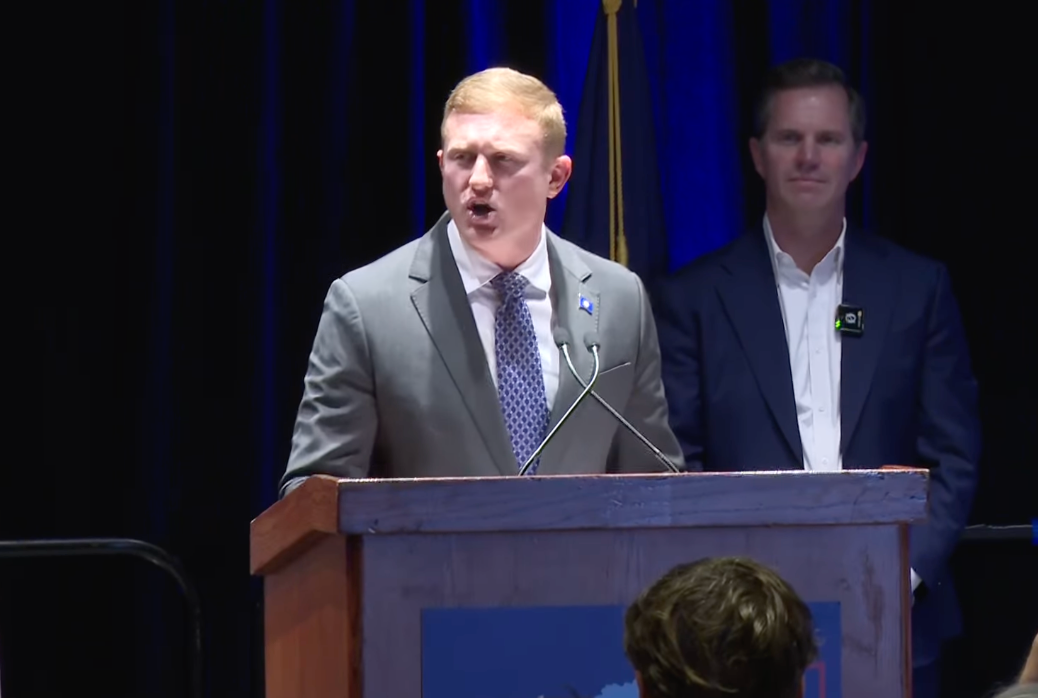
The biggest result came in the 6th Congressional District. Democrat Zach Dembo defeated Republican Ralph Alvarado for the seat formerly held by Andy Barr, which Republicans have held since 2013. Dembo becomes Kentucky’s second Democratic congressman, joining Rep. Morgan McGarvey.
Voss said he saw it coming. “I was saying a Democrat could win the sixth district from the beginning,” he said. Voss said some may have read that as partisan, but “I was analyzing it like an umpire, like a political scientist.” The district included communities already shifting blue, including much of Fayette County, in a year when Republicans controlled the White House and Congress.
The open question, Voss said, was whether Dembo would get the support to pull off an upset. “The deeper we got into the election cycle, the clearer it was that Zach Dembo was going to get enough Democratic support so that he could surprise people,” he said, as national Democrats made the race a priority and more money flowed in.
Republicans did hold the biggest prize. Barr, one of the first winners called Tuesday night, defeated Democrat Charles Booker to succeed retiring Sen. Mitch McConnell.
Asked what Kentuckians should take from the night, Voss offered three points.
First, recruit candidates near the center. Voss noted he was hired by the then-Republican Attorney General’s office in the state’s redistricting litigation, where he argued Democrats were too focused on tweaking election rules. He said Tuesday “validated that argument that if a party really wants to make a difference, don’t worry so much about tweaking the rules. Focus more on recruiting candidates who are near where the center, the swing voter, wants them to be.”
Second, national politics now drives everything. “The old adage ‘all politics is local’ is no longer true,” he said. “All politics is national.” He tied the Democratic surge to a reaction to President Donald Trump, which filtered “all the way through our ballot.”
Third, voters will cross party lines. In nonpartisan contests, he said, candidates who weren’t strictly Democratic held on, suggesting voters are open to candidates “if they can break from the straitjacket that is loyalty to their party and can campaign in a less partisan way.”
Like what you see? Learn more about Shay Informed here! This is honest journalism with compassion and clarity.