In rural Kentucky, a 40 year old lifeline for mothers is about to disappear
– 11 min read



The doctor who founded Fort Logan's birthing spa says the closure breaks a promise. The mothers counting on it say it could put lives at risk.
"I'm Shay McAlister, and this is Shay Informed: an independent, ad-free platform dedicated to honest journalism with compassion and clarity.
Are you new here? Sign up for the free weekly newsletter or subscribe to support our mission and access behind-the-scenes content, podcasts, and in-depth stories reserved for paid subscribers.
When Dr. Jay Miller arrived in Lincoln County, Kentucky, 40 years ago, four surrounding counties had zero obstetric services. Pregnant women in Garrard, Rockcastle, Casey, and Lincoln counties had nowhere nearby to deliver their babies.
So Miller, a family physician with a passion for childbirth, asked Fort Logan Hospital in Stanford if they'd be interested in opening a birthing service. "Right away they said they would do that," he told me. "That was the start."
They gave him three hospital rooms. He chopped the middle one in half to create two delivery rooms sharing a bathroom, with the other half serving as a nurse's station. "Very quaint," Miller admits. But the first thing they did? They put in a whirlpool tub.
That was January 1, 1986.
In the four decades since, Miller and his team have delivered more than 10,000 babies in what became one of the most unusual birthing centers in the country- a rural hospital that consistently ranked among Kentucky's safest, with the lowest cesarean section rates in the state and, most recently, designations as a "Best Hospital for Maternity Care" and a "Maternity Access Hospital" by U.S. News & World Report.
Now, it's closing.
On January 16, Ephraim McDowell Health- the regional health system that has owned Fort Logan Hospital for more than 20 years- announced that inpatient labor and delivery services would move to their regional medical center in Danville, effective February 16, 2026.
Jordan Hamm, a mother of three who is due with her fourth child in early April, found out from a friend who saw it on social media. She said the healthcare group has promised to provide some of the same amenities available at Ft Logan Hospital, but without a timeline.
"When are all of these things that you're saying you're going to have, but you don't have timelines for, when are they going to be available? I think having those questions answered before the announcement would have really put a lot of moms at ease, and it's just not happening the way that it's going so fast," Jordan said.
For Dr. Miller, the closure isn't just disappointing. It's a betrayal.

When Ephraim McDowell acquired Fort Logan Hospital in 2002, Dr. Miller said the health system made public pledges to the community. He was there.
"I was at that meeting,'" Miller recounted. "'I remember them pledging they would be committed to keep open OB and surgery and the ER services at Fort Logan Hospital.'"
Miller said the local paper reported at the time that the Lincoln County Fiscal Court- the technical owner of the land and building- demanded the right of first refusal to buy back the hospital if Ephraim McDowell quit offering hospital and ER services. According to Miller, everyone present understood that those services explicitly included obstetrics.
"We're trying to locate the actual document that was signed," Miller said. His son-in-law, an attorney, has advised that without legal language in the contract, courts may not pay attention to verbal pledges. But the archives are slow, and the closure is fast. "They only gave us 30 days' notice," Miller said.
To understand what's being lost, you have to understand what Miller and his partners built.
From the beginning, their approach was different. The Birthing Center specializes in natural births, using movement, water, and fathers in the delivery room to "drive the drugs out".
He calls it "family-centered" birth. It starts before the baby is born, with prenatal care at the family practice across the street from the hospital- Bates, Miller, Sims.
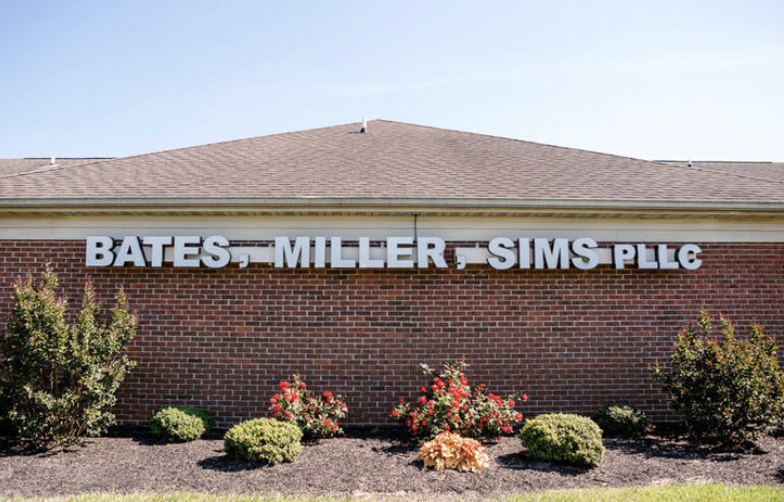
"We think women deserve to know who's going to be there delivering their baby," Miller explained. For 40 years, he has been on call every night, every day, for his patients. His two partners- Dr. Simms and midwife Jamie- do the same. "If I've been through a woman through one or two births, she trusts me a lot to be there with her next birth. We want to be there."
Women know that the doctor who saw them for OB prenatal care will be the one to deliver their baby, and after their baby is born, they will return to the same office to see the same doctors for pediatrician care for the newborn.
The approach extends to everything about how the maternity unit across the street operates. The birthing rooms open onto private garden patios where laboring mothers can walk outside. Every room has a jetted tub for water labor, which research shows can speed up delivery by helping mothers relax. The beds move into multiple positions to help with labor mechanics. The nurses are trained extensively in comfort measures for natural childbirth.

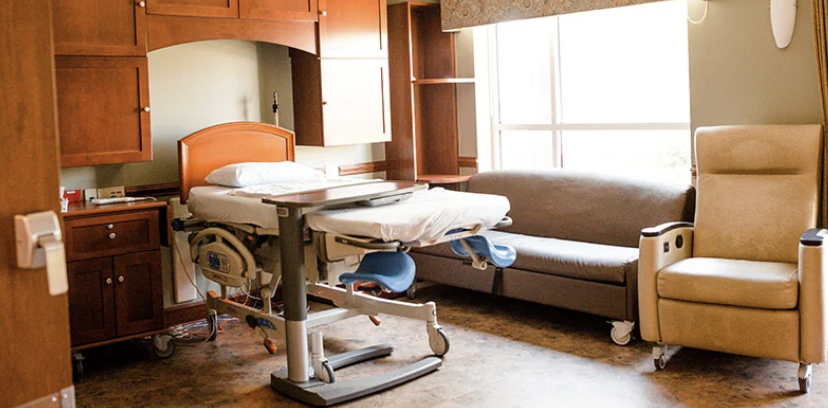

Credit: The Birthing Spa
"One study showed just standing during labor, as opposed to laying down, saved a third of the labor time," Miller said. The whole design is built around that research- getting mothers out of bed, keeping them moving, supporting them through the process without rushing to intervention.
The results speak for themselves. Dr. Miller says The Birthing Center has maintained one of, if not the lowest, C-section rate in the state for decades.
He said that was born out of necessity because for the first 12 years, epidurals weren't available at the facility and both doctors and nurses became well-equipped to help women through a natural birth.
"We were the only hospital in the state between Louisville, Lexington, and all around here that offered women private rooms the entire time they're in the hospital for their birth," Miller said of those early years.
The Birthing Center has received numerous recognitions and awards over the years and has a long list of current and former patients who vow it is unlike any other maternity unit in the state.
For Miller, though, it comes down to something simpler than awards and testimonials.
"The joy in my life is to have a baby come into my hands and be able to give it back to mom," he said. "I could get behind home plate or the 50-yard line at the Super Bowl coming up this week, and I wouldn't have a better seat than sitting right there by mom, holding her baby and giving it back."
Dr. Miller's passion for babies and mothers is palpable, and his work is at the heart of The Birthing Center. But there is another group of people who are feeling the impacts of the closure just as deeply- the mothers who planned to give birth there.
Jordan chose Fort Logan for a specific reason: she's allergic to fentanyl, which is in most epidurals. A previous reaction to anesthesia was life-threatening. Natural childbirth wasn't just a preference- it was a medical necessity.
"Going to another hospital was very worrisome, because I had to call around and try to figure out which places were safe," she said. When she found Fort Logan, she discovered a facility specifically designed for mothers like her. The tubs, the nitrous oxide (which most hospitals don't offer), the nurses trained in comfort measures- all of it made natural childbirth not just possible, but supported.
"With my last one, I was able to successfully do a natural childbirth," she said. "Didn't have to worry about the epidural."
Now, with her fourth baby due in eight weeks, she's scrambling. The Ephraim McDowell Regional Medical Center in Danville has one room with a tub- first-come, first-served. They say they'll offer nitrous, but they can't say when. And their only epidural option contains fentanyl.
"If I was to go and try to do natural childbirth and then labor stalled," Jordan said, "I would be terrified knowing that was the only option as a backup plan."
She's trying to find alternatives, but at this stage of pregnancy, most providers aren't taking new patients. "It very well may look like me having to deliver at a hospital I've never been to, with a provider I've never seen before who's completely unaware and does not know my medical history."
She's not alone. Another mother in the group working to fight the closure was planning a VBAC- vaginal birth after cesarean- which few hospitals in the area will even attempt. She had consulted with the doctors at Fort Logan before even getting pregnant to confirm it was possible. Now she doesn't know what she'll do.
"There's so many people in similar situations," Jordan said. "Having that choice completely taken away from them has been devastating."
The health system's press release frames the move as an upgrade: mothers will have "immediate access to neonatologists and a Level II Special Care Nursery" in Danville, should complications arise. The regional medical center has 18 beds compared to Fort Logan's smaller unit. It's only 11 miles away- "about a 15-minute drive," the FAQ states.
"Moving OB services from Fort Logan Hospital enables us to elevate the level of care provided to our OB mothers and babies and serve our community’s healthcare needs more efficiently," the statement read.
But for Miller and his partners, that 15-20 minutes is the heart of the problem.
All three providers at the Fort Logan birthing center live within five minutes of the hospital. "There's many times five minutes should have been quicker," Miller said. When complications arise- a cord prolapse, an emergency C-section- minutes matter.
"If you got a cord hanging out," Miller explained, "especially if the mom has to go 20 minutes first, and then the nurse finds out, 'Oh, you got a cord hanging out,' then they call us, and it's 20 more minutes. That is just not acceptable for emergencies."
He pointed to a 2018 study in the Journal of the American Medical Association that examined what happens when rural communities lose OB services. Three things increase: babies born outside hospitals, babies born in hospitals that aren't prepared to care for them (because women in crisis will stop at the nearest facility regardless), and premature deliveries.
A follow-up study published in JAMA in November 2025 found that infant mortality rates rise by 14% in counties that lose OB services.
"Our infant mortality rate in our little rural county has been lower than the state average," Miller said. "It's because we provide accessible health care."
Jordan's own experience illustrates the time pressure. Her last labor, from waking up to delivery, was four hours. After accounting for the time to confirm it was real labor, arrange childcare, pack the car, and drive through icy conditions, she wasn't at the hospital long before the baby arrived. Adding another 20 minutes could mean delivering on the side of the road- or in an ER that isn't equipped for it.
The mothers fighting the closure aren't optimistic about stopping it. They've reached out to board members, administrators, state representatives, senators and are planning to contact the Attorney General's office to explore an injunction. They've also started an online petition, hoping to stop the consolidation.
But the timeline is brutal. Even if legislators were sympathetic, policy changes wouldn't take effect in time. The closure is February 16th.
"I don't think personally that it's going to affect me in the next eight weeks," Jordan acknowledged. "Unless the Attorney General can issue an immediate injunction... it's beyond me. It's beyond the moms that are unfortunately having to deal with this right now."
Instead, they're focused on the future- pushing for legislation that would require longer notice periods for maternity unit closures (they're proposing 60-90 days minimum, ideally nine months) and formal notification requirements so communities aren't left in the dark.
"We fear this is just the first in a very long string of closures," Jordan said. She cited research suggesting 35 rural hospitals across Kentucky are at risk. "It's going to cause a ripple effect for the entire health and safety of people all across the state."
As for Dr. Miller, he's praying. Literally.
"I'm trying to come up with 10 reasons every day why I'm thankful that I'm going through this," he said. "And it's challenging." But he is leaning on faith and the belief that something good will be on the other side.
Also, he's not giving up obstetrics- he and his partners plan to continue delivering babies at the Danville facility, even though the commute will impact their patients' wait times and they believe the distance creates genuine safety risks.
He's also exploring other options.
Kentucky approved freestanding birthing centers last year, and the regulations are still being finalized. But Dr. Miller is looking into whether they could open one. His daughter, an interior designer, has suggested converting their historic 1890s home- with its cherry wood floors and fireplaces- into a birthing center. Dr. Miller said he's in the very early stages of consideration, but is open to the idea.
"We're going to call it the Baby Bed and Breakfast," Miller said, laughing.
But a freestanding center can't do emergency C-sections or epidurals, which limits who it can serve. The hospital, Miller maintains, offered the best of both worlds: the natural, supportive environment of a birthing center with the safety net of a full surgical team.
"My daughter searched all Philadelphia over and couldn't find a place like we have in Stanford to have her baby," he said. "We can't either. It's pretty unique, what we do."
He paused.
"The joy in my life is to have a baby come into my hands and give it back to mom. That never grows old. We won't miss that. And our women won't miss the care we give. But the safety that goes around it- we feel very safe in our small hospital. I will not feel safe 20 minutes away."
Ephraim McDowell Health provided me with the following statement:
After careful consideration, Ephraim McDowell Health has made the decision to move inpatient obstetric services at Ephraim McDowell Fort Logan Hospital (EMFLH) to Ephraim McDowell Regional Medical Center (EMRMC) effective February 16. This consolidation will best serve the needs of mothers and babies in our community, provide higher acuity services and reduce the need to transfer fragile newborns shortly after birth.
By concentrating our resources and services, Ephraim McDowell Health can strengthen and elevate obstetric care at its flagship facility—enhancing clinical capabilities while reinforcing long-term sustainability. Ephraim McDowell Regional Medical Center’s high acuity, 18-bed unit offers the latest advances in obstetrics and neonatology care including a Level II Special Care Nursery.
The short, 15-minute distance between EMRMC and EMFLH preserves local access to high-quality obstetric care while strengthening the availability of advanced emergency interventions for patients and newborns.