KY Governor cancels 4% Medicaid rate cut, points to unexpected budget surplus
– 5 min read


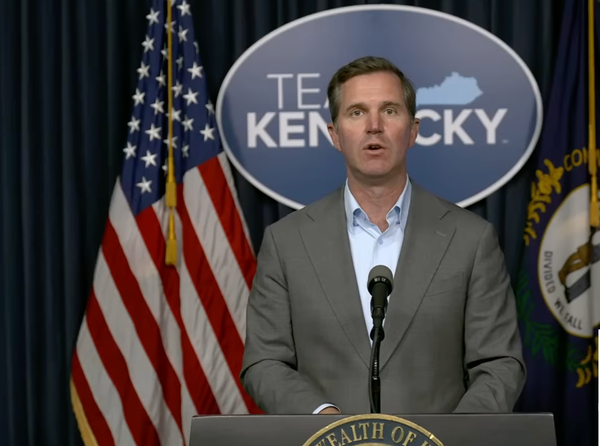
Governor Andy Beshear has reversed the 4% Medicaid cut set to go into effect August 1st, citing $781 million in unbudgeted surplus.
"I'm Shay McAlister, and this is Shay Informed: an independent, ad-free platform dedicated to honest journalism with compassion and clarity.
Are you new here? Sign up for the free weekly newsletter or subscribe to support our mission and access behind-the-scenes content, podcasts, and in-depth stories reserved for paid subscribers.
Gov. Andy Beshear announced Wednesday that Kentucky will not move forward with the 4% Medicaid provider rate cut set to take effect Aug. 1- reversing a reduction that had threatened residential care, day programs, and community-based services for adults with intellectual and developmental disabilities across the state.
The reversal is being funded by an unbudgeted $476 million budget surplus and more than $350 million in unexpected corporate income tax payments, for a combined $781 million the administration says became available after the state's official December 2025 revenue estimate- which had projected a $156 million shortfall.
Of that money, Beshear said he will apply $255 million to close the Medicaid gap and reverse the rate cut, close a separate funding gap for existing Michelle P. Waiver slots, add $4 million to the senior meals program for fiscal year 2027, and deposit the remaining $400-plus million into the state's Budget Reserve Trust Fund.
"Thanks to strong fiscal management by my administration and an economic surge for the state late in the fiscal year, we have more than $781 million in surplus funds available right now to correct mistakes made by the General Assembly," Beshear said.
The announcement follows months of advocacy from residential providers, including Louisville-based Day Spring and Dreams with Wings, whose leadership had said they could not identify budget language requiring the cut and had pressed both the Governor's office and General Assembly leadership for an explanation. A Kentucky Disability Waiver Town Hall and Capitol rally on July 17 was part of that advocacy push.
 Shay McAlister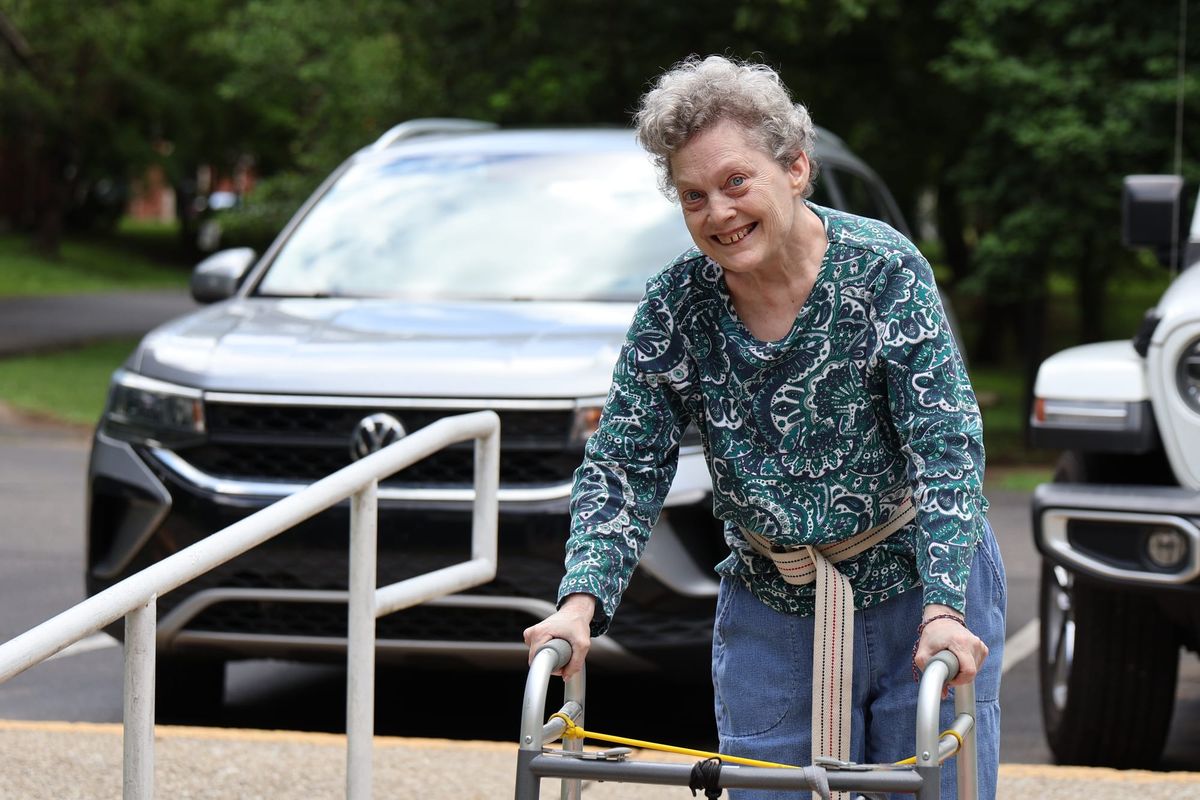
I spent time on the ground with both organizations while this fight was playing out. At Day Spring, that meant walking the campus with CEO Lauren Hays past residents playing Uno and coming home from day programs, and talking with Tim Baird, who's lived in the men's house for 15 years, by his scrap-metal pile out back.
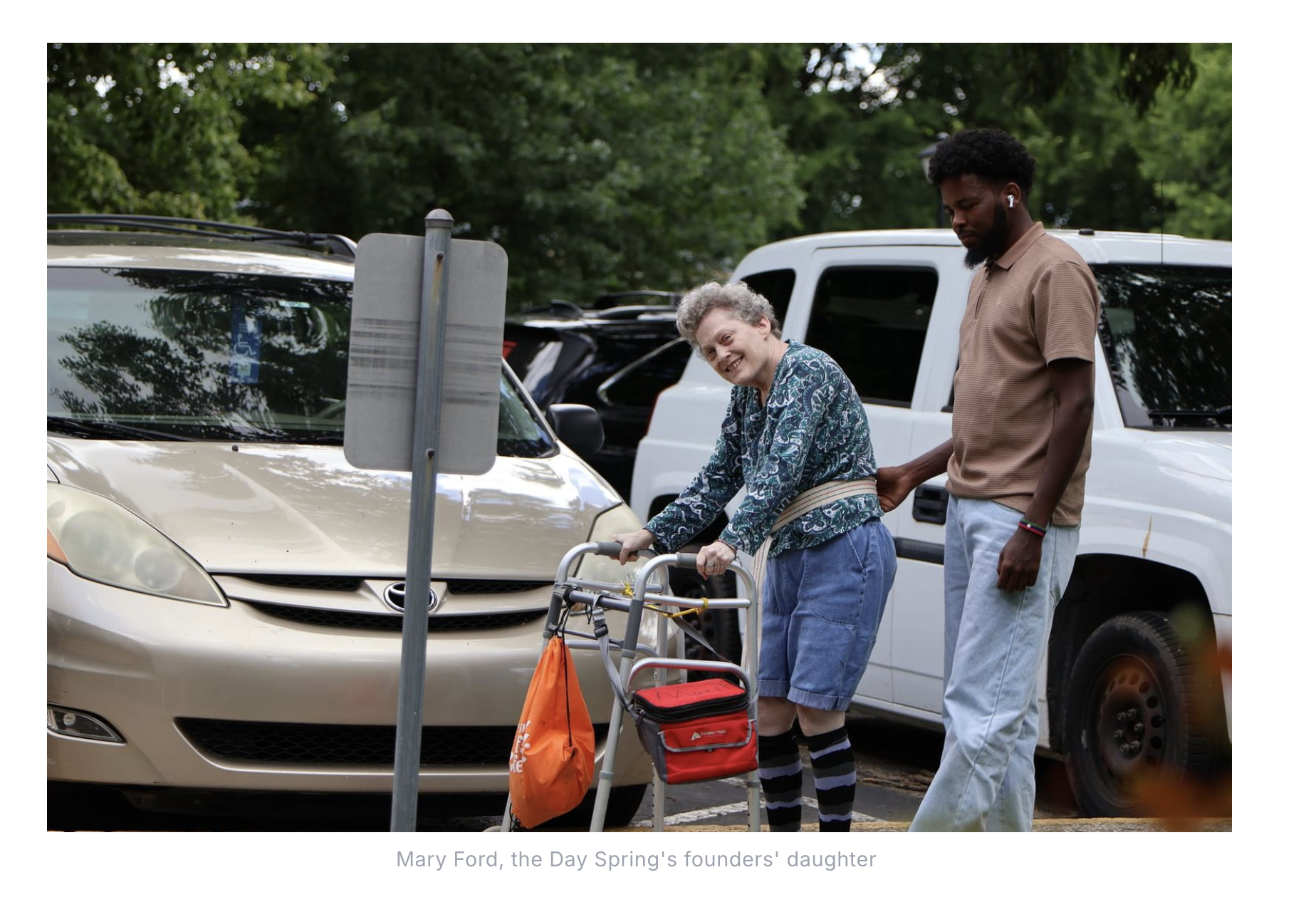
When I asked him what he thought about the state possibly pulling funding that supports the place he calls home, he didn't hesitate: "Oh, good grief. They shouldn't." Mary Ford, the daughter of Day Spring's founders and its very first resident more than three decades ago, still lives there too- the reason the organization exists at all.
The dueling narratives go like this: Gov. Andy Beshear's administration says his original proposed budget fully funded Medicaid, and that changes made later- during the General Assembly's budget process- left a shortfall that forced the administration's hand on rates. Republican legislative leaders say that's not accurate, and that the GA gave the administration flexibility to protect priority services when making reductions elsewhere.
Dream With Wings Founder Jenifer Frommeyer read through both sides of the paperwork- a comparison, she said, that a policy staffer at the Kentucky Association of Private Providers put together for member agencies. "There was a stark difference in those," she said. "The legislators recommended the MCO [Managed Care Organization] cuts and that there was over a million additional dollars put into Medicaid. That isn't what was implemented, and there might be a good reason for that. I don't know that, but to me, that's confusing."
That confusion tracks with what an independent comparison of the two budget documents shows: the enacted budget's Medicaid Benefits appropriation for FY 2026-27 is actually higher than what Beshear's own original executive budget proposed- by roughly $1.4 billion. Buried elsewhere in the budget is a contingency provision that would let the administration draw up to $290 million specifically to maintain Medicaid's "current service levels,"- but only if the administration formally requests it. Day Spring CEO Lauren Hays had come across a version of this same figure on her own. Nobody, she said, had explained to providers why that money wasn't simply flowing through.
"It really doesn't matter who's right or wrong. Who cares who's right or wrong, whose budget was better?" Hays said, "The answer is just- how do we continue these services."
For families, the Medicaid waiver program isn't abstract. It's the answer to a question every parent of a child with IDD eventually asks.
"What happens when I'm no longer here to care for my aging son or daughter?" is how Hays frames it. Jenifer Frommeyer, whose 38-year-old son Derek has Down syndrome, lives the other side of that question. Derek still lives at home with her, not because there's no need for a residential slot, but because there isn't one: "We're healthy, so the only way we can get a slot is to have a doctor say we're not capable of caring for him," she explained. The waiver system prioritizes emergency and crisis placements over healthy families who'd simply prefer their adult child have an independent life while everyone is still around to enjoy the transition.
Both providers pushed back on the idea that scaling back community-based services saves money by shifting the burden back to families. Frommeyer noted that many parents of people with IDD can only stay in the workforce because day programs and community living supports exist. "We will be taking people out of the workforce," she said. "We could be forcing people into other ways to make a living... or be dependent on governmental benefits that could be working and would rather work."
Last week, I asked The Cabinet for Safe and Healthy Families for comment on this story. Staff responded. When I referenced that response as coming from "the Governor's office," his press secretary reached out asking me to correct it- that statement, they said, came from the cabinet, not from him. Fair enough. So I asked directly: did the Governor's office have anything to add, or a different answer than the cabinet that ultimately reports directly to him? His press secretary deferred back to the same statement CHFS had already given me.
Why the Governor's office wouldn't answer questions directly last week, but stood front and center as the face of the fix this week, I can't say.
What I do know is what the people most affected by this told me: they're grateful the money was found. And they feel like political pawns.
Like what you see? Learn more about Shay Informed here! This is honest journalism with compassion and clarity.