"Prove it to us": Inside the fight over a 4% cut that could reshape life for Kentuckians with disabilities
– 13 min read



Louisville nonprofits serving Kentuckians with intellectual and developmental disabilities say they can't get a straight answer on who's really behind the cut- or why it's their funding on the chopping block.
"I'm Shay McAlister, and this is Shay Informed: an independent, ad-free platform dedicated to honest journalism with compassion and clarity.
Are you new here? Sign up for the free weekly newsletter or subscribe to support our mission and access behind-the-scenes content, podcasts, and in-depth stories reserved for paid subscribers.
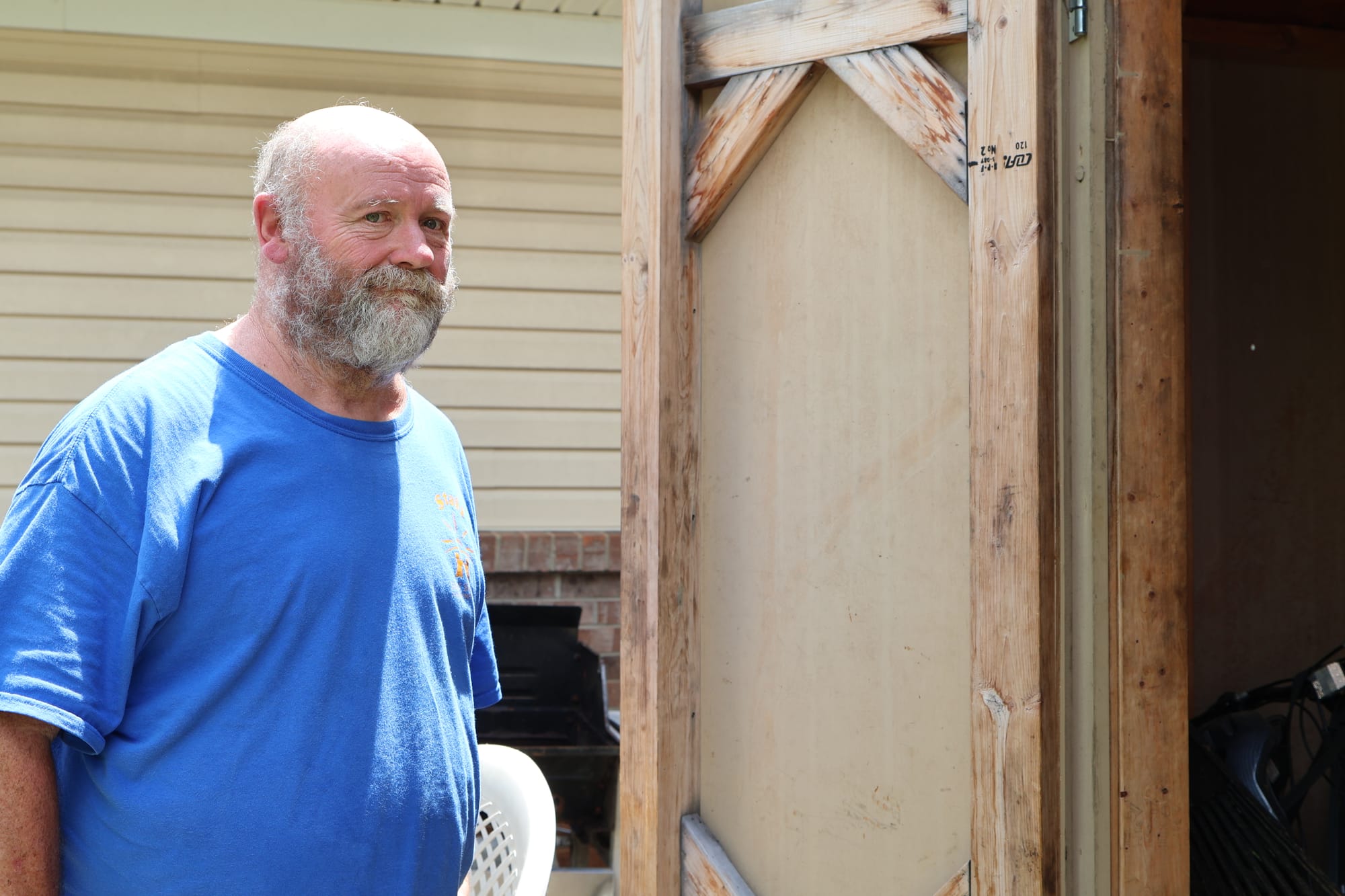
At Day Spring, a 12-acre campus of group homes and supported apartments in Louisville, Tim Baird has lived in the men's house for 15 years. Before that, he lived with his parents for nearly 50. He scraps metal for extra cash, gets driven to buy lottery tickets by staff he considers friends, and just celebrated a birthday with ostrich meat on his pizza. When I asked if he'd ever live anywhere else, he didn't hesitate.
"Nope," he said. "This place is it."
That certainty- a home, a routine, a community- is exactly what's on the line in a budget fight that neither the people living it nor the people funding it can fully explain.
Starting Aug. 1, Kentucky is reducing Medicaid reimbursement rates by 4% for dozens of provider types, including the 1915(c) waiver programs that fund residential and community-based services for Kentuckians with intellectual and developmental disabilities. For nonprofits like Day Spring and Dreams with Wings, that money isn't a line item among many- it's close to the only funding stream they have.
"We are the only program of all the programs that are being cut that only have a funding stream of Medicaid," said Jenifer Frommeyer, founder and executive director of Dreams with Wings, which provides residential support, day programs, and supported employment to people with intellectual and developmental disabilities across the Louisville area. "Everybody else has multiple other funding streams they can draw from... 4% is 4%. We have nowhere else to draw from."

For Day Spring, a 4% cut works out to roughly $130,000- a six-figure loss for an organization that already has to fundraise about $450,000 a year just to break even. CEO Lauren Hays said the money funds frontline staff who earn between $14 and $19 an hour doing what she calls "superhero-level work"- medication management, transportation, help with daily living, all of it around the clock.
"Nobody's getting rich off it," Hays told me as we walked the Day Spring campus, past residents playing Uno, walking with their families, and coming home from day programs. "The reimbursement rate- we cut it close."
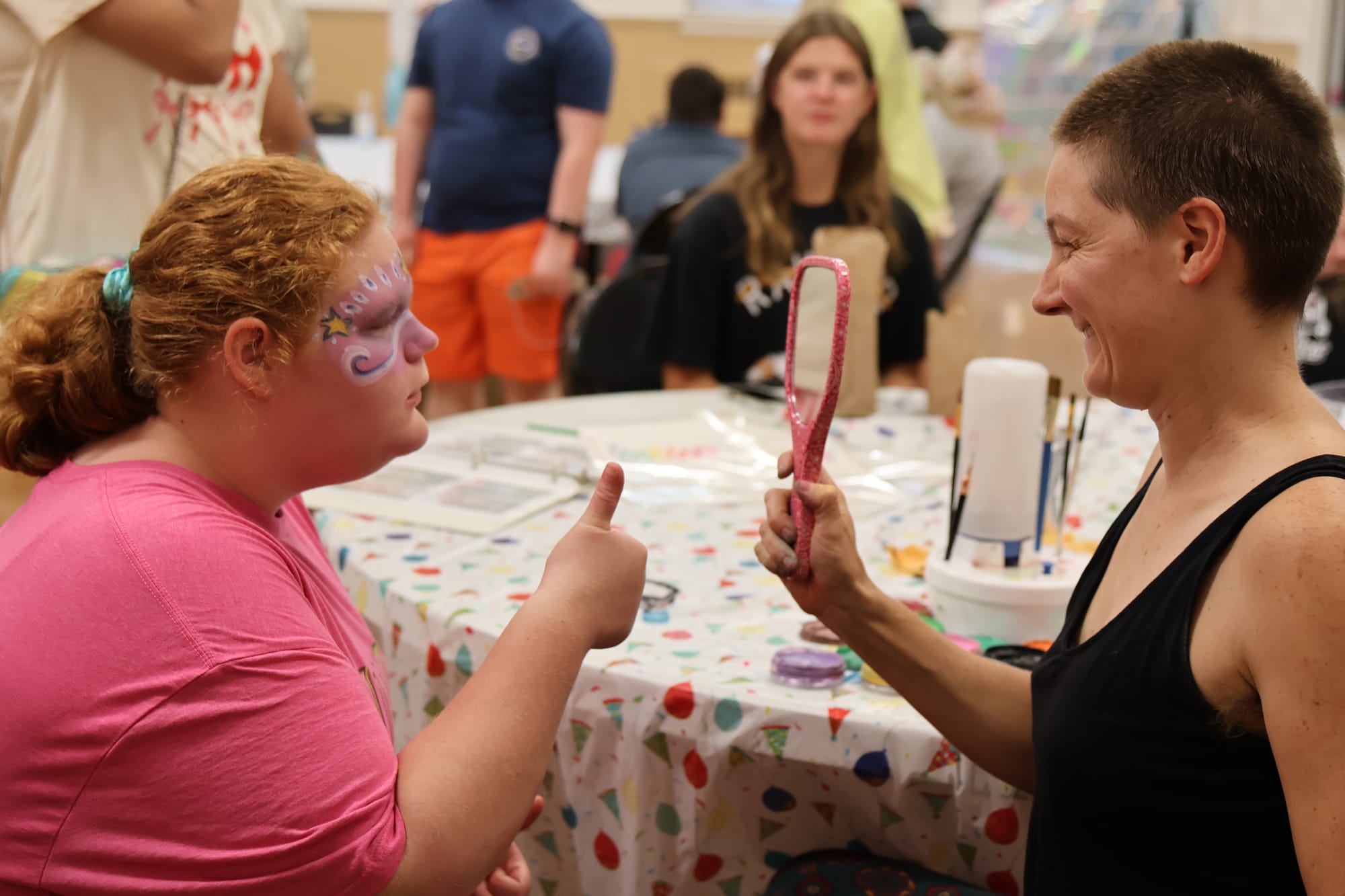
I met Jenifer Frommeyer at Dreams with Wings' summer camp, in the middle of what she called "organized chaos." Staff and volunteers were running a summer carnival- face painting, a game of Connect Four, a magic show, and a lot of music. On paper, it looks like any other summer camp. Kids also head out into the community- to the movies, to splash parks and public pools, to putt-putt- ordinary summer stuff that, for a lot of these campers, isn't something they can just show up to on their own.
That access doesn't happen by accident. Dreams with Wings hires a seasonal staff- counselors, camp coordinators, one-on-one aides- specifically to make it possible, at ratios as tight as one counselor for every two or three kids for campers who need more support. It's the kind of experience neurotypical teenagers take for granted and one that, without dedicated staffing, would simply be out of reach for a lot of these kids. Medicaid reimbursement is what pays for that staff.

It's worth understanding what that reimbursement rate pays for, because both women say the public conversation skips over it. Residential support reimburses at roughly $150 a day per person, and that money covers support workers' wages. It is not, providers stress, a payment that pads administrative budgets. It is the wage of the person who is physically present at 2 a.m. if someone needs help.
At Dreams with Wings, that math is complicated further by something few outside the field know exists: the provider tax. Every month, Frommeyer's organization is billed roughly $14,000- a state tax on the Medicaid services it provides, which Kentucky then uses to draw down federal matching dollars at a roughly 70-30 federal-to-state split.
"So by cutting programs, they're going to lessen the funding they have to draw down federal dollars," Frommeyer said. In other words, a cut to what providers bill doesn't just shrink the state's obligation- it can shrink the federal match that flows in behind it, a dynamic that complicates any simple "this saves the state money" argument.
Ask either woman who's responsible for the cut, and you get the same answer: nobody will say, clearly, on paper, why this specific line item was the one that got trimmed.
"There's been little to no communication on why," Hays said. When early advocacy around the near-closure of the Lee Specialty Clinic got that funding restored last month, providers assumed a similar reversal was possible for the waiver cut. Instead, silence. "There has been little to zero communication since the advocacy campaign at the Capitol for the Lee Specialty Clinic," Hays said. "That was the last formal time that I have heard any communication about trying to save services."
 Shay McAlister
The dueling narratives go like this: Gov. Andy Beshear's administration says his original proposed budget fully funded Medicaid, and that changes made later- during the General Assembly's budget process- left a shortfall that forced the administration's hand on rates. Republican legislative leaders say that's not accurate, and that the GA gave the administration flexibility to protect priority services when making reductions elsewhere.
Frommeyer has seen both sides of the paperwork- a comparison, she said, that a policy staffer at the Kentucky Association of Private Providers put together for member agencies. "There was a stark difference in those," she said. "The legislators recommended the MCO [Managed Care Organization] cuts and that there was over a million additional dollars put into Medicaid. That isn't what was implemented, and there might be a good reason for that. I don't know that, but to me, that's confusing."
That confusion tracks with what an independent comparison of the two budget documents shows: the enacted budget's Medicaid Benefits appropriation for FY 2026-27 is actually higher than what Beshear's own original executive budget proposed- by roughly $1.4 billion. Buried elsewhere in the budget is a contingency provision that would let the administration draw up to $290 million specifically to maintain Medicaid's "current service levels,"- but only if the administration formally requests it. Hays had come across a version of this same figure on her own. Nobody, she said, had explained to providers why that money wasn't simply flowing through.
Frommeyer, for her part, isn't interested in litigating who's technically right. "Part of me thinks... we're being used as political pawns." Hays put it more bluntly still: "It really doesn't matter who's right or wrong. Who cares who's right or wrong, whose budget was better? The answer is just- how do we continue these services."
Asked directly why the administration believes the cut was necessary, a spokesperson for the Cabinet for Health and Family Services pointed to the gap between what he proposed in January and what the General Assembly ultimately passed:
"Team Kentucky believes health care is a basic human right, which is why in January Gov. Beshear put forward a balanced budget that fully funded Medicaid; funded the needs of the Department for Community Based Services; maintained both the full funding and full services for critical providers across Kentucky; expanded the number of Michelle P. Waiver slots for families of children with autism; and provided the dollars needed for senior meals."
The administration's account is more specific than the general "he said, they said" framing providers have been getting: it says the General Assembly's budget tied more Medicaid dollars to specific legislative mandates passed between 2020 and 2025- adding up to $6 billion in new costs, by the administration's count- without allocating additional dollars to cover $690 million in state General Fund money the administration says is needed just to continue current services and absorb rising health care costs, inflation, and higher projected service use. The result, per the Governor's office, is a Medicaid budget short by $1 billion.
On the contingency fund- the mechanism both Hays and this reporting had identified as a potential source of the missing money- the Governor's office offered a detail that complicates the picture further: "The contingency funds referenced in the legislature's budget total roughly $290 million, but the General Assembly must approve the use of these funds before Medicaid can access them."
The administration's bottom line: "Medicaid is left with few options to address the significant shortfall and is forced to implement rate reductions, eliminate optional services, and/or reduce program enrollment... we recognize the pain these required cuts are causing families, which is why Governor Beshear and his administration repeatedly warned the General Assembly about the harm this avoidable shortfall would cause and is encouraging Kentuckians to contact their legislators," who return to session in January.
I also reached out to media contacts for GOP leadership in both the Kentucky House and Senate for comment on the Medicaid Benefits appropriation, the contingency fund, and the administration's claim that $6 billion in unfunded legislative mandates contributed to the shortfall. A spokesperson for Senate leadership said they were not commenting on this story. A spokesperson for House leadership acknowledged the request but had not provided answers as of publication. This story will be updated if that changes.

To understand what's at stake, it helps to understand why community-based waivers exist in the first place- and both women trace it back to the same thing: getting people out of institutions.
Day Spring was founded by the Ford family. Their daughter has an intellectual disability, and as they aged, they wanted a different future for her. "We don't want our daughter living in an institution," Hays said, describing the founding philosophy. "That was the whole philosophy behind agencies" like Day Spring. The property gives adults with intellectual disabilities the freedom to live a meaningful and fulfilling life, as independently as possible.
Mary Ford still lives at Day Spring today.

Frommeyer's own history in the field starts at the same inflection point. She founded Dreams with Wings in 2000, just as Kentucky was closing institutions like Panorama in Bowling Green, moving residents into community homes instead. The legal mechanism that made it possible is literally named for what it does: "They're called waivers because money was waved away from facilities to the community, so people could be served at a lower cost if they were able to be served that way," Frommeyer explained.
That "lower cost" framing matters, because it's central to the providers' argument that cutting waiver rates isn't saving the state money. Kentucky still operates some institutions like Hazelwood and Cedar Lake Lodge for people who need more acute medical care than community providers offer- and those facilities are reimbursed at a flat per-person rate regardless of what services a resident actually uses, a more expensive model than the fee-for-service billing community providers use.
"If the handwriting that people are projecting- that it's a 4% cut this year, 7% next year- is accurate," Frommeyer said, "there's going to be an explosion of problems that you're probably not ready to deal with." She says a squeezed system pushes people toward crisis-driven placements: hospitals, nursing homes, institutions or the streets.
 Shay McAlister
For families, the waiver isn't abstract. It's the answer to a question every parent of a child with IDD eventually asks.
"What happens when I'm no longer here to care for my aging son or daughter?" is how Hays frames it. Jenifer Frommeyer, whose 38-year-old son Derek has Down syndrome, lives the other side of that question. Derek still lives at home with her, not because there's no need for a residential slot, but because there isn't one: "We're healthy, so the only way we can get a slot is to have a doctor say we're not capable of caring for him," she explained. The waiver system prioritizes emergency and crisis placements over healthy families who'd simply prefer their adult child have an independent life while everyone is still around to enjoy the transition.
Both providers pushed back on the idea that scaling back community-based services saves money by shifting the burden back to families. Frommeyer noted that many parents of people with IDD can only stay in the workforce because day programs and community living supports exist. "We will be taking people out of the workforce," she said. "We could be forcing people into other ways to make a living... or be dependent on governmental benefits that could be working and would rather work."

For Tim Baird, none of the budget mechanics matter as much as the plain fact of what could be lost. Told the state was considering taking away funding that supports places like Day Spring, his reaction was immediate.
"Oh, good grief," he said. "They shouldn't."
Residential agencies, guardians, and self-advocates are gathering July 17 at the Capitol Annex for a Kentucky Disability Waiver Town Hall, followed by a rally on the Capitol steps- a strategy providers say worked once already, when advocacy pressure helped reverse the threatened closure of the Lee Specialty Clinic.
"It's an opportunity for us to make noise," Hays said, "very similar to how we went to the Capitol to shine a light on the potential closure of the Lee Specialty Clinic... We hope that our governor sees that we need him to be a hero, and we need him to recognize that there's another way."
Whether Friday changes anything remains to be seen. What's clear from providers on the ground is that the fight over whose budget is at fault has, so far, produced more confusion than answers- and Aug. 1 is coming regardless.
"1915(c)": is the section of federal Medicaid law that lets states offer home- and community-based services instead of requiring people to live in an institution to get Medicaid-funded long-term care. Kentucky runs several of these waivers; but two matter most for adults with intellectual and developmental disabilities.
Supports for Community Living (SCL) waiver: Funds residential services like group homes, staffed residences, supported apartments. This is the waiver Day Springs residents are on. It pays for round-the-clock or as-needed staff support in someone's actual home, at a reimbursement rate of roughly $150 a day per person, covering everything from medication management to transportation to daily living help.
Michelle P. Waiver: Funds everything outside of full residential care: day programs, supported employment, respite care, one-on-one community support. It's named for a Kentucky woman whose family sued the state over how long the SCL waiver's waitlist had grown, which led to this second, more flexible waiver being created as an alternative path to services. People on the Michelle P. waiver typically live at home or in an apartment with family support, and draw down a set number of hours a month- Frommeyer says up to 40- to use however fits their needs: a ride to a doctor's appointment, a day program, an aide for a few hours.
Like what you see? Learn more about Shay Informed here! This is honest journalism with compassion and clarity. Paid members can listen to my recent podcast on Kentucky's Medicaid crisis. Follow the steps below!