"He was sent home to die": A federal law, a state budget, and the fight to save Kentucky's only specialty clinic for people with disabilities
– 9 min read


A chain of decisions- from Washington to Frankfort- has left more than 1,300 Kentuckians with intellectual and developmental disabilities facing the loss of the only specialty clinic in the state equipped to care for them. Now the governor says he has a temporary fix.
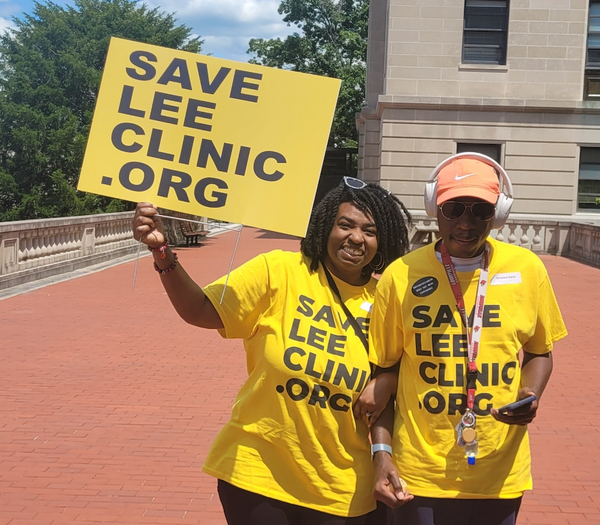
"I'm Shay McAlister, and this is Shay Informed: an independent, ad-free platform dedicated to honest journalism with compassion and clarity.
Are you new here? Sign up for the free weekly newsletter or subscribe to support our mission and access behind-the-scenes content, podcasts, and in-depth stories reserved for paid subscribers.
When Bruce Perfect's son Greg was placed in hospice care in 2015, doctors told his family there was nothing more they could do. Greg had been in and out of hospitals for years- vomiting, wasting away, struggling with severe behavioral issues that no physician could explain or treat. He was sent home to die.
Then, through what Bruce describes as God's grace, the Perfect family found the Lee Specialty Clinic in Louisville.
"When we finally found the specialty clinic, it was our last hope," Bruce told Kentucky lawmakers at a Medicaid Oversight Advisory Board hearing this week. Within a short time, Greg was diagnosed with Phelan-McDermid syndrome- a rare genetic condition whose hallmarks include severe vomiting and autism. Today, Bruce says, his son is not only alive but in great health, with a quality of life his family always prayed for.
Greg Perfect is one of more than 1,300 Kentuckians who rely on the Lee Specialty Clinic for care they simply cannot get anywhere else. Now, because of a chain of decisions that runs from Washington to Frankfort to a cabinet conference room, that clinic is facing the most severe cuts in its history- and the families who depend on it are fighting back.
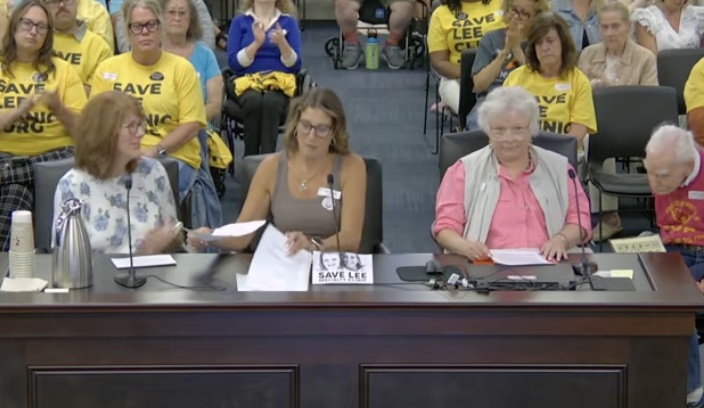
Wednesday's Medicaid Oversight Advisory Board hearing drew what observers described as the largest crowd ever to attend an interim committee hearing at the Capitol- and among the largest gatherings in the building's history. The people who filled that room were not lobbyists or political operatives. They were parents, caregivers, and advocates for some of Kentucky's most medically complex residents, many of whom cannot speak for themselves.
To understand what is happening to the Lee Specialty Clinic, the story begins in Washington.
On July 4, 2025, the One Big Beautiful Bill Act was signed into law. The sweeping tax and spending legislation reduced federal Medicaid funding by nearly $1 trillion over the next decade- the largest single reduction to the federal health safety net in American history, exceeding all previous Medicaid cuts combined.
The law makes changes across several areas: it creates new work and community engagement reporting requirements for certain Medicaid enrollees; moves eligibility redeterminations from annually to every six months; introduces new out-of-pocket cost-sharing for some expansion enrollees; and restricts the provider tax arrangements that states have long used to help fund their share of Medicaid costs.
The nonpartisan Congressional Budget Office estimated the law would result in approximately 11.8 million Americans losing health coverage by 2034. Combined with the expiration of enhanced ACA premium subsidies and other policy changes, that number could reach 17 million.
For Kentucky, where nearly one in three residents is covered by Medicaid, the projected impact is significant. Analysts at the Kentucky Center for Economic Policy estimate Kentucky stands to lose $38 billion in federal Medicaid funding over the next decade, with approximately 210,000 Kentuckians losing coverage. An independent analysis projected Kentucky would see the largest reduction in rural Medicaid payments of any state- a $12.3 billion decline that puts 35 rural hospitals at risk of closure.
Most of the law's financial reductions are phased in between 2027 and 2029. The new administrative requirements- more frequent eligibility checks, work reporting documentation- begin earlier.
With the federal framework in place, the Kentucky General Assembly acted during its 2026 legislative session.
House Bill 2 aligned Kentucky's Medicaid program with the new federal requirements. The legislation imposed community engagement requirements on expansion enrollees, mandated eligibility redeterminations every six months, and introduced copays for Medicaid services beginning in 2028. Governor Andy Beshear vetoed several provisions- arguing the copay structure would cost the state federal matching dollars and that requiring three months of documented work compliance before enrollment would create barriers for otherwise-eligible people. The Republican supermajority overrode those vetoes on party-line votes.
Separately, the General Assembly passed a state budget that reduced funding to the Department for Behavioral Health, Developmental, and Intellectual Disabilities- known as DBHDID- by 4% in State Fiscal Year 2027 and 7% in SFY 2028.
That state budget reduction, when translated into specific allocations by the Beshear administration's cabinet, resulted in a $4.5 million total cut to the Lee Specialty Clinic. The clinic's outpatient budget was set at $720,000 in FY27 and $697,500 in FY28- a reduction of approximately 89% from its prior funding level.
The Beshear administration said outpatient services "will unfortunately be scaled back significantly due to the cruel and senseless budget cuts enacted by the state legislature," adding that "the Governor is currently taking steps to prevent the worst, and his administration repeatedly warned the General Assembly about the painful impacts of these cuts." The statement also cited "chronic defunding from the federal government" as a contributing factor.
At Wednesday's hearing, a co-chair of the Medicaid Oversight Advisory Board offered a different lens on the situation. He noted that the operating contract for Lee Specialty Clinic had been eliminated by the administration, but that the services the clinic provides remain required covered benefits under the Kentucky Medicaid program. He further noted that the General Assembly had actually increased Medicaid benefit funding in the budget overall. His question to the administration: what is the plan to ensure patients can still access these covered services?
Bill Kinneil, president of the board of the Council on Developmental Disabilities and a Lee Clinic patient family member since 2014, made the numbers plain: "The cabinet has decided to cut our outpatient budget by 89%. We are a licensed outpatient clinic. Ninety-plus percent of the patients treated there are outpatient. So we will be basically taken away. I've had no explanation for why this was done to the clinic- just that it was done."
The question of who bears responsibility for that 89% figure has become a central point of dispute between the two branches of government. Legislative leaders have argued they gave the cabinet a budget and the cabinet made its own choices about how to allocate it- framing the Lee Specialty Clinic cuts as an executive branch decision, not a legislative one.
Governor Beshear pushed back on that framing Thursday with a pointed clarification: 89% of the relevant budget line is mandated by law, leaving the cabinet discretion over only the remaining 11%. In other words, the legislature's appropriation didn't leave enough room for the cabinet to protect the clinic even if it had wanted to. By Beshear's accounting, the only way to permanently fix Lee Specialty Clinic's funding is for the General Assembly to change the appropriation itself- not simply instruct the cabinet to spend differently.
Lee Specialty Clinic is not a general medical practice that also sees patients with intellectual and developmental disabilities. It is the only facility in Kentucky specifically designed and staffed to provide comprehensive care- medical, psychiatric, behavioral, dental, ophthalmology- to this population under one roof.
That distinction matters more than most people understand, families told lawmakers Wednesday.
Amy Cutter has a 25-year-old daughter named Kennedy who has profound autism and Primrose syndrome- a rare genetic condition so uncommon that Kennedy is one of only 136 known cases in the world. In 2021, Kennedy's behavioral crises escalated severely. She was attacking herself and family members. Amy took her to doctors, specialists, and emergency rooms across Kentucky. Nobody could help.
"Every hospital here- nobody could tell me what was happening. Nobody knows about Primrose," Amy said.
Then Kennedy had a grand mal seizure at her favorite restaurant. Lee Clinic accepted them as a crisis case.
"When we went to the Lee Center, we weren't trying to convince people that Kennedy's needs were different," Amy said. "They already got it. For the first time, we had access to medical care, psychiatry, behavioral support, therapies, and dental care- all under one roof. For our kids, that's huge, because they're scared to go to doctors. Every waiting room can be overwhelming. Every unfamiliar environment can trigger behaviors. Most people have never had to walk into a medical office wondering whether their child might hurt themselves, hurt someone else, or be judged. At Lee, we were understood the moment we walked through the door."
A mother of a patient named Jillian described a similarly years-long search- a daughter on 23 routine medications managing gastroparesis, apraxia of speech, and intellectual disability, with the complexity that standard medical practices are not set up to handle. "It will be extremely difficult for her to find a doctor that can handle her, much less help her," she said.
Several speakers at Wednesday's hearing raised a concern that extended beyond their own family situations: once Lee Specialty Clinic's specialized staff disperses, rebuilding will be extraordinarily difficult.
"Once staff at the clinic begins to leave for other positions- which they will have to do by necessity, because they have paychecks that need to be received- it's going to be very, very hard to reconstitute the operations of the clinic," said one long-time parent advocate. "It will not happen overnight. It will take a long period of time, and in the meantime, these 1,300 individuals and families are going to suffer severe hardship."
Kinneil was direct about where those patients would go- and what they would find: "There will be more than 1,000 people who will descend upon an unwilling and unprepared medical and dental treatment system. Hospitals turn away our people. They're turned away at Central State because they have dual diagnoses. This has gone on for decades."
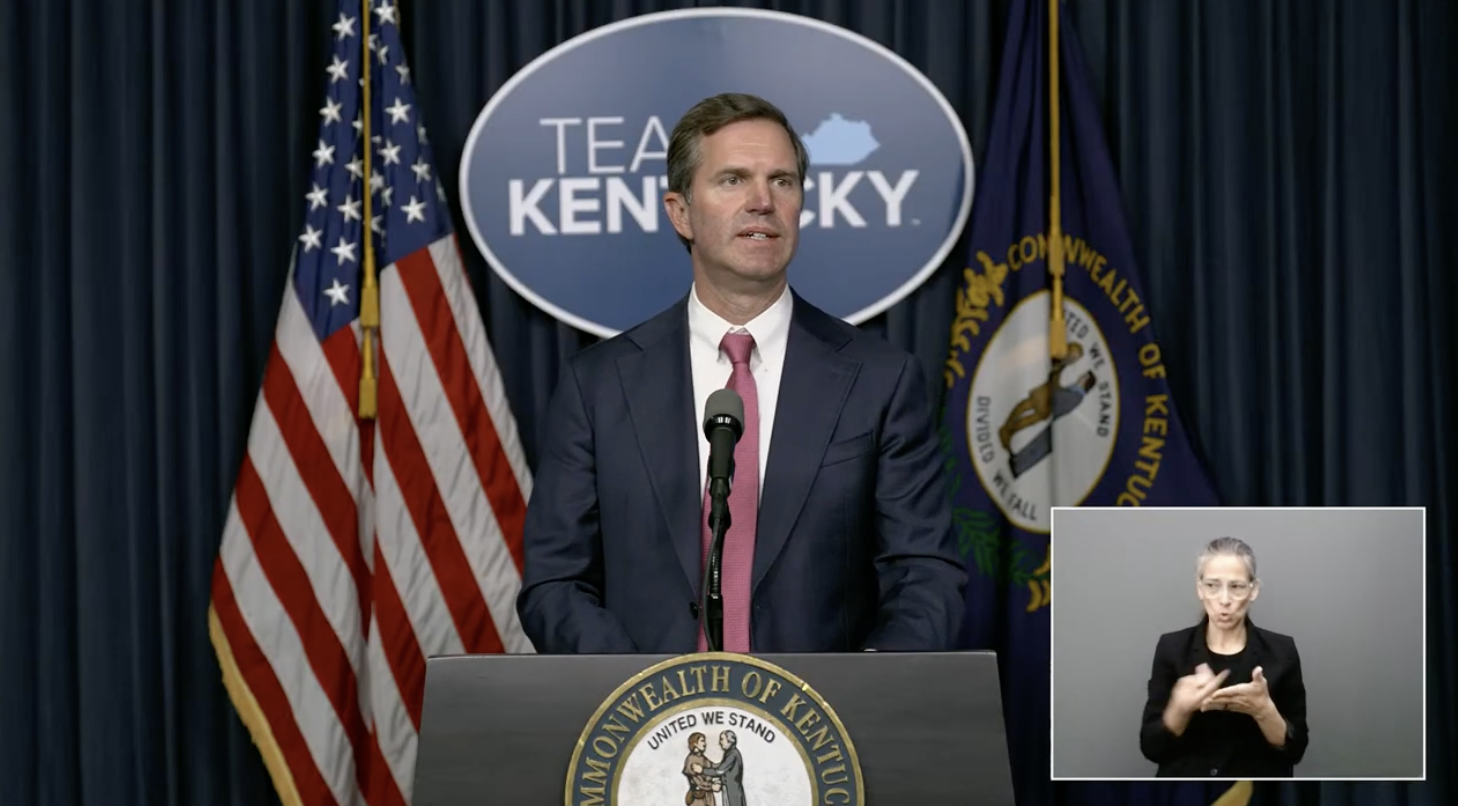
The hearing concluded with a signal that something was coming. Dr. Steven Stack, secretary of the Cabinet for Health and Family Services, acknowledged Wednesday that the budget as passed did not contain sufficient resources for all of the cabinet's work- and that movement was imminent. On Thursday, Governor Beshear delivered.
Beshear announced he is moving funding from the $400 million state Capitol annex renovation- a project not set to begin until 2029- to cover Lee Specialty Clinic through the first fiscal year. The move was made possible by the renovation's timeline: because that money would not have been spent this year, redirecting it now frees up dollars for the clinic without cutting anything currently in use.
Beshear was pointed in his framing of the decision. "Legislators have claimed I have flexibility to move funds to cover essential services, so I've taken those words as legislative intent, and I'm doing what's needed to help the families who rely on this clinic," he said. But he was equally direct about the limits of what he'd just done. "Let me be clear, this will be a Band-Aid solution. It would not permanently fix this problem, which we will face again if the legislature does not take action. So, Kentuckians need to call their legislators and ask them to provide the proper funding when they return in January."
Dr. Stack echoed that framing. "I want to thank Gov. Beshear for his work to take exceptional steps to find additional resources and we look forward to restoring the funding for Lee Specialty Clinic to its fiscal year 2026 level," he said. "But Kentuckians' advocacy remains critical."
The Beshear administration also released a broader accounting of what its original January budget proposal had included- and what the General Assembly cut. According to the administration, the governor's budget had fully funded Medicaid, maintained full funding for providers, expanded Michelle P. Waiver slots for families of children with autism, and provided dollars for senior meals. The General Assembly passed its own budget with what the administration described as more than $1.2 billion less than what essential services require.
"We don't need building projects nearly as much as disabled Kentuckians and their families need Lee Specialty Clinic to remain open, to have the CHFS cuts reversed and Kentucky's Medicaid program fully funded. The people who came to Frankfort yesterday weren't asking for special treatment. They were asking us to honor our commitments and protect services that allow their loved ones to live with dignity with people who love them", State Representative Lindsey Burk said.
For families, the one-year reprieve is relief- but not resolution. The federal funding reductions are still phasing in. The state budget cycle will return. And the long-term question of whether Kentucky will permanently sustain the only specialized care facility for its most medically complex Medicaid recipients remains in the hands of the General Assembly, which returns in January.
"The clinic is not a convenience," Amy Cutter told the board Wednesday. "It's a lifeline. And today that lifeline feels like it's being ripped away from all of us."
Bruce Perfect closed with a plea that the record crowd in that hearing room had come to echo.
"Please don't take our family's hope away by pushing our son out into a health care system that left him for dead- and could do the same to the over 1,000 patients who will no longer have access to care at Lee Specialty Clinic."
Like what you see? Learn more about Shay Informed here! This is honest journalism with compassion and clarity.