

A one-year-old U.S. citizen may be sent to Guatemala within days. A state lawmaker calls the lack of oversight "a dereliction of duty."
"I'm Shay McAlister, and this is Shay Informed: an independent, ad-free platform dedicated to honest journalism with compassion and clarity.
Are you new here? Sign up for the free weekly newsletter or subscribe to support our mission and access behind-the-scenes content, podcasts, and in-depth stories reserved for paid subscribers.
A Jefferson County judge has ordered a one-year-old U.S. citizen returned to the custody of her mother- a woman currently in ICE detention in Louisiana who pleaded guilty to a criminal charge after the infant was found with severe lacerations as a newborn. Once the child is handed over, sources familiar with the case say both will be deported to Guatemala.
Multiple sources say the transfer is expected within days.
"I really was trying to figure out how we as a state could be turning over a one-year-old to ICE, to be placed with the parent in a detention center, and then sent back to Guatemala," said state Rep. Tina Bojanowski, D-Louisville. "There were too many dynamics that don't have answers, and I still don't have answers."
What happened to the baby

According to Jefferson County court records, the child was born at home on August 2, 2025, and brought to Norton Women's & Children's Hospital the same day with lacerations across multiple parts of her body. Pediatric Protection Specialists, the hospital's child abuse assessment team, examined the infant and found her injuries "indicative of child physical abuse," according to the criminal citation.
The mother, Marleny Reynoso, was the only person who had been in possession of the child, according to court records. She told investigators she used scissors to cut the umbilical cord- but the citation states her injuries "are not consistent" with that explanation.
Reynoso was initially charged with attempted murder, first-degree criminal abuse, and second-degree wanton endangerment. Those charges were later amended, and she pleaded guilty to second-degree wanton endangerment.
Reynoso completed her criminal sentence in July and was transferred directly into federal immigration custody. According to ICE's online detainee locator, she is currently held at the South Louisiana ICE Processing Center. She has not seen her daughter since the day of the child's birth, under a no-contact order tied to the criminal case.
Rep. Bojanowski said she has struggled to square the severity of the original allegations with what's happening now. "Surely the judge would have seen the arrest record of the mother of the child," she said. Though she told me she isn't sure.
A reunification with no visits, no case plan, and no home study
The child has remained with the same foster family for approximately one year, since her discharge from the hospital's NICU as a newborn. That family is now fighting for answers- both from the Cabinet for Health and Family Services and from the Jefferson County Attorney's office- both of which are required to work in the best interest of the child.
A source with direct knowledge of the investigation and how Kentucky's child welfare cabinet handles reunifications explained that, typically, the cabinet does not reunify children with their parents without moving through a defined process. That process includes lifting any no-contact order, then supervised visits, then unsupervised visits, then a trial home visit, and finally a monitoring period of at least 60 days after a child is returned home.
"This is missing everything," the source said. "This mother has never once seen this child since the day she took that baby to the hospital last year. She's never once visited her. She has absolutely no bond with this child."
The same source said the cabinet does not agree with the reunification and objected to it in court, but it has no authority once a judge rules. "If they tell us to reunify a child, we have to reunify a child," the source said. "The cabinet is not on board with this. They have objected to this, but ultimately they've lost."
Rep. Bojanowski said she pressed the Cabinet for Health and Family Services for documentation and explanation but was given little of either. "It was just kind of the facts that there was a hearing," she said. She said that the cabinet "didn't think that they were going to be able to do anything else."
She said she has not been able to identify any process resembling a typical reunification. "I don't think that reunification happens without oversight afterwards," she said. "I think that that's a dereliction of duty."
To illustrate her disbelief, Bojanowski compared the case to a hypothetical without immigration enforcement involved. "Would the cabinet and the judge just reunite the baby with the mother without ensuring the mother is a safe parent? I don't think that would ever happen," she said. "But with ICE involved, and it's an immigrant who is undocumented- I don't understand how the judge could have made the decision to give the parent back."
The judge's decision

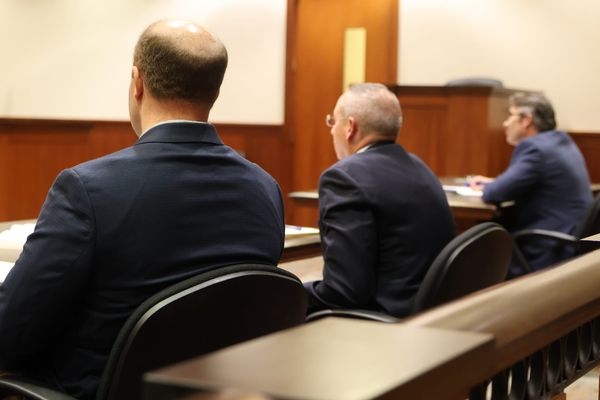
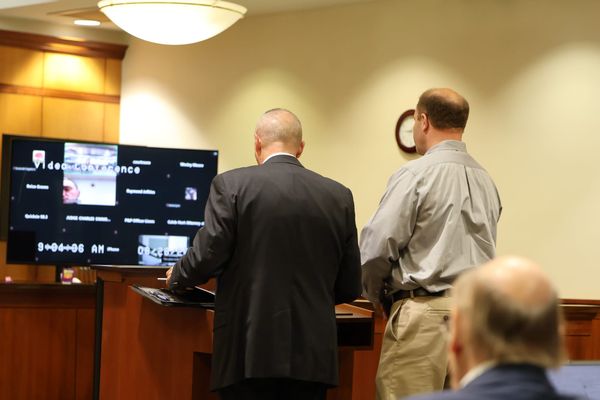
According to those familiar with the proceedings, Jefferson County Family Court Judge Angela Johnson ordered the child returned to the mother because the mother had not been given an adequate opportunity to work toward reunification.
The cabinet, in a statement, said the ruling was supported by the county attorney and guardian ad litem assigned to the case. The Jefferson County Attorney's Office disputed that characterization.
"The Cabinet for Health and Family Service's description of a confidential court proceeding is inaccurate," a spokesperson for the county attorney's office said. "The County Attorney's Office has no role in post disposition matters in Dependency, Neglect, and Abuse cases. As such, the County Attorney's Office deferred to the Guardian ad Litem who is an attorney appointed by the court to represent the best interests of the child."
Family court proceedings involving children are confidential under Kentucky law, which has limited what can be independently verified about the judge's specific reasoning and the case's procedural history. Rep. Bojanowski said that confidentiality has made her own efforts to advocate for the child difficult. "Family court cases are confidential," she said. "I can't just do an open records request and ask for it."
Without access to the order itself, Bojanowski said she's left assuming the judge weighed factors she can't see. "From my perspective, there's a child that is going to be sent to an ICE detention center, and then when the mom's deported, the child will go with her- without, from my knowledge, any oversight as to whether that parent is fit to be a parent."
Rep. Bojanowski said she has contacted the offices of U.S. Rep. Morgan McGarvey, the Jefferson County Attorney, and the Louisville mayor's office, with mixed results. "From one, I heard that there have been multiple calls regarding this situation," she said. "From another, I heard that they are going to make contact with the cabinet and see what they can find out. And from another, I heard that there are so many things that are confidential that there's nothing I can be told."
A spokesperson for U.S. Rep. Morgan McGarvey's office said Thursday: "We are aware of the situation and looking into it."
Bojanowski said state government has no jurisdiction over ICE, which limits what she or other Kentucky lawmakers can do directly. So, she's hopeful Kentucky's federal lawmakers will step in. "There needs to be time between the child reunifying with the parent and the child being sent out of the country," she said.
What's next
Rep. Bojanowski said she is hopeful someone will petition the court for a stay before the child is handed over. "I think right now it seems that only the judge could make a change," she said.
In a statement, the Cabinet for Health and Family Services said custody decisions are made by the courts, not the cabinet.
"Team Kentucky is committed to the health and safety of everyone in the commonwealth, especially vulnerable children under the state's care," the cabinet said. "Custody decisions- like this one- are made by the courts and not CHFS. CHFS must follow any orders issued by the court."
The cabinet added that the ruling was "supported by the county attorney and guardian ad litem assigned to the case". Guardian ad litem assignments in Kentucky family court cases are confidential, and I was unable to reach the guardian ad litem for comment.
According to my source, the foster family has been asked to hand over the child Monday morning, so she can be taken to the ICE detention center.
Like what you see? Learn more about Shay Informed here! This is honest journalism with compassion and clarity.
Written by

Comments