'This is not a reflection of who we are'; Network for Hope CEO breaks his silence
– 16 min read


What the public was told at a podium in Lexington and what the government wrote in its own decertification letter turn out to be two different stories. I spent the last month trying to fill the gap.
I'm Shay McAlister, and this is Shay Informed: an independent, ad-free platform dedicated to honest journalism with compassion and clarity.
This story is a 'Shay Original', which is available to paid subscribers only. You can become a member for $4.99/month and gain access to all of my work, including full interviews, behind-the-scenes content, and my weekly podcast.
Want to listen instead of read? This week's episode of One More Question with Shay McAlister goes inside the story. Access is at the bottom of this page!
At 10 a.m. on August 5th, Barry Massa's phone lit up with an email from a New York Times reporter.
I've heard from multiple sources that you've been decertified. You have until 2 o'clock to respond.
Massa, the CEO of Network for Hope, Kentucky's organ procurement organization, had a meeting scheduled with the Centers for Medicare & Medicaid Services that same afternoon- at 2 o'clock. There was a press conference scheduled for 3 o'clock, led by U.S. Health and Human Services Secretary Robert F. Kennedy Jr. Massa didn't know, until a reporter told him, that the federal government was about to strip his organization of its certification to procure organs for transplant in Kentucky and parts of Ohio, Indiana, and West Virginia.
"We were not given any advance notice," Massa told me, in his first interview since the announcement. "We were having a meeting with Medicare at 2 o'clock on Wednesday the fifth. The press conference was at three. But we got an email at 10 a.m. from a reporter at the New York Times that said, ' We've heard from multiple sources that you've been decertified'."
I asked him directly: do you believe the federal government called the New York Times?
"The only people that knew would have been people from the federal government," he said. "Do I know for sure that they are the people that informed the New York Times? I do not. I don't know how the New York Times found out. No idea. So I can't point the finger at anybody, but they obviously knew what was occurring." He said it wasn't the first time the New York Times knew about something happening with an organ procurement organization before the organization did.
"The fact that somebody else knows ahead of time before we do- it just doesn't feel like we have our due process," he said, "of going through the steps in the proper fashion."
He walked into that 2 o'clock meeting not knowing what was coming, though he told me he didn't feel good about it. Then they told him Network for Hope was being decertified and handed him the letter- just a few minutes before Secretary Kennedy's press conference was going public with the news. Two of his own staff found out before Massa had a chance to tell them himself. "I wish that would have been handled differently," he said.
At 2:45, he pulled his leadership team into a room to listen to the press conference live. At 4, he stood in front of his staff and told them what he knew.
“When an organization entrusted with the gift of life repeatedly puts patients at risk, the federal government has the duty to act, and that’s why we’re acting today,” Secretary Kennedy said at the podium. He called Network for Life a 'bad apple'.
What Secretary Kennedy said at that podium is not, on paper, why Network for Hope is being decertified. Not according to Massa, or the federal documents I've seen. I think that discrepancy is important. Because last month, nearly 1,500 Kentuckians pulled their names off of the registered donor list. For the first time in more than 30 years, there is a waitlist for cornea donation in our state.
"What is occurring now is not an accurate portrayal of what Network for Hope is doing. And that is why we are appealing," Massa told me.
Before the fight, it's worth explaining plainly what Network for Hope does.
"It's to facilitate and save lives through organ, tissue, and eye donation," Massa said of the organization's mission. Coordinators are on call every hour of every year. When a hospital calls about a potential donor, someone goes- not to make a medical decision, but eventually, if a physician declares that patient dead, to sit with a family and ask the hardest question there is. "We know they're going through one of their worst days," he said. "Unfortunately, with donation, it's very time-sensitive."
If the family says yes, then another team from Network for Hope gets involved. This team manages the process of organ recovery. "We don't do the recovery. That's what the physicians are for, and the surgeons are for. But we help out in that process," he said. "We're the ones who package and label those organs, and then sometimes we take them to wherever they're going."
As of July, Network for Hope helped facilitate about 200 organ donations. They had 350 people 'say yes', but not all of those cases progressed to donation.
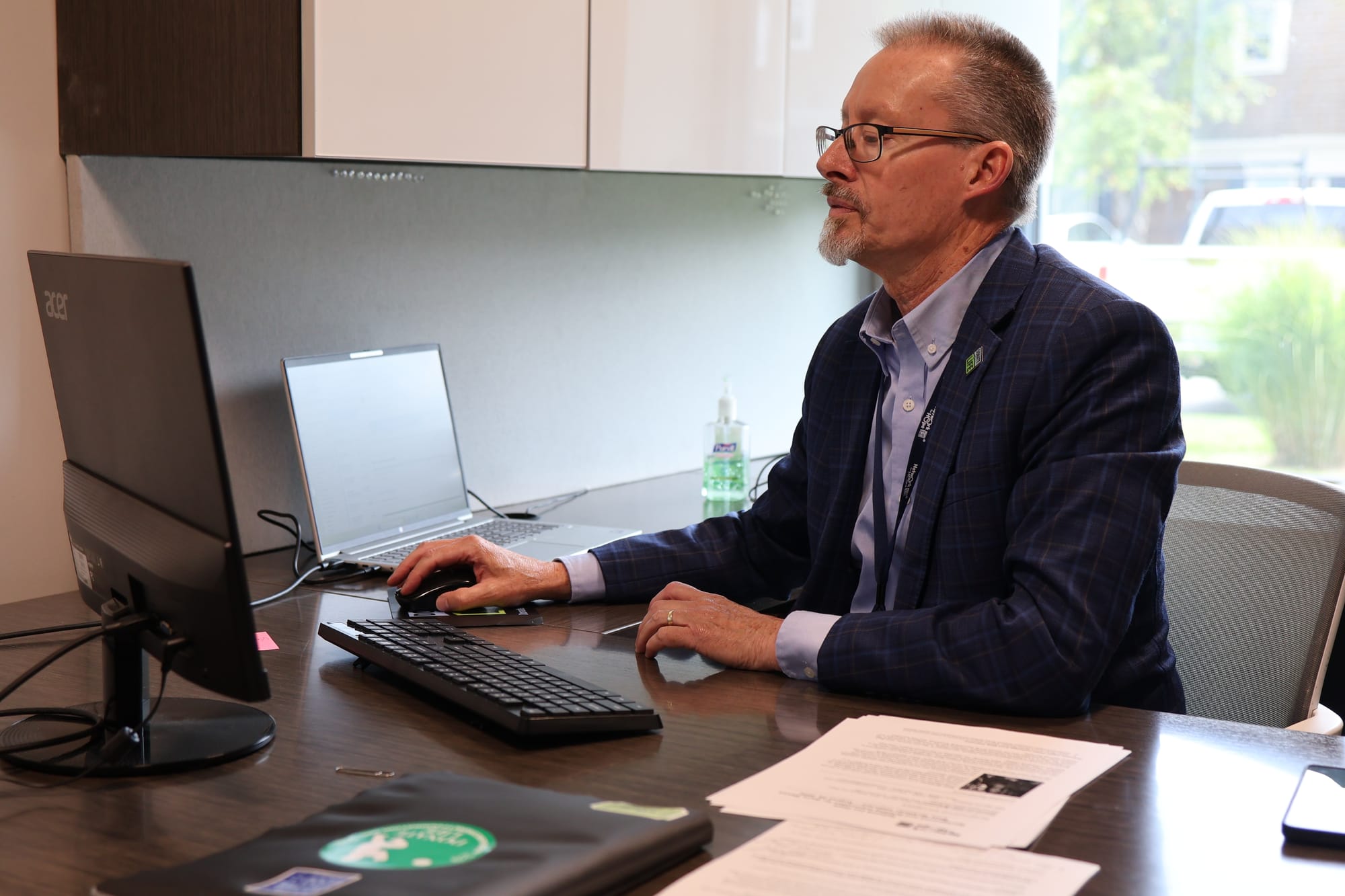
I also talked to one of the people on the front lines of Network for Hope.
Jennifer Love is on the family-facing side of the mission, as a Family Support Coordinator- meaning she takes that call from the physician and heads to the hospital."Donation starts with an open mind and an open heart," she told me. "These families truly are in one of the darkest moments, and my number one goal isn't to bring up donation immediately. My number one goal is to let them know: I'm here for you."
Love's job has nothing to do with brain-death protocols or donor suitability- the clinical questions now at the center of this fight. Her world is grief, and the fact that only about one percent of deaths happen in a way that allows for donation at all. That matters, because the two cases actually driving this decertification never touched her part of the process. The families involved had already said yes. What CMS says went wrong happened after that.
To understand why Massa is as frustrated as he is, you have to go back further than the August 5th press conference- to a case that popped up as a problem three years after it happened.