Kentucky's organ donation network faces federal decertification over safety failures

– 3 min read


Agency cites years of unresolved safety failures; Network for Hope says it will appeal and warns thousands of transplant patients could be affected.
"I'm Shay McAlister, and this is Shay Informed: an independent, ad-free platform dedicated to honest journalism with compassion and clarity.
Are you new here? Sign up for the free weekly newsletter or subscribe to support our mission and access behind-the-scenes content, podcasts, and in-depth stories reserved for paid subscribers.
Kentucky's organ procurement organization is losing its federal certification, and the fight over why is already underway.
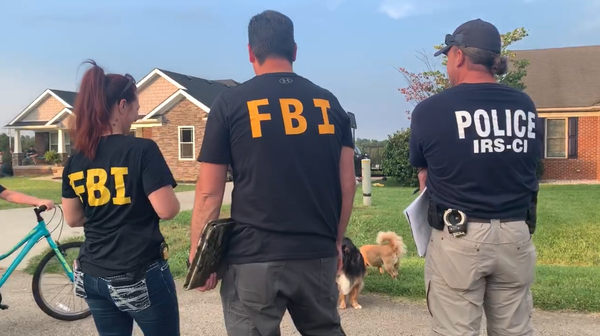
The U.S. Department of Health and Human Services (HHS) announced Wednesday that it's begun decertifying Network for Hope, the organization responsible for coordinating organ donation across Kentucky and parts of Indiana, Ohio and West Virginia. HHS says this isn't a snap decision- it's the result of multiple federal reviews that found the same patient safety problems showing up again and again, even after the organization was given chance after chance to fix them.
"Americans who choose to become organ donors deserve a system that honors their gift and protects every patient," HHS Secretary Robert F. Kennedy Jr. said, framing the move as part of a bigger push to hold healthcare organizations accountable.
So what exactly did federal regulators find? According to HHS, it's not a small thing. The department's Health Resources and Services Administration (HRSA) dug into 351 cases between 2021 and 2024 where organ donation had been authorized but, for one reason or another, never actually happened. Of those, 103- nearly 30%- had what HHS calls "concerning features." That includes 73 patients who showed neurological signs that should have ruled out organ donation in the first place. And in a detail that's hard to read past, HHS says the review raised questions about whether some potential donors may not have even been deceased yet when the procurement process started.
The agency also flagged a broader pattern: shaky neurological assessments, poor coordination with medical teams, questionable consent practices, and causes of death getting misclassified- especially in overdose cases.
Here's how HHS says things unfolded from there. In 2025, HRSA raised serious concerns and ordered the organization onto a corrective action plan with active monitoring. From there, HRSA and the Centers for Medicare & Medicaid Services (CMS) ran their own separate reviews- one checking whether the problems had actually been fixed, the other checking whether the organization still met the basic federal bar for Medicare certification. Both landed in the same place: not enough improvement, according to HHS.
"HRSA, through its oversight of the Organ Procurement and Transplantation Network (OPTN), worked closely with Network for Hope over the past year through intensive monitoring and corrective action to address serious patient safety concerns," said HRSA Administrator Tom Engels. "Despite those efforts, the organization did not demonstrate the improvements necessary to meet federal standards."
CMS Administrator Dr. Mehmet Oz put it more bluntly, saying the decision sends a message well beyond this one organization: "If you can't be trusted to safeguard patients and be responsible stewards of American taxpayer dollars, we'll find organizations that can."
HHS says a CMS review wrapped up in May 2026 and found the same quality issues kept popping up in core areas- donor evaluation, how adverse events get reviewed, basic administration. The agency is tying this decertification into a bigger reform push it's been rolling out, including new safeguards against organ allocation "line-skipping," an independently elected national transplant network board, a stronger system for reporting misconduct, and a tool that flags when organs get allocated outside the normal match list. Kennedy has also ordered every Organ Procurement Organization in the country to appoint a dedicated patient safety officer.
Network for Hope isn't taking this quietly. CEO Barry Massa released a statement saying the organization "strongly disagrees" with Kennedy's decision and plans to appeal it.
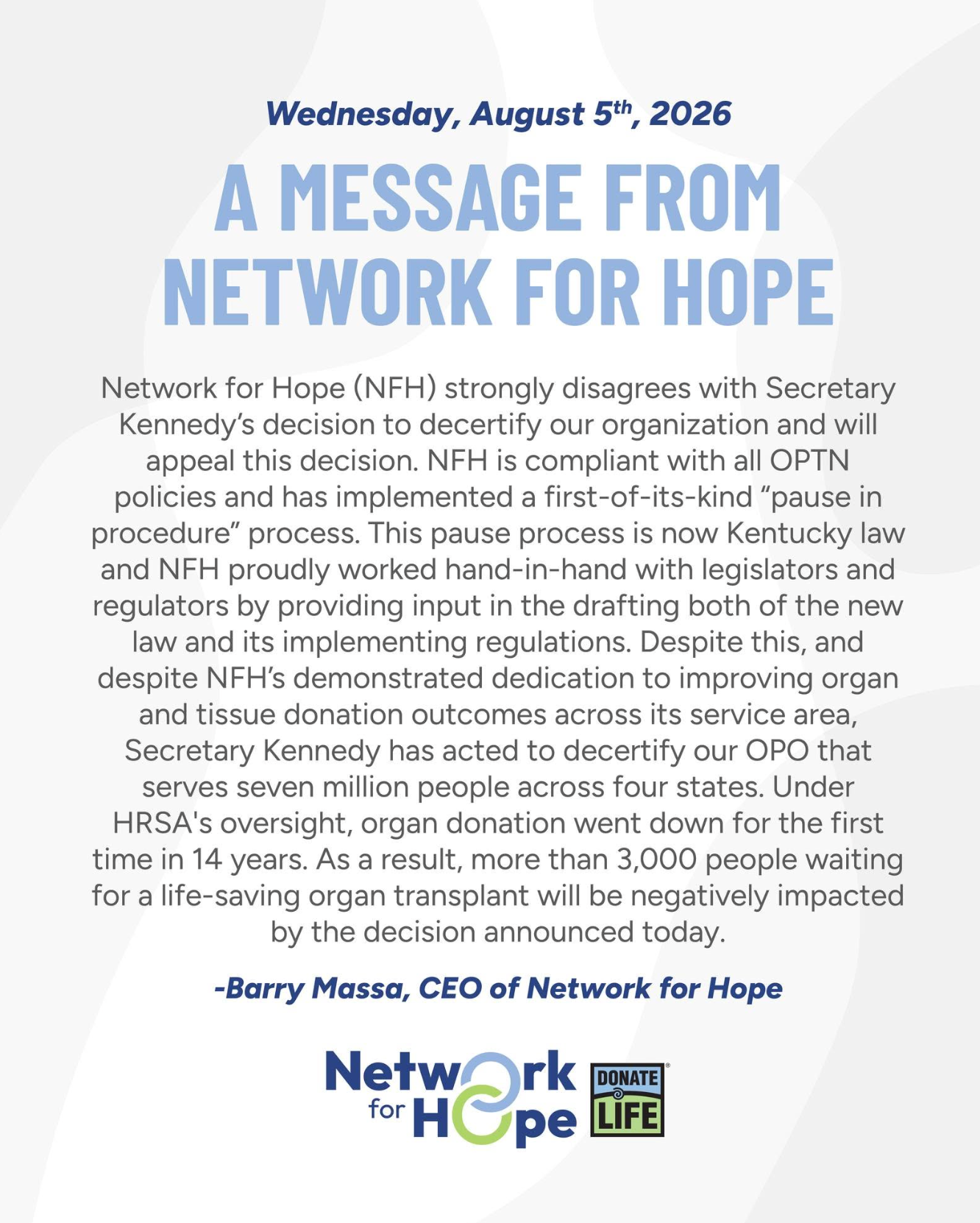
Massa says Network for Hope is fully compliant with OPTN policy and actually pioneered something called a "pause in procedure" process- one that's now written into Kentucky law, with Network for Hope's own input shaping both the law and the regulations behind it.
Despite that, he says, the federal government is now decertifying an organization that serves seven million people across four states. Massa also pointed to a statistic of his own: organ donation dropped for the first time in 14 years under HRSA's oversight. He warned that more than 3,000 people currently waiting on transplant lists will feel the impact of this decision.
So there are two very different stories here- a federal agency pointing to years of documented, repeated safety failures, and an organ procurement organization insisting it followed the rules and was actually making things better. What happens next, and how fast that appeal moves, remains to be seen- as does what this means in the near term for people in the region waiting on a transplant.
Like what you see? Learn more about Shay Informed here! This is honest journalism with compassion and clarity.