'They left us no choice': Grade A Recycling owner says UPS forced his hand after six months of waiting

– 7 min read


Owner of Grade A Recycling Sean Garber says the company that destroyed his business has failed the community it claims to care about.
"I'm Shay McAlister, and this is Shay Informed: an independent, ad-free platform dedicated to honest journalism with compassion and clarity.
Are you new here? Sign up for the free weekly newsletter or subscribe to support our mission and access behind-the-scenes content, podcasts, and in-depth stories reserved for paid subscribers.
Sean Garber was boarding a plane in Jacksonville when his CFO called on Noveber 4th of last year. He knew immediately something was wrong.
"She was in a horrible panic- a state I'd never seen her in before," Garber said. "She was crying, telling me there was an earthquake, the power was out. Things that just didn't make sense."
He asked her to go outside. That's when the plane rolled onto the property. He had her FaceTime him.
"I saw just a huge, huge ball of fire. People screaming and panicking."
Six months later, Garber is talking- not just about that day, but about what has happened since. Specifically, about UPS.
"We hear these generic statements that come from UPS on how deeply saddened they are and how they're here to help the impacted families. Well, I haven't, and nor has anybody else who has been impacted seen any of that," Garber said.
Garber has been vocal about the crash itself and its impact on his business and employees since November. What's different now is the lawsuit filed last week in Jefferson Circuit Court- and the frustration behind it.
This was not where he wanted to be. That point came through clearly in my conversation with him and his attorneys, Masten Childers III and Justin Peterson.
"There were plenty of lawsuits filed before we filed ours- months before," Garber said. "It was my intention to give UPS the ability to be a good corporate citizen."
Childers said he and Peterson started working the evening of November 4, and spent the following six months trying to get a resolution without going to court. Kentucky law gives them a one-year window to file. They waited as long as they could, the attorneys told me.
"We said: if UPS wants to do what is right, as they've said from the get-go, let's see if we can find closure sooner rather than later," Childers said. "The only thing I can say is that the breakdown of that effort has been established by the fact that we needed to file the lawsuits."
The attorneys could not reveal details from their conversations with UPS over the last six months. Only confirming they ultimately weren't going anywhere.
UPS has said publicly- repeatedly- that it is doing everything it can to help impacted families and businesses. Garber is done being polite about that.
"I haven't seen any of it. Nor has anybody else that has been impacted," he said. "So wherever that fictitious act is occurring, I would like to know where it is."
He said over 90 businesses were impacted by the crash. Part of Grade Lane is still closed. And through six months of what he describes as one-sided efforts to find resolution, UPS has continued to put out what he called "generic statements" and "frivolous statements" about how deeply saddened they are and how they're there to help.
"They continue to mislead the public, and they've left us no choice but to take this next step", Garger said.
15 lawsuits filed last week on behalf of victims of the UPS plane crash allege that Allianz- the insurance group covering UPS- encouraged victims to submit documentation and delay filing suit, then failed to negotiate meaningfully when it came time to settle. According to the complaints, Allianz representatives told the attorneys their standard position is that cases like these take three to six years to resolve.
 Shay McAlister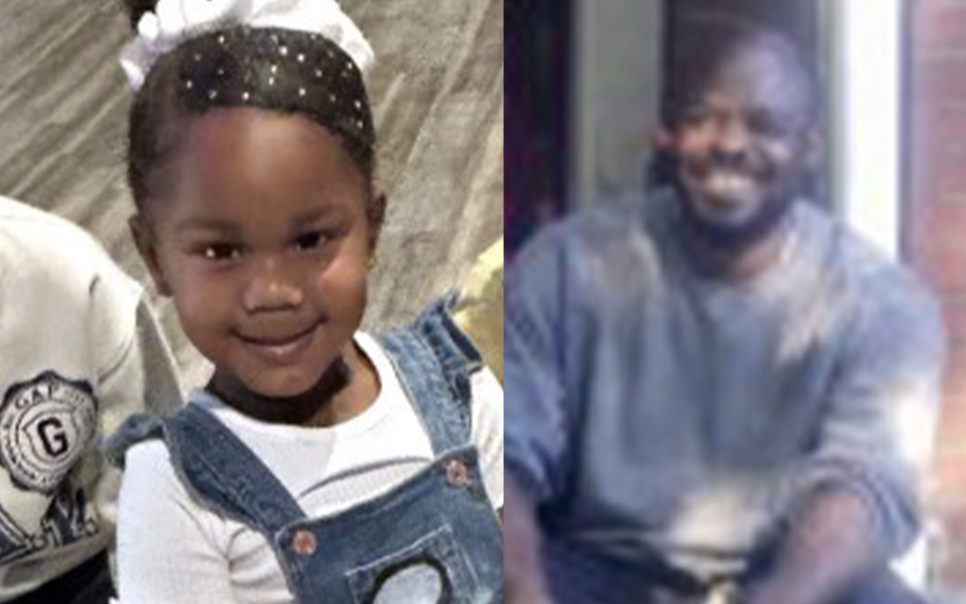
Garber's criticism of UPS goes beyond the response after the crash. He believes the company knew the risks before the plane ever left the ground.
"This is conscious negligence," he said. "They knew what they did. It's not just UPS leadership- the company is full of people that know what was happening that day and what was wrong with those airplanes."
He said UPS employees- people he's known in the community for years- have approached him on their own to acknowledge problems with the MD-11 fleet. "I can't tell you how many people have come up to us and made mention of the issues that were out there about these MD-11 airplanes."
The lawsuits back that up with specifics. According to the filings, Boeing issued a service letter as far back as 2011 warning MD-11 operators, including UPS, of known risks with the pylon assembly bearing races. UPS is alleged to have kept the planes on a standard maintenance schedule anyway, because the cost of more rigorous inspections would have made the aircraft too expensive to operate. According to the NTSB's preliminary report, fatigue cracks on the engine pylon assembly caused the left engine to separate from the wing during takeoff, sending the plane into the businesses along Grade Lane.
The aircraft had logged nearly 93,000 hours of flight time.
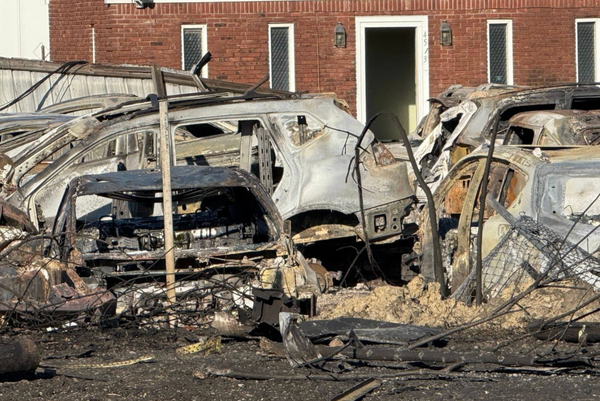
Grade A's main facility is still not operational. The fuselage, cockpit, landing gear, and tail of UPS Flight 2976 came to rest directly on the property. Environmental testing from the jet fuel contamination still isn't complete. And the site sits directly beneath Louisville Muhammad Ali International Airport's flight paths- meaning 20 to 100 UPS planes fly directly overhead every single day.
"You can just feel the tension from those airplanes," Garber said.
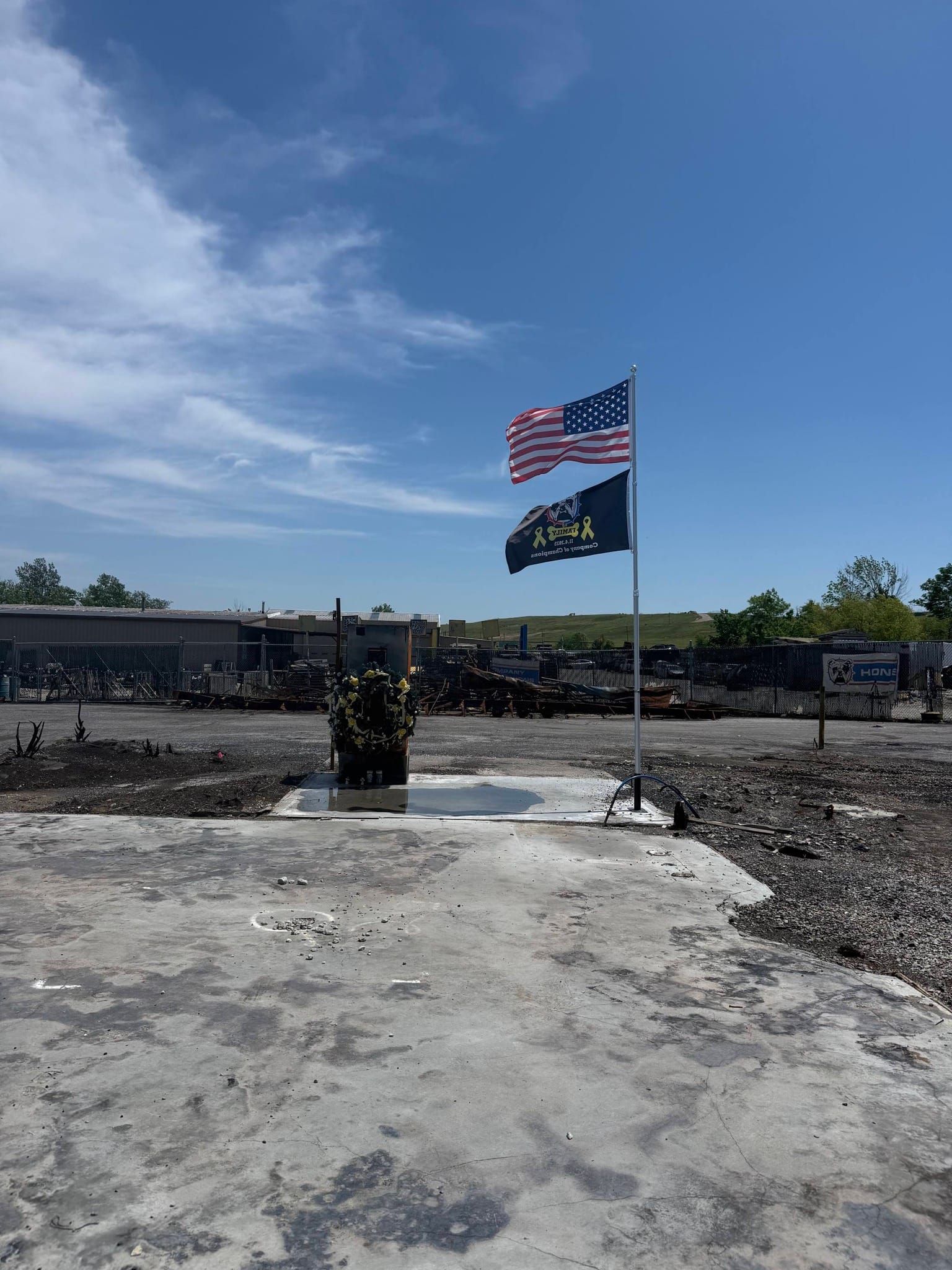
Fifteen people died on that property. There's a makeshift memorial around the facility's old ATM machine- burned but still standing - where community members have left wreaths and flags. Even some UPS employees have come out to pay their respects.
Despite all of it, Garber said, they haven't laid off a single employee.
Attorney Justin Peterson described what the Garber family built at Grade A as something beyond a business. "Very quickly we realized that what the Garber family had produced was a very close-knit family of employees and customers. The ones who lived absolutely have survivors remorse to a very disturbing degree."
Childers talked about the people who were on the ground that day- including multiple employees, customers and a three-year-old named Kimberly Asa, who was there with her grandfather Louisnes Fedon when the plane came down. Fedon survived the initial impact and tried to run with his granddaughter to safety, according to the wrongful death lawsuit filed by his family. He didn't make it.
"Not one of them thought only about themselves," Childers said. "They thought about the community, their family, their co-workers, their customers. It is one of the greatest honors I've ever had- to represent these people."
Garber said he hopes it doesn't go to trial. Childers noted that 99% of civil cases settle. The attorneys say the filing of a lawsuit doesn't end UPS's legal obligation to negotiate in good faith and they're counting on that.
"UPS still has a really good opportunity to do the right thing," Garber said. "That's all any of us are hoping for."
But he was clear about what doing the right thing actually means- not just compensation, but acknowledgment and accountability, and a commitment that the conditions that caused this crash never exist again.
"Being good yesterday does not get you a pass for today," he said. "When people don't take responsibility, that tragedy is likely to happen again. No other businesses destroyed. No other people die. That is our sheer focus."
The lawsuits filed this week rely heavily on the NTSB's preliminary report, which found that fatigue cracks in a critical engine-mounting hardware led to the catastrophic failure of UPS Flight 2976 on November 4, 2025.
According to the NTSB report, the left engine separated from the wing of the MD-11F shortly after the plane rotated for takeoff from runway 17R around 5:14 p.m. "A fire ignited near the area of the left pylon attachment to the wing, which continued until ground impact," the report states.
The plane managed to clear the blast fence at the end of the runway but never climbed higher than about 30 feet above ground level, according to data from the flight data recorder. The left landing gear struck the roof of a UPS Supply Chain Solutions warehouse at the southern edge of the airport. The aircraft then hit a storage yard and two other buildings, including a petroleum recycling facility.
All three crew members aboard the plane were killed, along with 12 people on the ground. Another 22 people on the ground were injured.
The NTSB has not released a final report or cause. The final investigative findings could take up to two years to complete.
A UPS spokesperson provided the following statement:
We remain deeply saddened by Flight 2976. Our focus continues to be on supporting those affected and working closely with the National Transportation Safety Board as the investigation continues.
Like what you see? Learn more about Shay Informed here! This is honest journalism with compassion and clarity.