'They have nobody': Louisville clinic serving Kentuckians with disabilities facing deep cuts
– 6 min read


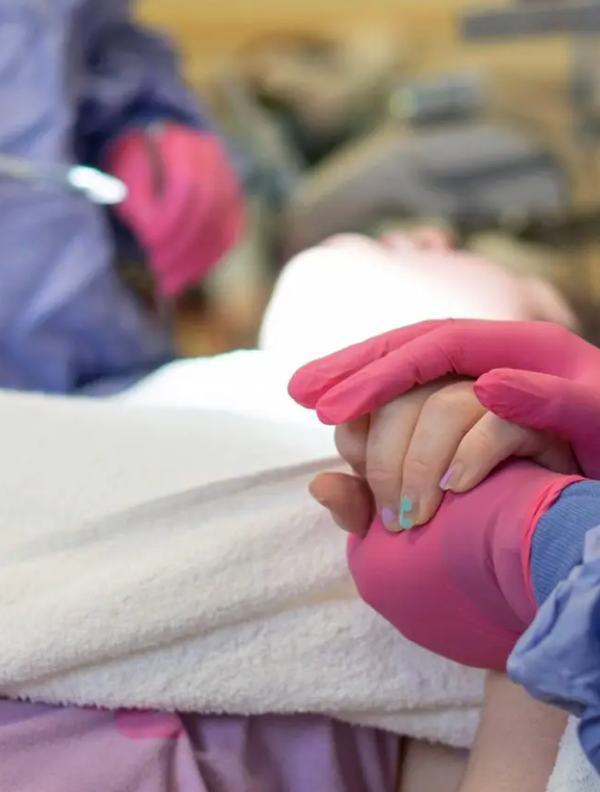
Lee Specialty Clinic a one-of-a-kind facility that offers something no one else does- compassionate health care for people with intellectual and physical disabilities.
"I'm Shay McAlister, and this is Shay Informed: an independent, ad-free platform dedicated to honest journalism with compassion and clarity.
Are you new here? Sign up for the free weekly newsletter or subscribe to support our mission and access behind-the-scenes content, podcasts, and in-depth stories reserved for paid subscribers.
More than 1,000 of Kentucky's most medically complex patients are set to lose their healthcare home, after staff at Louisville's Lee Specialty Clinic were told the facility is losing the vast majority of its funding- a cut the Beshear administration now confirms, and blames on the General Assembly's budget.
The Louisville clinic is a one-stop medical home for Kentuckians with intellectual and developmental disabilities. Dental care, primary care, psychiatry, OB-GYN, audiology, physical and occupational therapy, speech, behavioral health, a crisis center- all under one roof, all delivered by staff trained specifically to care for patients that most doctors' offices, frankly, turn away.
The New York Times profiled the clinic back in 2014, shortly after it opened, calling it an oasis of care for people with intellectual disabilities. The clinic's own mission statement doesn't mince words about why it exists: for years, physicians, dentists, hospitals, and emergency rooms have quietly told patients with IDD and their families to find care elsewhere.
Now, staff members tell me that oasis is on the brink of disappearing. They told me the source of the funding cut was unclear. But today I learned what's behind it- at least according to the Beshear administration.
On Thursday, employees were called into a meeting and told the clinic is losing roughly 80% of its funding- from about $7 million down to $2 million, according to one staff member I spoke with. The fallout, as it was described to them: more than half the staff will lose their jobs, and upwards of 1,000 patients will be discharged.
Discharge notices started going out Thursday night. Patients were told discharges would begin on Monday. "With nowhere, nowhere to go," one staff member told me.
I spoke with three clinic employees who agreed to share what they know. All three were emotional but clear-eyed about why they were talking to me.
"If our clinic closes, I'll be fine, but my patients won't be," one said.
According to staff, entire departments are being eliminated- dental, physical therapy, occupational therapy, speech, and the crisis center that serves patients in psychiatric emergencies. One employee, a 10-year veteran of the clinic, told me she fears as few as eight staff members could be left.
"You can't operate with eight people to run a dental clinic, a medical primary care, and a psychiatry," she said. "You need a team."
What frustrated them most: nobody would tell them why. Staff said the explanation they received was vague- the cuts were attributed to Medicaid and Medicare funding, and decisions made "from the top."
"We need to know where to start, and we're not getting any information whatsoever," one staff member told me. She wants to fight back. She wants to ask for the funding to be returned. She doesn't know where to start.
So I asked the state. And the state answered.
In a statement, the Cabinet for Health and Family Services confirmed the cuts- and pointed the finger squarely at the General Assembly's budget.
According to the Cabinet, the legislature reduced the budget for the Department for Behavioral Health, Developmental, and Intellectual Disabilities by 4% in state fiscal year 2027 and 7% in fiscal year 2028. That, the Cabinet says, forces a $4.5 million total reduction for the Lee Specialty Clinic.
"While the Lee Specialty Clinic will continue providing services to residents at Bingham Gardens Intermediate Care Facility, its outpatient services will unfortunately be scaled back significantly due to the cruel and senseless budget cuts enacted by the state legislature," the statement reads.
A few important details from the Cabinet's response:
The clinic is not closing entirely. It will keep serving residents of Bingham Gardens, the intermediate care facility it's connected to. The outpatient side- the dental program with its 200-person wait list, the specialty care that draws families from every corner of Kentucky- is what's being gutted.
Outpatient services will remain open, but on a fraction of the funding: $720,000 in FY27 and $697,500 in FY28, per the budget bill appropriation. The Cabinet acknowledged plainly that "significantly fewer Kentuckians will be served" beginning in FY27, which starts July 1st.
There is a small reprieve. The Cabinet says a one-time allocation is being provided to extend the transition timeline for patients and staff, though it did not specify how much money or how much time.
And the clinic's future isn't entirely written. The Cabinet says it is actively working with IDD Health, the provider contracted to operate the clinic, "to evaluate the potential for future sustainability."
"Team Kentucky believes healthcare is a basic human right that all of our people deserve access to," the statement said, adding that the administration "repeatedly warned the General Assembly about the painful impacts of these cuts" and is "now forced to bear the outcome of these shortsighted decisions and the chronic defunding from the federal government."
If that language sounds familiar, it should. Last week, Gov. Andy Beshear announced that painful cuts were coming to state services- the result, he says, of a legislative budget that underfunded the Department for Community Based Services by about $76 million, shorted Medicaid by a billion dollars, and imposed those same 4% and 7% reductions across cabinets.
Republican legislative leaders have pushed back hard, saying the budget gave the governor flexibility to protect essential services and prioritize funding where it's needed most.
Then on Thursday- the same day Lee Specialty Clinic staff were called into that meeting- Beshear announced he would take them up on that claimed flexibility, moving $186 million in debt service savings and $30 million from stalled projects to blunt some of the damage. He said the move could offset about half of the Medicaid cuts and protect foster care rates and TANF eligibility.
What that announcement did not appear to include: the Lee Specialty Clinic. The one-time transition allocation referenced in the Cabinet's statement extends the timeline- it does not restore the funding.
So here's where things stand. The administration says the legislature cut the money. Legislators say the administration has the flexibility to manage it. And caught in the middle are roughly 1,000 of Kentucky's most medically complex patients, many of whom have nowhere else to go.
Here's what struck me most in my conversations with staff: this is not a clinic struggling to find patients. It has a two-year wait list. The dental program alone has more than 200 people waiting, from every corner of Kentucky.
Some patients drive to Louisville and spend the night just to get a teeth cleaning the next morning- a couple of times a year- because no one else in the state will see them.
And the care looks different here. One staffer described a new patient who didn't want to leave after his appointment. He wasn't being aggressive; he just wasn't ready. His mother braced for the response she'd gotten everywhere else- threats of trespassing, even police. Instead, staff told her he could stay until he was ready to go.
"She's kind of like, 'What is going on here?'" the employee recalled.
For some patients, staff will schedule dozens of visits just to get them comfortable walking through the door, then sitting in the chair, then letting someone look in their mouth. At a typical office, a patient who doesn't cooperate gets discharged. Here, they get invited back next week.
The clinic is also a teaching facility, training future dentists and nurse practitioners on how to care for this population- knowledge that walks out the door with them and multiplies across the state. That pipeline would be cut off, too.
When I asked one staff member what she would say to whoever made this decision, she didn't hesitate.
"Where's your humanity?" she said. "Look at these people as people, not numbers. They're not money signs, they're people- people that might actually die because they're not getting healthcare services. They're so fragile, they're so medically complex. They now have nobody. They have nobody."
The day staff learned the news, a husband and wife who have been bringing their loved one to the clinic for a decade showed up with donuts and hugs and one question: How do we fight this? Staff tell me they didn't have answers then.
We now know who made the cut, who's blaming whom, and that a transition window is coming. What we don't know yet is whether anyone- in Frankfort or anywhere else- will step up to keep the doors of the outpatient clinic fully open.
I'll update this story as I learn more. If you or a loved one is a patient at the Lee Specialty Clinic and want to share your story, you know where to find me.
Like what you see? Learn more about Shay Informed here! This is honest journalism with compassion and clarity.