Before you vote: meet the Kentucky Senate Candidates you haven't heard from

– 17 min read



I asked every candidate vying for Mitch McConnell's seat to spend 15 minutes with me on Zoom. I didn't want a campaign staffer to copy and paste an answer- I wanted to hear from the people themselves. This is who said yes.
I'm Shay McAlister, and this is Shay Informed: an independent, ad-free platform dedicated to honest journalism with compassion and clarity.
I believe some stories are too important to stay behind a paywall. That's why I'm making this piece free to read for everyone today. Informed communities make better decisions and that can only happen when people have access to honest, thorough reporting.
Shay Informed is 100% reader-funded. No ads. No corporate backing. Just journalism that answers to you. If you'd like to help keep this work going, please consider subscribing.
With the May 19 primary just days away, I wanted to do something a little different. Every candidate on the ballot deserves a chance to speak directly to voters- not just the ones with the biggest ad budgets or the most TV appearances. I reached out to every candidate in the Kentucky U.S. Senate primary, on both sides of the aisle, and offered each of them the same thing: the same seven questions, the same format, and the same platform.
Not everyone responded. You'll find a full accounting of who participated and who didn't at the end of this piece- because transparency is part of the job.
The candidates who agreed to answer questions gave thoughtful, candid answers. What follows is a summary of what they said, organized by party since these are separate primaries. Within each party, candidates appear alphabetically.
Note: This week's 'The Weekly Wrap' podcast episode will be dedicated to these conversations, if you would rather listen than read. The Weekly Wrap is emailed out on Sunday mornings.
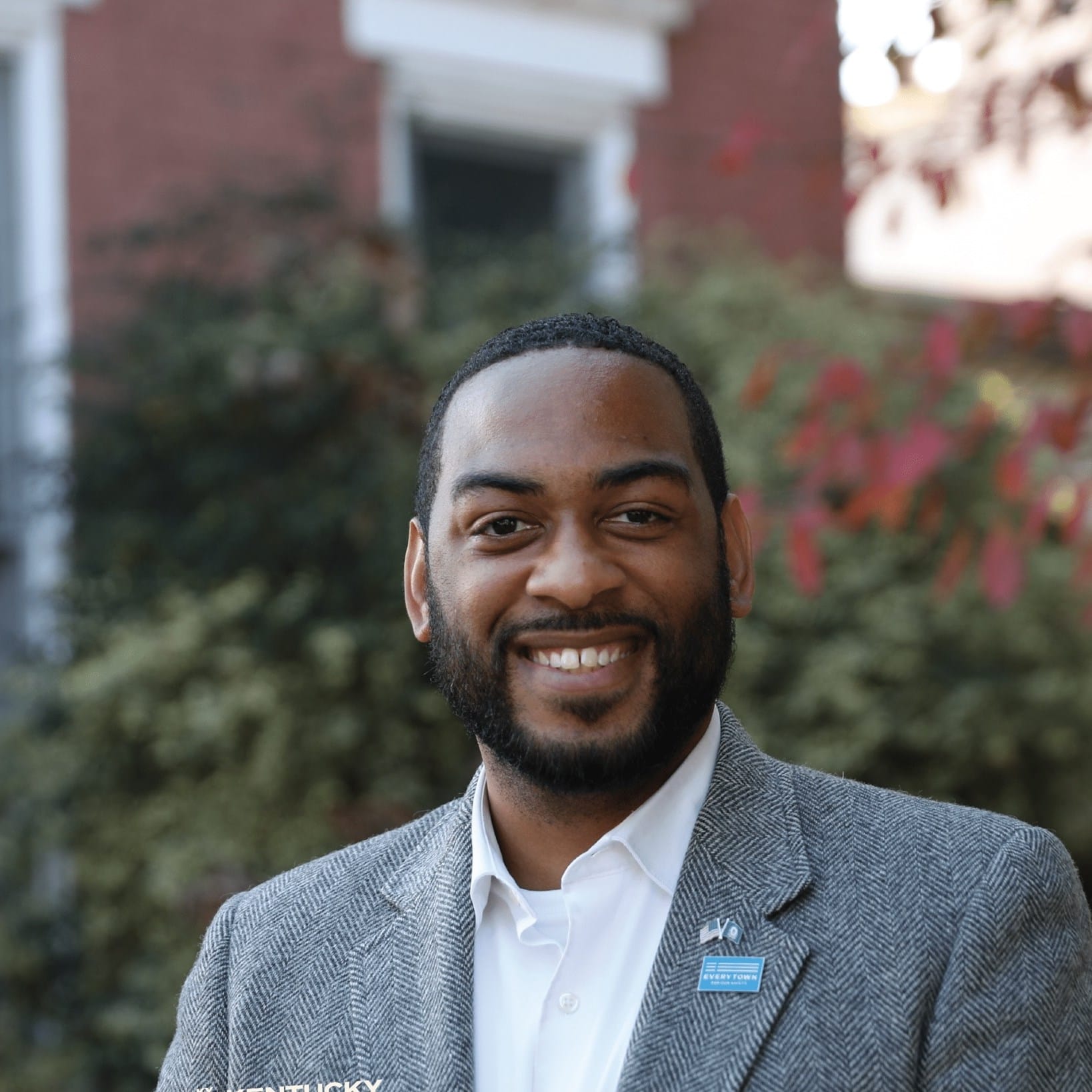
Charles Booker is not a new name in Kentucky politics. He ran for this same Senate seat in 2020, nearly beating Amy McGrath in the Democratic primary. In 2022 he won the Democratic primary and faced Rand Paul in the general. Now he's back, and he says the urgency has only grown.
"I like to call myself a good troublemaker," Booker said with a laugh. A lifelong Kentuckian whose family has lived in Louisville's west end for generations, he is a father of three daughters he calls his bosses, a former state legislator, and someone who has spent years organizing across what he describes as Kentucky's "hood to the holler."
Booker frames his entire candidacy around a single animating mission: ending generational poverty as a policy choice. He argues the federal government has a critical role in making that happen- and that the Senate, specifically, is the lever. "I want to take notes from Mitch McConnell on how he built infrastructure and leveraged his role in the Senate," he said, "but do it for the people."
His signature issue is Medicare for All- which he describes not just as a healthcare policy but as an economic and justice policy. "In the wealthiest country in the world, no one should have to choose between a prescription and food for their family," he said, "while Elon Musk gets every tax break he can ask for." He is direct that he believes a Medicare for All system is achievable at the federal level.
On why Kentucky is ready for a Democratic senator, Booker pushes back on the premise. "It's less about being a Democrat and more about being a leader who has a vision to meet the needs Kentuckians are calling out for," he said. He points to voters who put Booker signs next to Trump signs in their yards as proof that Kentuckians vote on connection and conviction, not just party. He also notes that Kentucky is already home to Rand Paul, Thomas Massie, and Andy Beshear- ideologically distinct figures who each won statewide- as evidence that the state defies simple partisan categories.
His breaks from the Democratic Party are among the most pointed of any candidate in this series. Booker said he opposes big money in politics flatly and has run against Chuck Schumer's leadership before. He supports universal basic income, Medicare for All, and fully funding public education- positions he acknowledges get him called "radical" by members of his own party. He said he doesn't run from those labels. "I'm not running for a title. I genuinely want to end generational poverty because it is a policy choice."
On McConnell, Booker offered a nuanced take: he credits the longtime senator with understanding how to build political power and deliver resources to Kentucky- early in his career- while arguing that McConnell long ago stopped working for everyday Kentuckians. "The Mitch McConnell of today wouldn't recognize the Mitch McConnell who was elected when I was born," he said. "They'd probably call him a radical progressive too." Booker's own agenda- the Working People's Bill of Rights- would center housing and healthcare as human rights and restore voting rights protections.
His closing message was a call to action: "I don't come from politics, and I don't trust politicians. I'm sick and tired of being sick and tired, and I know we can't afford excuses. If you're ready for real change, stand with me."
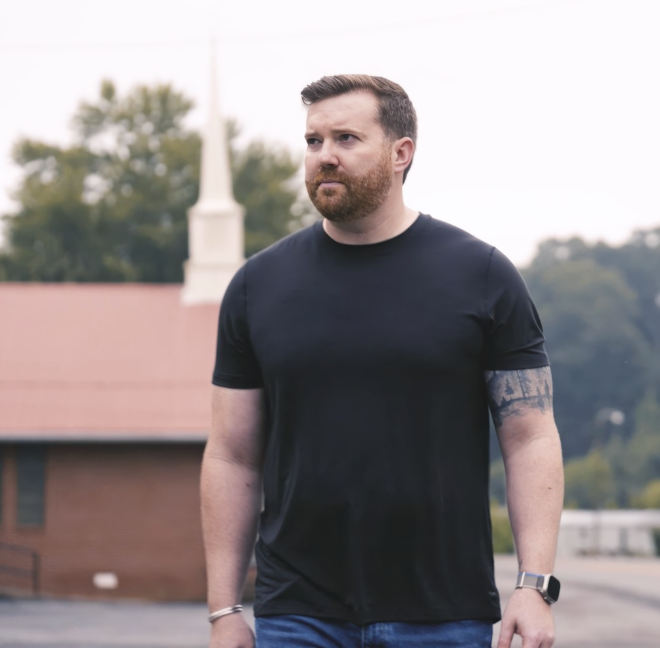
Logan Forsythe is an attorney specializing in workers' rights and civil rights litigation- and a former Secret Service agent who served under three presidents. He is quick to say he never wanted to be a politician. In some ways, that's the whole point.
"I was around politicians on both sides," he said of his time in the Secret Service. "If anything, my disdain for politicians just grew during that time. I don't like most of their character. I don't like what they talk about behind closed doors."
So why run? The answer, for Forsythe, is intensely personal. He grew up in poverty in rural Kentucky- the youngest of four children whose father left when he was three. His mother worked two full-time jobs, sometimes a third, logging close to 100 hours a week just to keep the family afloat. He watched Mitch McConnell spend decades in the Senate voting against nearly everything that might have helped families like his. Now his own son is 14 and his daughter is 10, and Forsythe said he looks at the world they're inheriting and feels he has no choice but to act. "My daughter has fewer rights today than the day she was born," he said. "What are we doing?"
His core issues are affordability, healthcare, and education- and he's direct about where he stands, even when he knows it invites pushback. He supports moving from a minimum wage to a living wage standard, arguing that if you have a job in any Kentucky town, you should be able to pay your bills in that same town on that income alone. On healthcare, he describes himself as a Medicare for All supporter, but said he'd pursue a public option on day one as a practical first step. On education, he wants federal funding to ensure every Kentucky child- rural or urban- has access to quality schools and well-paid teachers.
On why a Democrat can win in 2026, Forsythe points to special elections and primaries across the country where Democrats have been outperforming expectations in unlikely places. "People are breaking," he said, arguing that Trump's first term felt novel to some voters, but the second has removed any remaining guardrails. "There's no safeguards. There's no rails keeping him in check."
His sharpest break from his own party may be the most candid answer in this entire series. Forsythe said Democrats "quit very soon or early into a fight, or they don't fight at all," and that Congress has become a stepping stone to celebrity status in both parties. He said his Secret Service training instilled in him something close to the opposite instinct- an inability to stop fighting regardless of odds. "Our party does it just as much, if not more, than the Republican Party," he said. "And I have no interest in that."
On McConnell, he didn't hesitate: "I promise that before I do anything- before I propose a bill, before I support a bill- I'll ask myself: what would Mitch McConnell do? And I'll do the exact opposite."
What does he want voters to know? That he is more like them than they might expect from a Senate candidate. "I relied on Medicaid. I relied on food stamps. I faced homelessness multiple times growing up," he said. "I want voters to know that we can get back to a country where a child in poverty has a firm belief that they can do more with their life, regardless of their circumstances. Because without that hope, you don't survive those days."
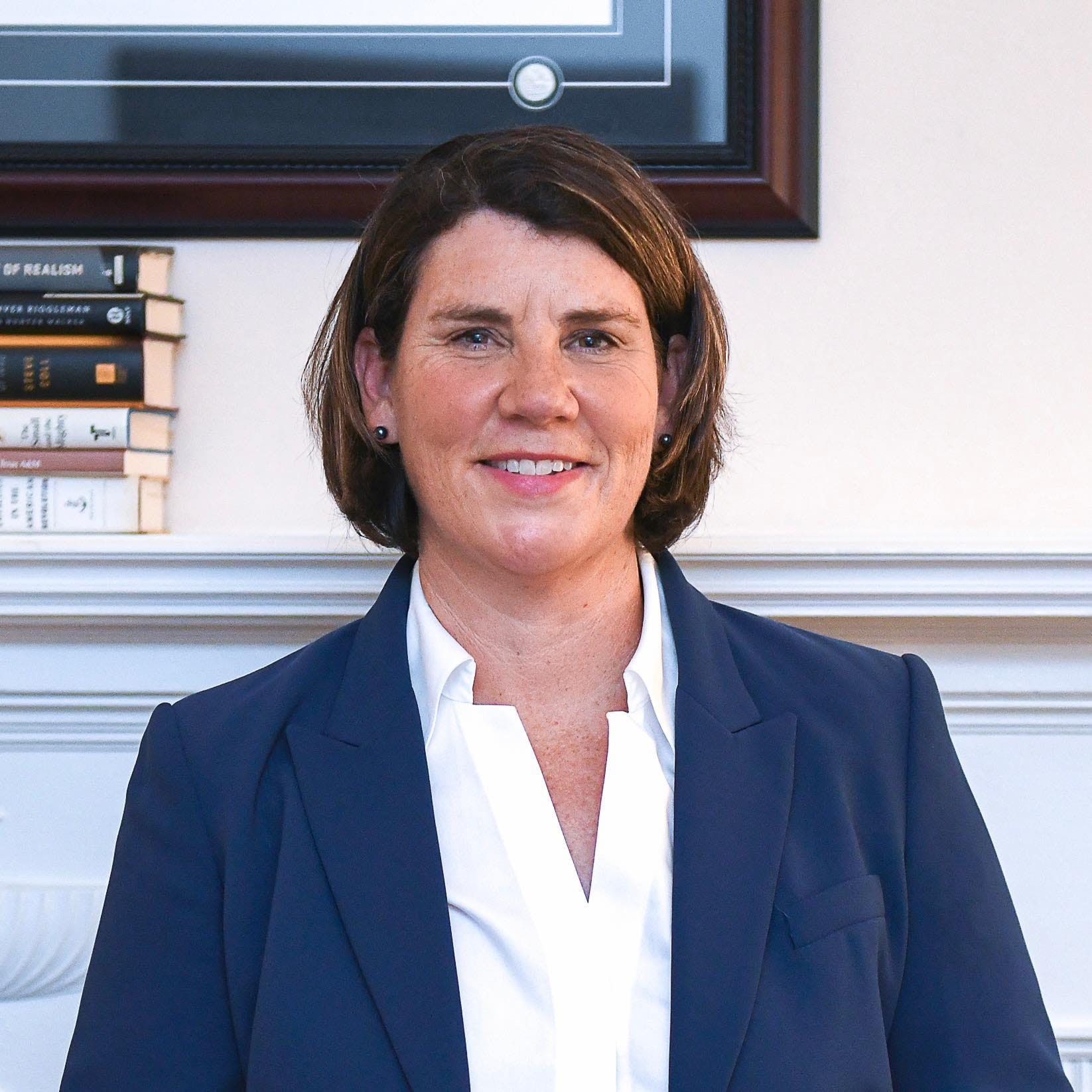
Amy McGrath is a retired Marine Colonel, a mother of three, and a two-time Kentucky Democratic nominee who came close before- first for Congress in 2018, then against Mitch McConnell himself in 2020. She's back, and she says the urgency is different this time.
"When I think about the core of who I am, what motivates me- I'm a patriot," McGrath said. "I love this country. Since I was a little girl, I wanted to serve it, and I did that my whole life."
But McGrath doesn't just lead with her military resume. She's equally emphatic about being a mother, and uses it to make a policy point. She said the hardest moment of her entire military career- harder than three combat tours, harder than the Marine Corps version of Top Gun- was when she couldn't find daycare for her first child while the military moved her family from station to station.
"I feel like we need more people in the Senate who get it," she said.
On the issues, McGrath is laser-focused on what she calls the affordability crisis. She argues the average Kentucky family is spending $5,000 more this year than last- a figure she breaks down as roughly $2,500 from tariffs hitting everything from bourbon to groceries, $750 from rising gas prices tied to the conflict in Iran, and $1,500 from what she describes as healthcare cuts passed in last year's federal legislation. "I'm going to go where the money is," she said, promising to fight to roll back tariffs, restore Affordable Care Act subsidies, and push for a diplomatic resolution to the Iran conflict.
On the long-standing question of whether a Democrat can win a Senate seat in Kentucky, McGrath points to Andy Beshear's back-to-back gubernatorial victories as proof it's possible. "Many Kentuckians do not want a lapdog in the United States Senate," she said, adding that her slogan- Country Over Party- is meant to signal independence, not partisanship.
She's not without distinctions from her own party, either. McGrath said she will not vote for Chuck Schumer as Senate Democratic leader, calling for generational change. She also supports term limits for both Congress and the Supreme Court, a ban on stock trading by members of Congress, and an end to dark money in politics.
On Mitch McConnell's legacy, she was pointed: she called the blocking of Merrick Garland's Supreme Court confirmation "ethically wrong," saying it made Americans stop believing in their government.
What does she want voters to know before May 19? "I want people to know that I'm a lot like them- that I have struggles with family and motherhood, and I'm just somebody that loves her country and is willing to step out and try to do the hard thing."
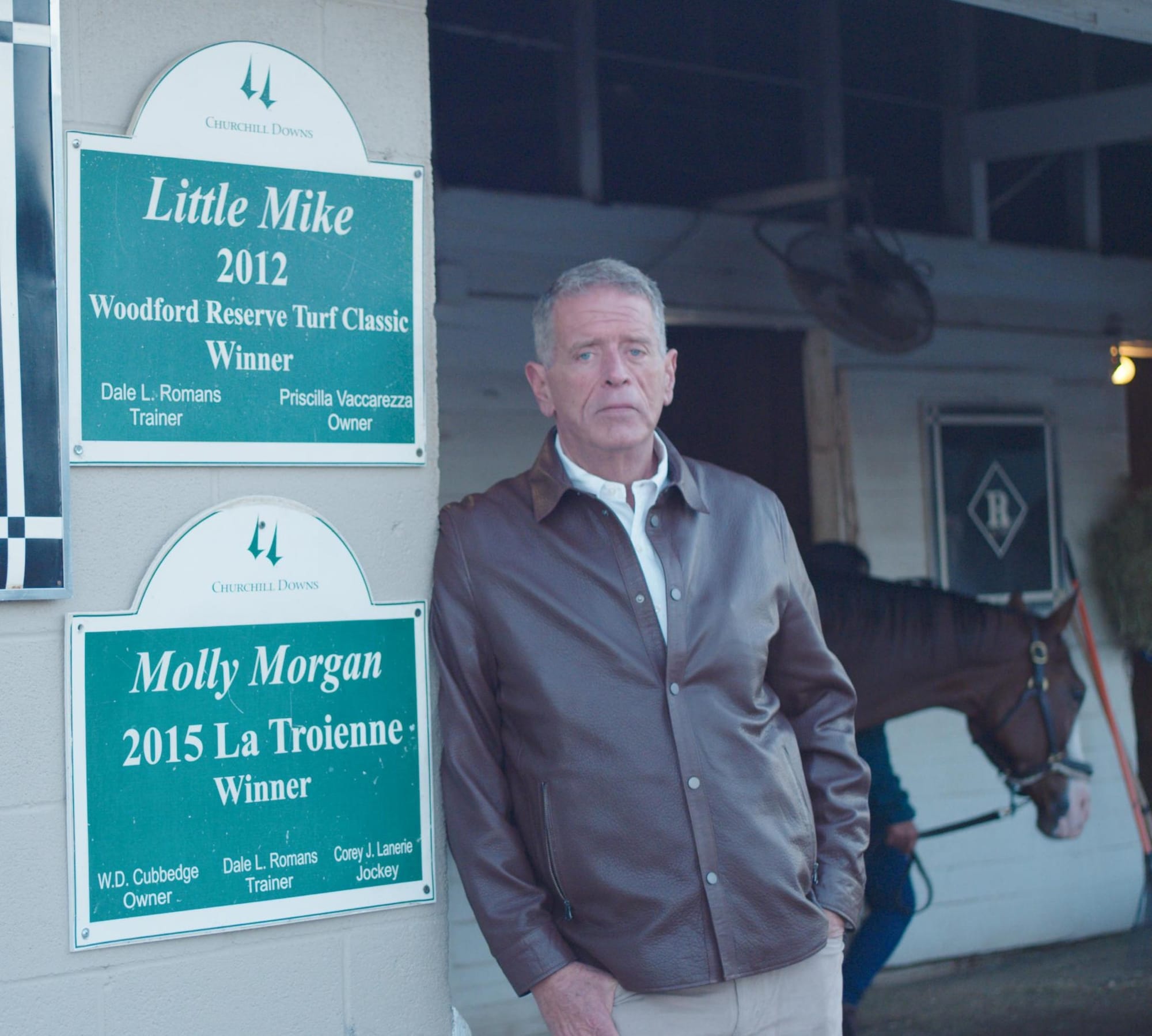
Dale Romans has spent his career not in politics, but under the spotlight of a different kind: the racetrack. He's one of thoroughbred racing's most recognizable trainers, a president of his industry's horsemen's group, and a member of the Kentucky Racing and Gaming Corporation. Now he's running for U.S. Senate.
"I think I'm a person that cares about people," Romans said when asked who he is beyond his resume. "I know I care about Kentucky. And I think it's time for someone outside of politics to go to Washington and do some pragmatic things that can really affect Kentucky people."
Romans speaks directly and doesn't shy away from the unusual nature of his candidacy. He said he called Governor Andy Beshear before getting in the race to ask if Beshear thought it was a crazy idea- and said Beshear's response reinforced his case: Kentucky Democrats need a candidate with deep roots, no voting record to attack from the right, and genuine independence from Washington.
His top issue is healthcare. Romans argues that cuts to Medicaid and the rollback of ACA subsidies will hit Kentucky's rural communities hardest, threatening small and regional hospitals that many Kentuckians depend on. "If you're having a heart attack and you have to travel an extra half hour, that matters," he said. "Even if rural hospitals survive, they can't keep up services if they're not getting paid."
On the question of why a Democrat can win this cycle, Romans offers a reframe of the "40 years" talking point that Republicans lean on. He points out that most of those four decades were dominated by the same two long-serving Republican incumbents- McConnell and Jim Bunning- who simply weren't going to be voted out. "There wasn't an opportunity for Democrats since Wendell Ford," he said. "I'd love to go up there and be a Wendell Ford Democrat."
His breaks from the national party are substantive. He is flatly opposed to shutting down the government- calling it "holding people's paychecks hostage during a political dispute"- and he's against pursuing another impeachment of President Trump. "You're never going to get 60 senators to vote to remove him," he said. "Impeaching him is just show. I don't want to go up there and do show."
On McConnell, Romans said he would have confirmed Merrick Garland and would not have supported the tax cuts he argues predominantly benefited the wealthy. "Tell me all the voters that didn't get a tax cut, and I'll win this race," he said- pointing out that whatever small cuts voters received were largely wiped out by rising insurance costs and inflation.
His closing message to voters who may not know him beyond the paddock: "I'm not just a horse trainer. I've sat on boards, I've been a political junkie my whole life, and I'm tired of all the fighting in Washington. I want to go up there and fix things. The journey of a thousand miles starts with one step- but divided, we fall."
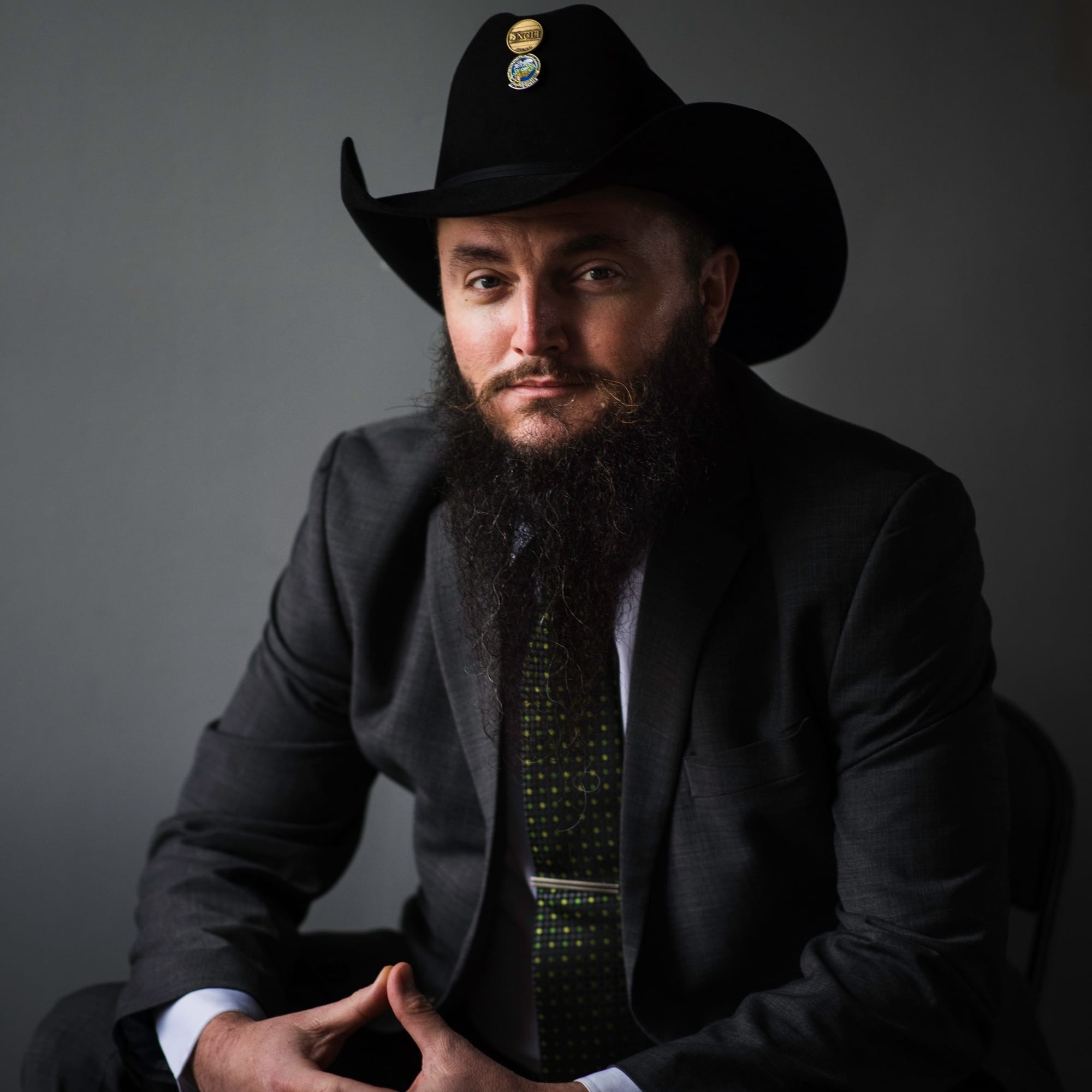
Vincent Thompson's reason for running is rooted in one of the most personal stories in this race. In 2015, his wife- a retired special needs schoolteacher- was diagnosed with congestive heart failure. Her doctors told her she needed a heart transplant at Vanderbilt. Her insurance said no. Because she was on Kentucky state insurance, the plan required exhausting in-state options first, which meant UK Medical Center. She survived complications while in a medically induced coma for four months in early 2020, eventually made it home just in time for their daughter's birthday that August- and then passed away in October 2020 after contracting E. coli during a subsequent hospitalization.
"Her doctors told her she needed to go to Vanderbilt," Thompson said. "Insurance said no. And I don't feel like that's right."
That experience, combined with his work as chairman of the Hardin County Conservation District- a nonpartisan role he's held for years- forms the backbone of his campaign. Thompson is also a farmer who raises beef cattle and goats, a widower, and the father of a daughter with autism. He studied philosophy, theology, and anthropology at the University of Louisville, and his family's roots in Kentucky predate statehood.
His biggest issue is the high cost of living, which he describes as having cascading effects across every income level. He talks about tariffs driving up food costs, conflict in the Middle East adding to fuel prices, and corporations buying up housing stock to use as assets on publicly traded balance sheets. He was struck, he said, by judging scholarship applications and seeing families earning close to $200,000 unable to afford college tuition- a marker of just how far up the income ladder affordability pressure has climbed.
Thompson's argument for why a Democrat can win in 2026 is also his differentiator: he has spent fifteen years working in a nonpartisan role alongside Republicans, and believes he can be a genuine bridge. "I have the ability to at least connect with the conservative mindset while also having my own core values," he said. "It's going to take somebody who can do that."
His break from the Democratic Party came on the question of Israel and Gaza. Thompson said he believes the U.S. should not be supplying Israel with offensive military capability for what it is doing in Gaza, but he stopped short of calling for cutting all aid- arguing that Israel remains a key regional ally and that defensive support should remain intact. It was a careful, measured answer that he acknowledged is still evolving.
On McConnell, Thompson had a specific story. In 2024, as part of a national conservation leadership program, he traveled twice to Washington to lobby for $45 billion in conservation and agriculture funding. He met with eight senators- none of them from Kentucky. McConnell and Rand Paul declined to meet with him both times, their staff engaging in their place. "I felt like $45 billion deserved at least a couple minutes of my senator's time," he said. It was that experience that convinced him to run. "I'm going to represent everyone," he said. "Not just the wealthy donors."
What does he want voters to know? That Kentucky is his home in every sense. His ancestors were founding members of Kentucky counties. His family has farmed this land for generations. "America is in my blood. Kentucky is 100% in my blood," he said. "At my core, I am for Kentucky to be a better place, and I feel like I've shown that time and time again."
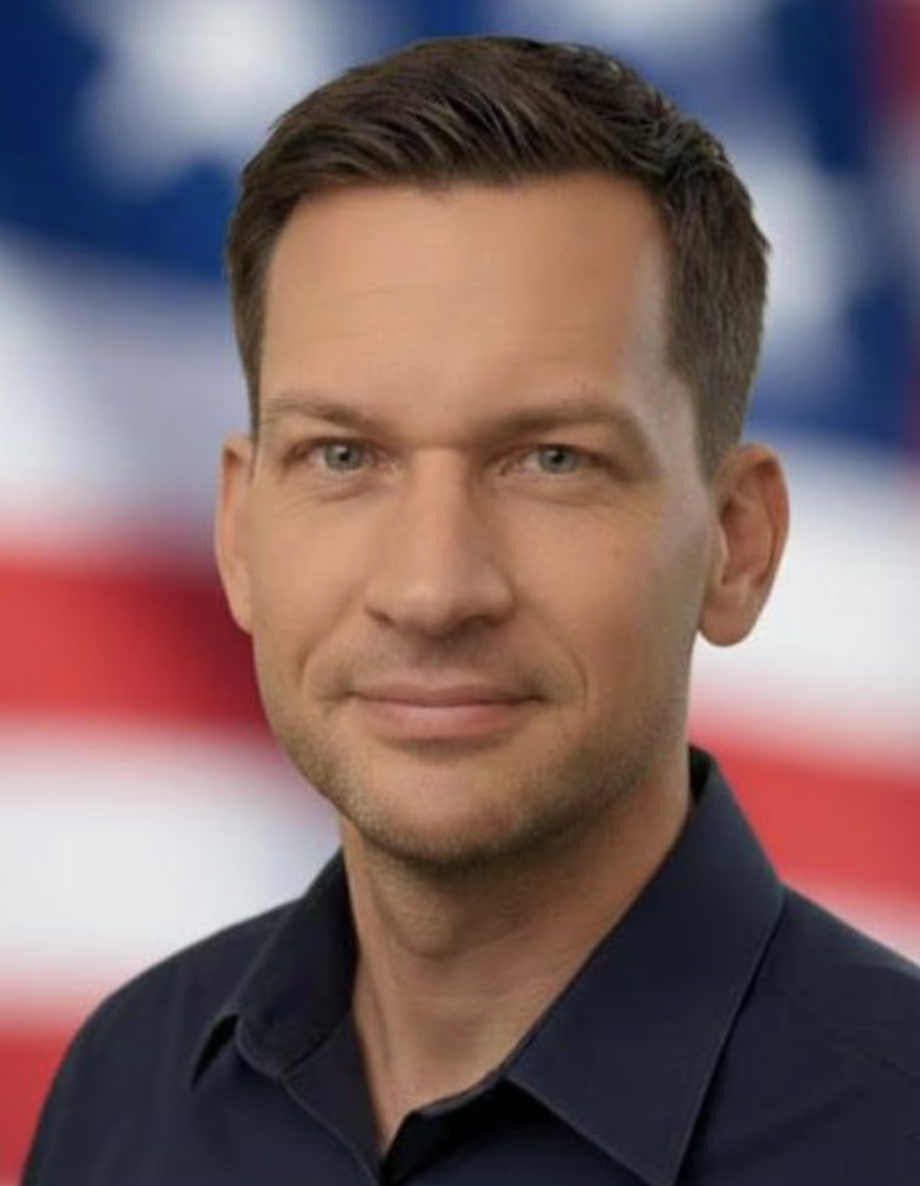
James Duncan may be the most unconventional candidate in this race. By trade, he's a farrier- a blacksmith who shoes horses- working alongside his wife, an equine veterinarian, in the heart of Bluegrass country. He was raised in New England, holds a master's degree in liberal arts from St. John's College in Annapolis, and he describes his education as a "Founding Fathers kind of experience" steeped in classical texts, philosophy, and constitutional thinking.
"I feel like I relate to our Founding Fathers," Duncan said. "They wanted to create something wonderful and enduring. And once founders lose their vision, things fall apart."
That philosophy shapes his critique of the current political moment. Duncan is deeply skeptical of what he calls the "professional politician" class- people who, in his view, campaign effectively but govern by marketing directive and donor pressure rather than conviction. He said shortly after entering the race, his inbox was flooded with consultants offering talking points. Term limits, for example- a popular rallying cry he said he found in almost every solicitation- is something he actually disagrees with. If a representative is truly excellent, he asked, why should they be forced out?
His signature policy issue is energy, and he goes deep on it. Duncan argues that the future of everything from Kentucky agriculture to affordable housing comes down to energy costs. He is specifically critical of politicians in both parties who he says mislead Eastern Kentucky coal communities by promising a return to the industry's peak productivity- an era when energy return on investment was roughly 100 to one- when modern coal extraction no longer delivers those returns. "The golden days of Eastern Kentucky coal are gone," he said bluntly. "And the only energy source that exists that's 100-to-one going forward is next-gen nuclear."
What does he offer that the frontrunners don't? Genuine independence, he argues. He said candidates like Andy Barr are skilled at raising money and running campaigns, but that money creates obligations- and those obligations eventually override constituents' interests when the two conflict. Duncan says he doesn't have that problem.
He holds Kentucky's own Thomas Massie up as a model for the kind of independent thinking the Senate needs- someone willing to dissent even when it draws fire from within his own party.
On Mitch McConnell, Duncan had complicated feelings- crediting McConnell's deep institutional knowledge while noting that hemp farmers in Woodford County are still sitting on unprocessed inventory because of what he views as McConnell's reversal on the issue. His bottom line: "We're just ready for new leadership."
His message to voters: Stop accepting the "lesser of two evils." He argued that when voters settle rather than demand the best candidate, they give parties permission to slide as close to their least favorite outcome as possible without fully crossing the line. "Your vote, according to the Declaration of Independence, is your consent," he said. "Treat it that way."
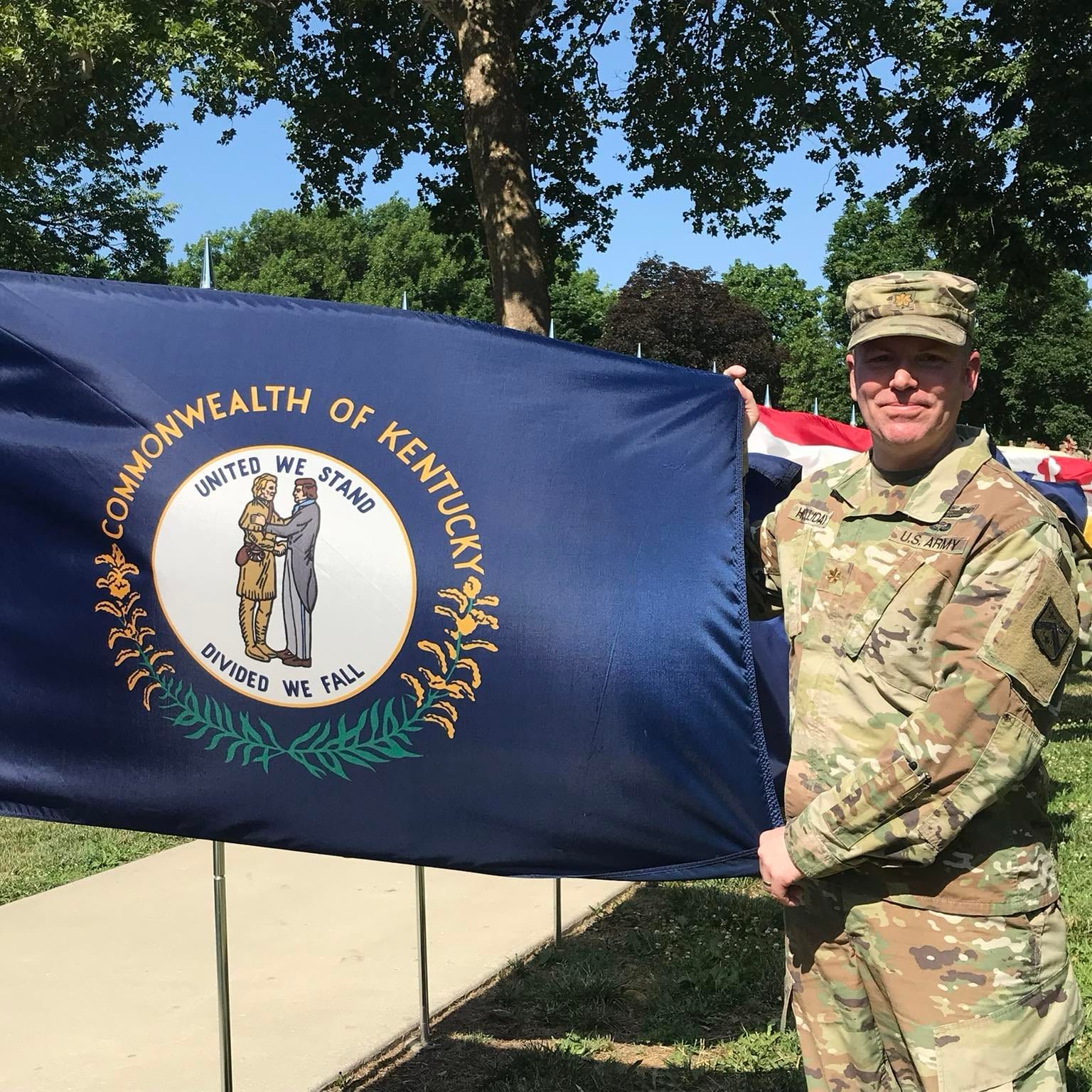
Jonathan Holliday's resume reads unlike any other candidate in this race. He is a 25-year military veteran still serving in the Kentucky National Guard, with 17 years of active federal service. He is a law enforcement officer. He is a Purple Heart recipient and two-time Bronze Star awardee. He served as a credentialed diplomat at the U.S. Embassy in Djibouti as an Army attaché and humanitarian, spending two years in Africa during the COVID pandemic. His most recent active duty assignment was as the Chief of Anti-Terrorism and Force Protection for U.S. Army Central.
"I'm a Christian. I'm a husband, a father, a soldier," he said. "I have a firm appreciation for the law, and I know its many flaws- and I think that gives me a unique stance on how to fix some of our problems."
Holliday says he entered the race because he looked at the field and didn't see himself- or most Kentuckians- reflected in it. "I saw two career politician lawyers and a millionaire," he said. "The Republican Party is especially failing the middle class."
His most urgent issue is foreign policy honesty. Drawing on years of intelligence work and high-level military experience, Holliday said the American public is not being told the truth about the conflict in Ukraine- specifically, that Ukraine cannot defeat Russia without NATO forces on the ground, and that NATO forces on the ground risk nuclear conflict. "We are inching toward nuclear conflict," he said. "You're not hearing that from the press. You're not hearing it from politicians."
What does he offer that the frontrunners don't? Experience that, he argues, simply can't be replicated in a briefing room. He said senators without military and foreign policy backgrounds require large staffs just to understand what they're voting on. He already knows- and more importantly, he says he knows what he doesn't know, which he views as equally essential.
On where he breaks from the Republican Party, Holliday was direct: he's not interested in the theater. He said debates about issues that have clear answers- debates he suggests are manufactured to generate fundraising and media attention- distract from the actual work of representing families. "I don't need anybody to tell me what's right and wrong," he said. "I need to know what I can do to make America a better place for families."
On McConnell, Holliday was plain: "I think he enriched himself. I would represent the voter better." He also offered a broader warning to voters: the politicians who disappoint you in office were the same people before they got elected. "Don't be fooled," he said.
His closing pitch leans heavily on his roots. His grandfather on his mother's side was a Kentucky farmer. His grandfather on his father's side was a West Virginia coal miner. His father, an Air Force officer, is buried at Camp Nelson in Jessamine County. His wife is from Eastern Kentucky. All of his children were born in Kentucky. "I represent Kentuckians," he said. "Not some strange political machine."
Every candidate in the May 19 primary was contacted and offered the same opportunity to participate in this series. The following candidates did not respond by the deadline:
Democratic Primary: Joshua Blanton Sr., Pamela Stevenson
Republican Primary: Andy Barr, Daniel Cameron, Michael Faris, Valeria Fredrick
Additional notes:
The decision not to participate, or to not respond, belongs to each candidate and their campaigns. This series was designed to give every voter access to every candidate. That offer stands.
Louisville voters- you can see your ballot here.
Like what you see? Learn more about Shay Informed here! This is honest journalism with compassion and clarity.