Children are dying. Eastern Kentucky deserves answers.
– 8 min read


A rare and always-fatal brain cancer is hitting one corner of Kentucky at a rate that state health officials are calling "unusual," and families are demanding to know why.
I'm Shay McAlister, and this is Shay Informed: an independent, ad-free platform dedicated to honest journalism with compassion and clarity.
I believe some stories are too important to stay behind a paywall. That's why I'm making this piece free to read for everyone. Informed communities make better decisions and that can only happen when people have access to honest, thorough reporting.
Shay Informed is 100% reader-funded. No ads. No corporate backing. Just journalism that answers to you. If you'd like to help keep this work going, please consider subscribing.
One year ago this week, Ashley Early got the worst news a mother can receive.
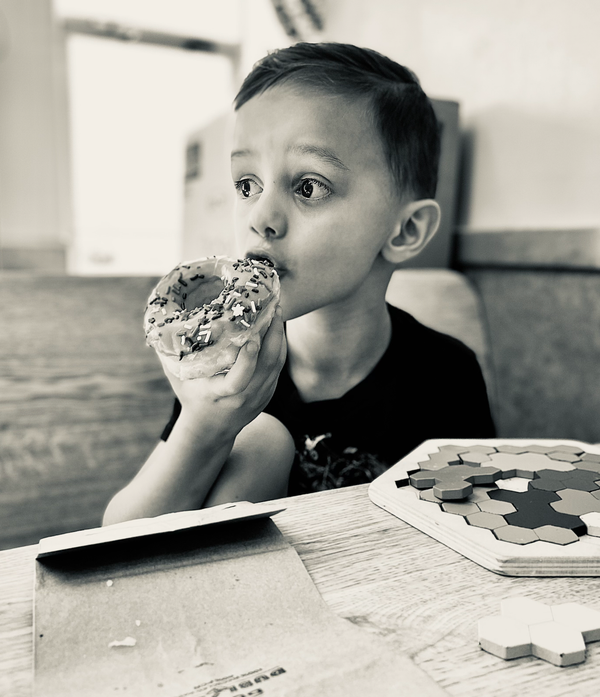
Her five-year-old son, Ayven Dennis, had just been diagnosed with Diffuse Intrinsic Pontine Glioma- DIPG- a brain cancer so aggressive, so merciless, that from the moment doctors confirmed it, there was essentially no hope.
"When they told me what it was, I knew at that moment it was literally the worst," Ashley told me, her voice steady in the way that only comes from a grief you've already lived all the way through. "Very little hope. No hope, essentially."
Ayven died on March 5, 2026. He was six years old. He had been sick for less than a year.
This week marks exactly twelve months since that diagnosis. And now, the state of Kentucky has confirmed what families in the southeastern part of this state have quietly feared for some time: children here are being diagnosed with this rare, incurable brain cancer at a rate that is staggering, alarming, and demands an answer.
The Kentucky Department for Public Health, in coordination with the Kentucky Cancer Registry and the University of Kentucky College of Public Health, has now officially confirmed 10 cases of DIPG/DMG in Eastern Kentucky in people under the age of 21 since 2024.
To understand why that number should stop you cold: in a typical year, the entire state of Kentucky sees only two or three cases of this cancer in that age group. Total. All of Kentucky.
Ten cases in one region in roughly two years is not a statistical blip. It is not a coincidence. It is a cluster- and it is happening to children.
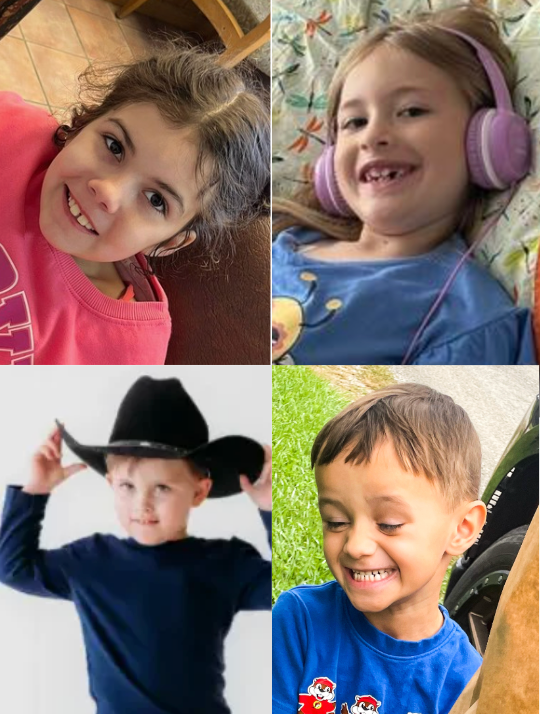
I have spoken directly with the mothers of two young girls who are currently fighting this diagnosis right now, today, in this region. I have confirmed through those families that a fourth child- a boy- also died from DIPG earlier this year. Ayven was not alone. He was not an anomaly. He was part of a pattern that this community has been living through while the rest of the state wasn't paying attention. Now it's something none of us can ignore.
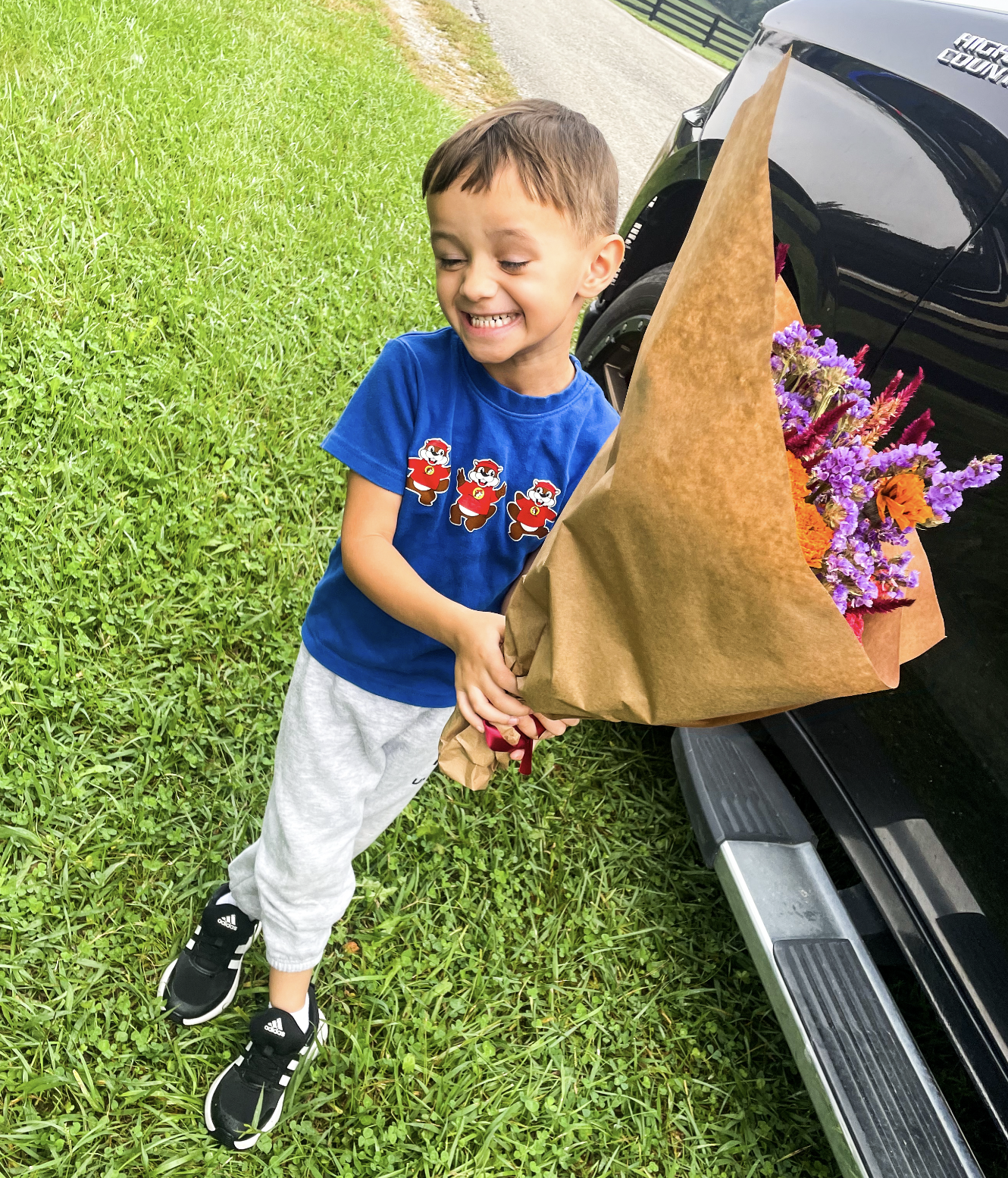
Ashley Early is a nurse. She works in the emergency room at Baptist Health Corbin. She is someone who knows how disease works, who understands statistics and odds, who has held her clinical knowledge like a lantern in the dark of the worst year of her life.
And even she didn't see it coming.
Ayven's first symptom was subtle- his eye seemed to be turning inward slightly. Ashley thought it might be a lazy eye, like his older brother had dealt with years before. She planned to call the eye doctor.
Days later, his dad sent her a video. Ayven was having trouble walking up the stairs.
"He normally zooms right up them," Ashley said. "He was very active."
They went to the ER. The next morning, Ayven had an MRI. There was a large tumor in his brainstem. That was May of 2025.
"Easter before that, he was running around like crazy," Ashley told me. "Him and I had hiked to Eagle Falls a few weeks before- that's a ton of stairs, in and out, two miles. He had no problem. The symptoms, once he started showing any kind of symptoms, progressed very quickly."
The diagnosis was confirmed by Cincinnati Children's Hospital and a DIPG tumor board. The news was exactly what Ashley had feared from her own midnight research in the hospital waiting room the night before.
There were no treatment options. There were no cures. They could do radiation. They could try a clinical trial. And they were given nine to eleven months.
"In the back of your mind, you know," she said. "I think I knew he wouldn't survive. I just could not imagine it would be as quick as it was."
What followed was ten months of love and desperation in equal measure.
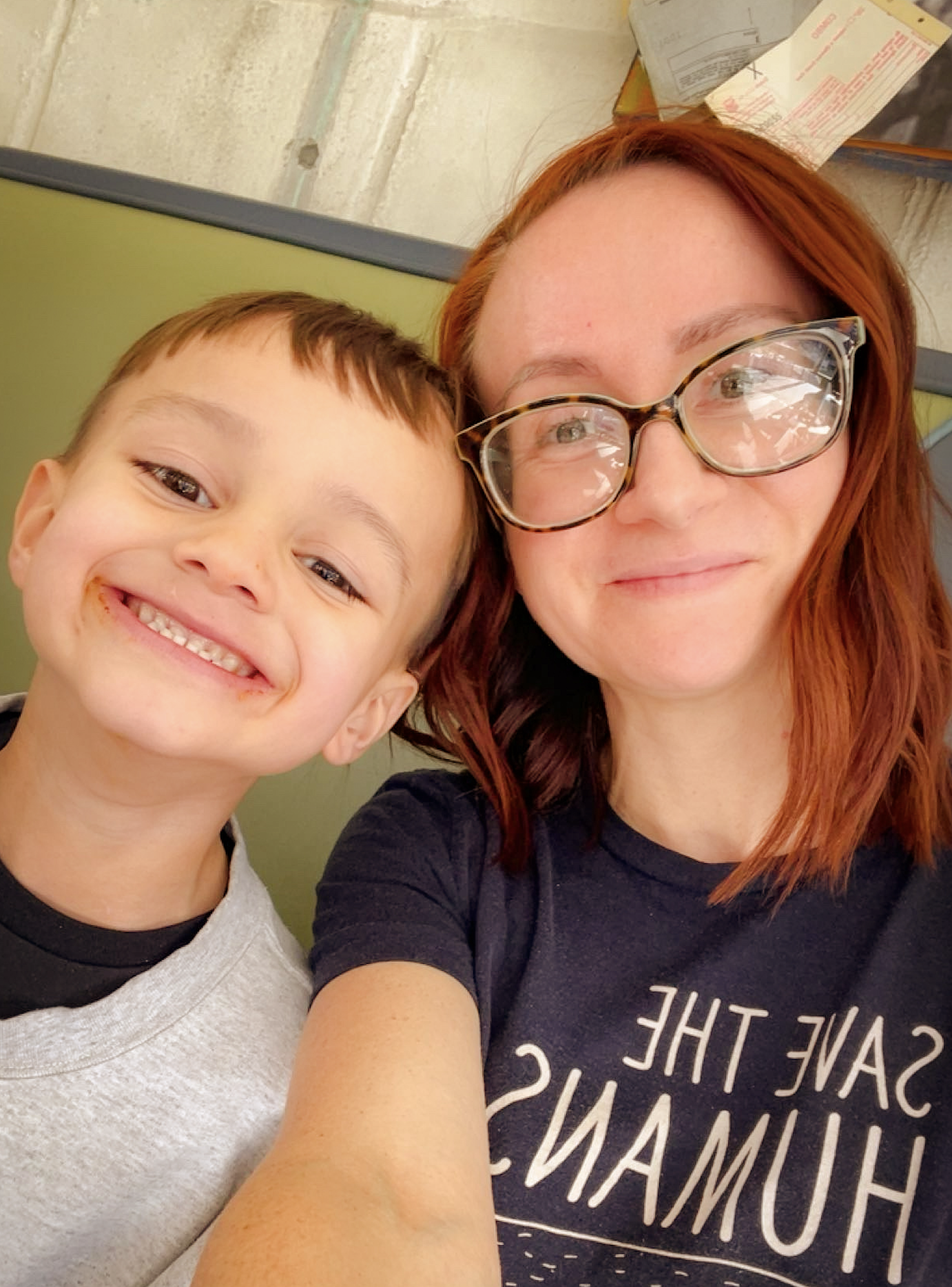
Ayven completed thirty rounds of radiation- five days a week for six weeks. His older brother Mason, who turned 18 just four days after Ayven's diagnosis, dropped his college classes to stay home and help care for his little brother. When Ayven would rage from steroid side effects, Mason was usually the one who could bring him back down.
"He was right there for all of it," Ashley said.
After radiation, Ayven developed fluid on the brain and required an emergency VP shunt- a complication that limited which clinical trials he could qualify for. Ashley spent every day she wasn't working scanning clinicaltrials.gov, looking for any open door.
They found one at Lurie Children's Hospital of Chicago- a heat shock protein vaccine combined with immunotherapy. They traveled back and forth for months. Ayven did well. He played. He wasn't nauseous. There was a stretch of time that felt, cautiously, like something. That was in September.
Then, in January, his MRI showed the tumor had dramatically worsened. By late January, Ayven entered hospice.
He died six weeks later.
"The very last thing he ever did," Ashley said quietly, "was reach over to give me a hug. Even though it was a little hug. I'll forever be grateful for that. The last effort his little body made was to reach for his mom."
She paused.
"He was so loved", she said through tears.
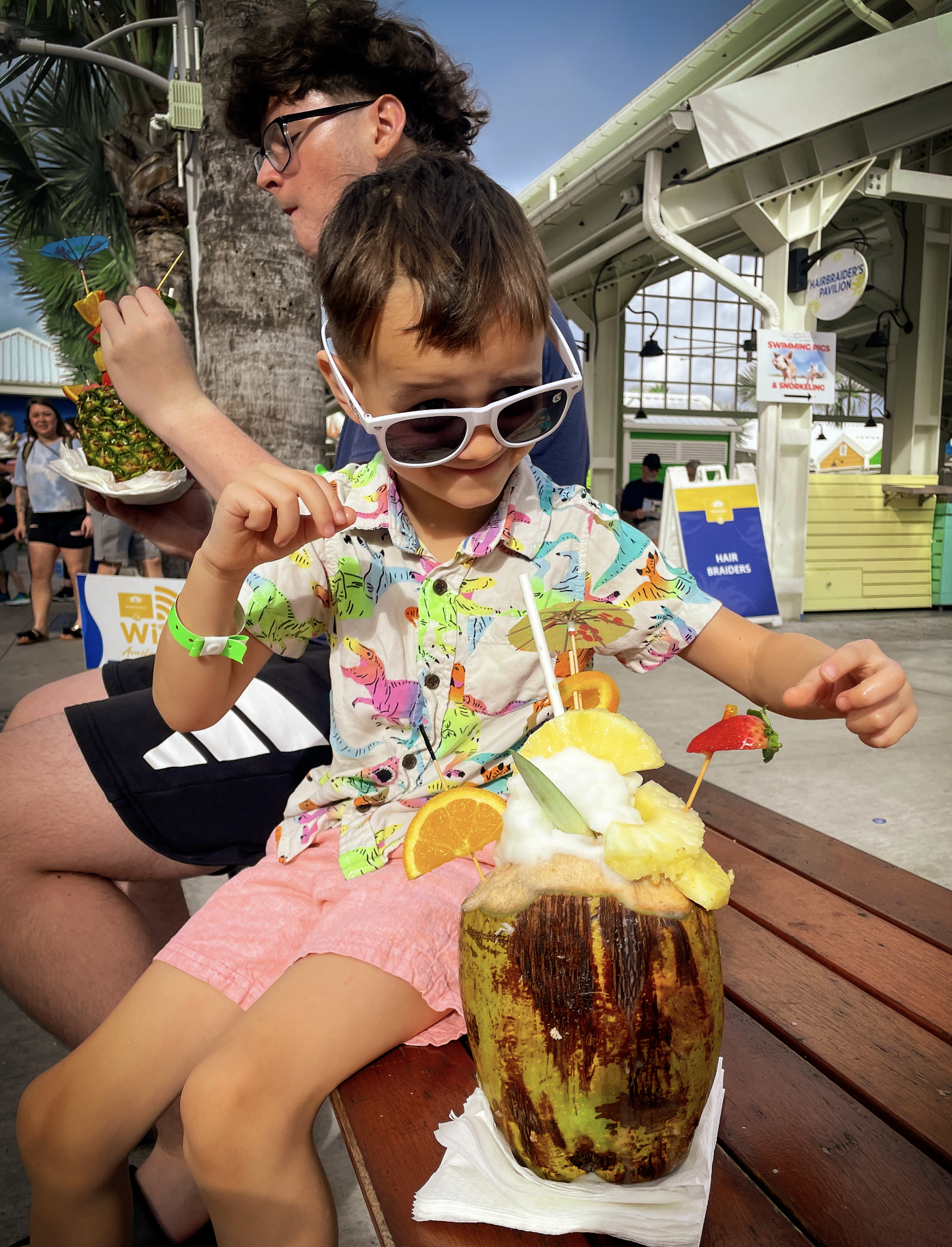
Before all of this- before the diagnosis and the clinical trials and the hospice and the grief- Ayven Dennis was just a kid.
He was, by his mother's description, a handful. Stubborn and opinionated and hilarious. He had a blue heeler named Frank, and the two of them were always getting into something together. He had favorite restaurants: the Wrigley and Folktale coffee shop in Corbin. He loved to hike. He loved to dance.
"He was always shaking his butt and making vulgar, inappropriate moves," Ashley laughed. "I couldn't help but laugh. He just cussed a lot, honestly, and I did not care. It was so entertaining."
He was beloved by his classmates. The children in that school are now six and seven years old, trying to understand something no child should have to understand.
"I can't imagine trying to understand that at that age," Ashley said. "That a six-year-old can die."
Ashley is careful. She is a nurse. She doesn't like to speculate without data. But she also lives and works in this community, and she has seen things that stay with her.
"For years, people have talked about how in Knox County, Whitley County, Laurel County- this area- there seems to be a higher prevalence of pediatric cancers in general," she told me. "I can remember the last couple of decades, there are several children that pop into my brain with different types of cancer. It's not the first time people have been like, why is there so much cancer here?"
She works in an emergency room. She sees the health of this region up close, every shift- the high rates of diabetes, COPD, cancer. She knows this is a community that has long struggled with poverty and its downstream effects on health.
But pediatric brain cancer is different. Children are not getting DIPG because of cigarettes or diet.
"My gut does tell me that there are absolutely environmental factors that cause this area to have a higher incidence of cancer," she said. "I don't know if DIPG specifically is caused by an environmental factor. I think that's going to take a long time to sort out. But we do need to look at it."
She was also firm about one thing she's been asked too many times: no, Ayven had not received the COVID vaccine, and she finds it deeply hurtful when people suggest a parental health choice caused her son's cancer. "That's essentially what you're saying," she said. "That a decision I made killed my child."
This week, the Kentucky Department for Public Health confirmed the cluster publicly, calling the increase "concerning and devastating." The statement acknowledged the state is taking steps: partnering with the Kentucky Pediatric Cancer Research Trust Fund, coordinating with local health departments, and reaching out to UK and other hospitals about research opportunities.
Under Governor Beshear's administration, more than $45 million has been invested in the Kentucky Pediatric Cancer Research Trust Fund. Since July 2024, over $9.6 million of that has gone specifically toward DIPG/DMG and other pediatric brain tumor research, according to the state.
But- notably- the statement I received from the Cabinet for Health and Family Services also acknowledged this: getting support from the CDC "has been more difficult due to significant funding cuts that have occurred under the current administration." In plain language: at the exact moment Kentucky needs federal public health infrastructure, that infrastructure has been gutted.
What the state's statement did not include: any announcement of an environmental investigation. No mention of testing water sources, soil, air quality. No formal designation of this as a cancer cluster triggering a specific investigative protocol. That gap matters. I asked if that testing was taking place, but have not yet heard back.
A petition has been circulating, started by a community member, calling for a formal public health investigation into a possible pediatric brain cancer cluster in southeastern Kentucky.
Ashley says all of these are steps in the right direction. Efforts she appreciates and is happy to see. She also has a message for anyone who isn't convinced this is a crisis.
"We haven't been angry enough," she said. "When I sit back and really think about it- to see some choices our government makes on things we do spend money on versus things we don't- it is infuriating. I am very happy that attention and funding is being brought to this. I think it unfortunately won't save these children. But it might save a child ten years from now. And I think that's very important."
She paused again, then said, "I wish that something had been done two decades ago so that we would have answers for my own child."
Sign the petition. A community member has started a formal request for an investigation into the possible pediatric brain cancer cluster in southeastern Kentucky.
Demand answers from your representatives. Ask your state legislators, your county health officials, and your federal representatives: Is an environmental investigation underway? What is being tested? Who is responsible for finding out why this is happening here?
Contact the International DIPG/DMG Registry. If your family has been affected by this diagnosis, the Kentucky Department for Public Health is encouraging you to reach out to the International DIPG/DMG Registry to learn about studies and resources that may be available.
Support pediatric cancer research. Only 4% of cancer research funding in the United States goes toward pediatric cancers. DIPG gets a fraction of that- despite the fact that every single child diagnosed with it will almost certainly be dead within a year. That is not acceptable, and it does not have to be permanent.
Like what you see? Learn more about Shay Informed here! This is honest journalism with compassion and clarity.