Kentucky kids are dying from a rare and always fatal brain tumor; I'm trying to help find out why
– 8 min read


I'm Shay McAlister, and this is Shay Informed: an independent, ad-free platform dedicated to honest journalism with compassion and clarity.
I believe some stories are too important to stay behind a paywall. That's why I'm making this piece free to read for everyone. Informed communities make better decisions and that can only happen when people have access to honest, thorough reporting.
Shay Informed is 100% reader-funded. No ads. No corporate backing. Just journalism that answers to you. If you'd like to help keep this work going, please consider subscribing.
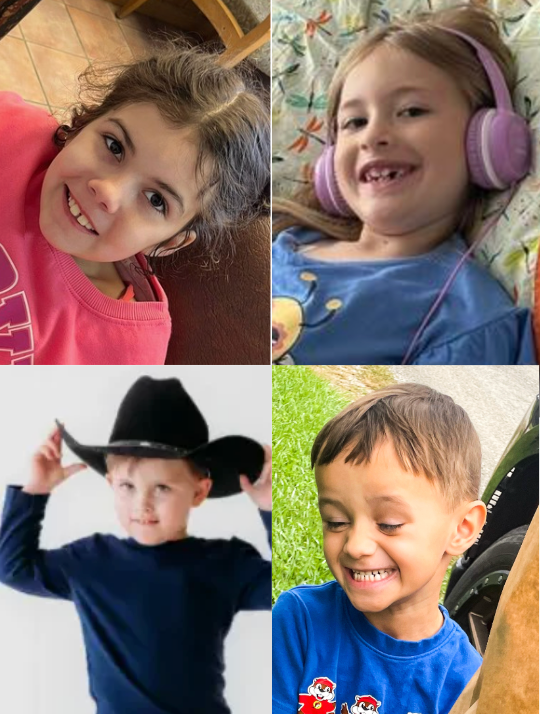
A rare and always-fatal brain cancer is hitting one corner of Kentucky at a rate that state health officials are calling "unusual," and families are demanding to know why.
Since concerns began mounting about an unusual number of DIPG cases in Eastern Kentucky, the question I've heard from families, readers, and community members has been the same: Is this a cluster? Could something be causing this?
It's the right question. But getting the answer requires a step that, it turns out, hasn't happened yet.
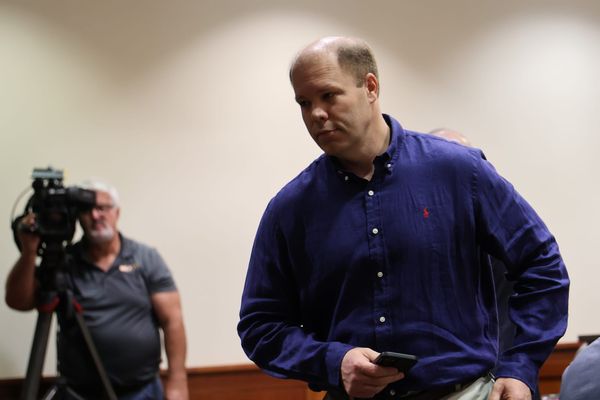
This week I spent some time talking with Keith Desserich, one of the people best positioned in the country to explain why. He's the co-founder of The Cure Starts Now, a non-profit that serves as the primary funder of the International DIPG/DMG Registry. That registry is the foremost research tool in the world for tracking this disease. He didn't come to this work as a scientist or a government official. He came to it as a father.
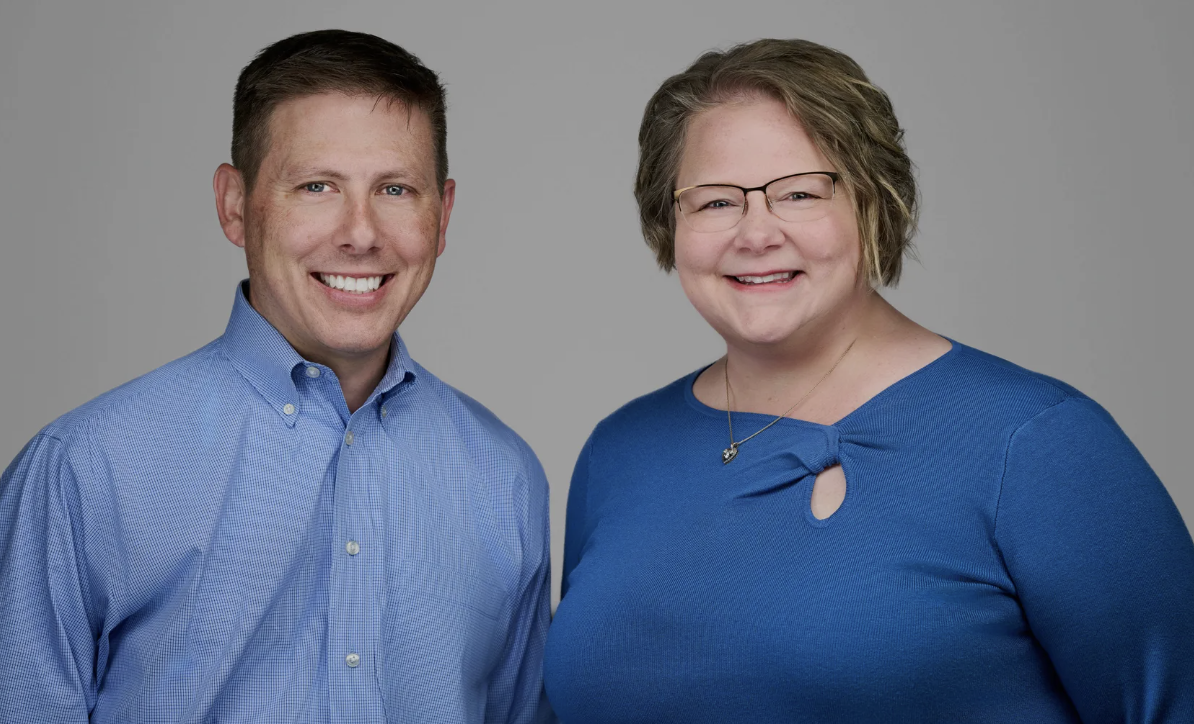
Twenty years ago, Keith and his wife were told their six-year-old daughter, Elena, had DIPG. The doctor walked into their hospital room in tears. She told them there was no chance of survival- that they had, with jarring specificity, about 135 days.
"Within two weeks she lost the ability to eat, she lost the ability to see, she lost the ability to speak, and she lost the ability to walk," Keith told me. "That's how fast it goes."
He described watching his daughter understand, even at five or six years old, what she was about to lose. "It's the hardest cancer that you're ever going to face."
When Keith and his wife began searching for research, clinical trials, or organizations dedicated to fighting DIPG, they found almost nothing. One expert in the world. No trials designed specifically for DIPG. No coordinated research community.
So they started one.
What began as a private blog entry- an emotional, late-night piece about the need to rethink how we fight cancer- accidentally went viral. People found their business address and started mailing checks to something called "The Cure Starts Now," the final line Keith had written. He didn't even remember writing it.
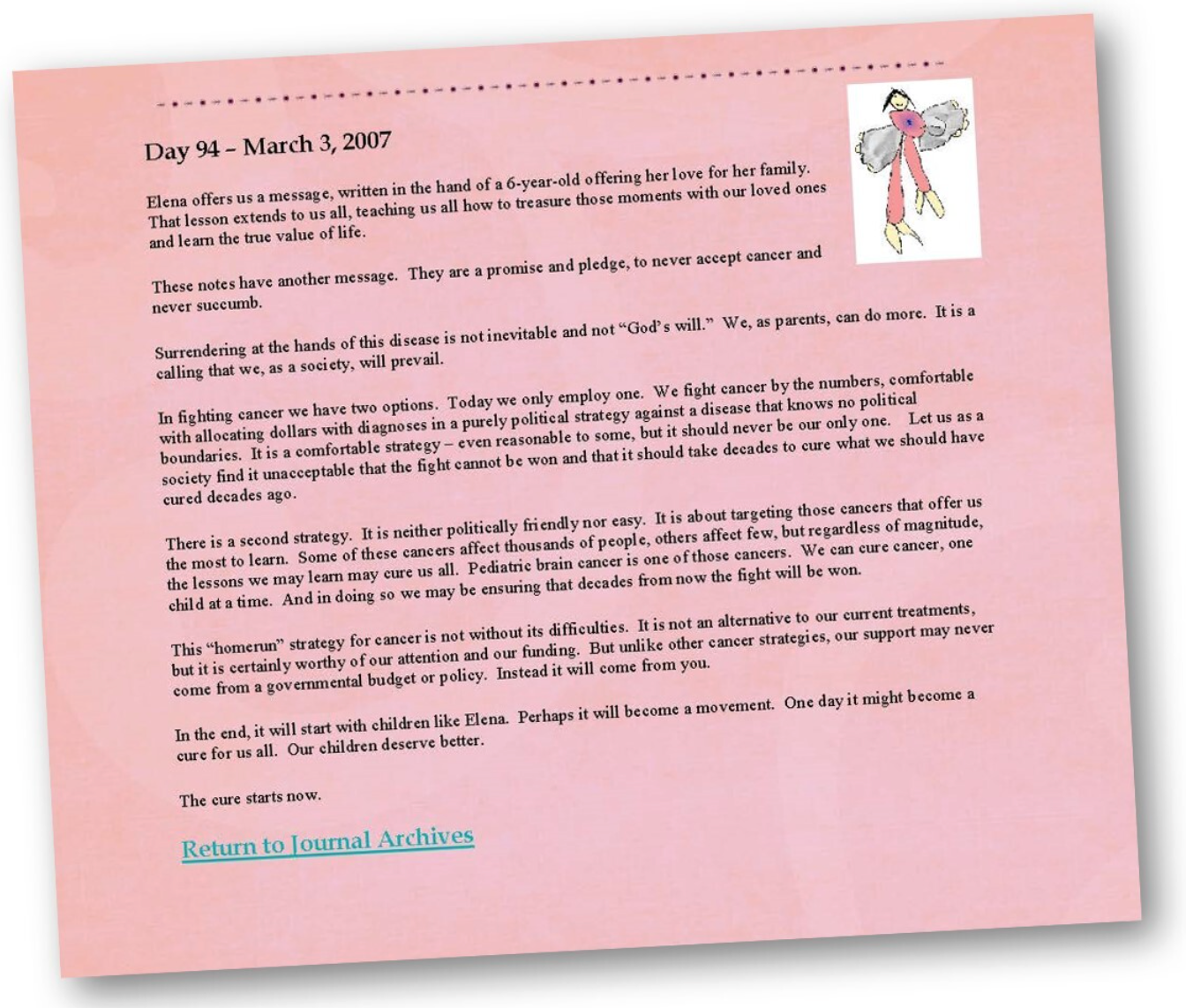
"My wife called me up and said, 'What did you do?' She goes, 'I have a pile of checks that were mailed to our offices that say The Cure Starts Now. What the heck is The Cure Starts Now?'"
That accidental fundraiser became a foundation. That foundation has now invested more than $45 million, funded over 200 trials in 29 countries, and built a coalition of 60 chapters across four countries. More importantly, for the question at the center of this story, they built the registry.
The International DIPG/DMG Registry was funded primarily by The Cure Starts Now beginning around 2011. It's a roughly $7 million initiative designed specifically to do what no other data collection system was: capture everything about a DIPG patient, from the moment of diagnosis through the entirety of their journey.
"Most registries out there are designed to collect data during the course of another trial," Keith explained. "They only have so much money, so if they're just looking at a certain chemotherapy drug, they're only going to collect the stuff that they actually care about for that trial. What you get is a lot of disconnected data on a lot of patients, but nothing you can draw a pattern from."
The DIPG Registry was built differently- enrolling patients at diagnosis, collecting more than 670 data panels per patient, including full MRI histories, genetic information, birth history, and geographic data. More than 100 hospitals work together on it. It currently holds records on roughly 1,600 patients in the U.S.
And critically, when states or government agencies want to know if they might be looking at a cluster of cases- this is the tool they're supposed to use.
"About 80%, maybe even as many as 90%, of any clustering questions that have come up in the last 15 years typically came to my email box," Keith told me.
 Shay McAlister
When concerns about Eastern Kentucky DIPG cases began drawing attention, state officials did what you'd expect- they reached out to the registry. Keith was looped in, as he typically is when a potential cluster emerges.
What they found when they looked at the registry data for Eastern Kentucky stopped the process before it could begin.
The cases making headlines- the ones families have been talking about, the ones journalists including me have been pressing the state to analyze- were not in the registry, Keith told me.
"When we looked at it, we could not find at least what we can assume is any of those patients actually in that registry," Keith said. "As of three weeks ago, when this first started to happen and we started getting calls from the state of Kentucky and families and our chapters- we didn't have anybody that I could estimate was in that group."
He's heard that as many as 10 cases have been referenced in news coverage. But the registry couldn't identify them.
"Sometimes I've heard 10 cases, but we can't seem to identify the specific ones. That's part of our problem here."
This is the gap. And without filling it, there is no cluster analysis- not a real one.
"This is the foremost authority on that first step of the clustering discussion," Keith said. "If we don't have the data there, it just gets ignored. I've probably seen about four clustering cases per year that we're asked to get involved with, and in each one of those, if we don't have the data there, it just gets ignored."
Shay McAlister
After speaking with Keith, I went back to the Kentucky Department for Public Health to ask directly about what he had described.
In a statement, a spokesperson confirmed that the state has been working with the Kentucky Cancer Registry- the state's legally mandated cancer reporting system- and said that review confirmed "an unusual increase in cases of brain tumors called Diffuse Intrinsic Pontine Glioma (DIPG) / Diffuse Midline Glioma (DMG) in the region."
On the question of the International Registry specifically, the state acknowledged the distinction Keith raised:
"While the International DIPG/DMG Registry would not necessarily have access to the cases and information provided to Kentucky Department of Public Health (KDPH) through the Kentucky Cancer Registry given that healthcare providers are not legally required to report cases to them, they are an invaluable partner. KDPH and its partners are in communication and working with the DIPG Registry, we encourage families affected by DIPG/DMG to contact the International DIPG/DMG Registry to learn more about studies and resources that may be available to them, and we are committed to continuing our collaboration with them to ensure we protect as many Kentucky families as possible from this devastating disease."
That statement confirms what Keith laid out: under Kentucky law, new cancer diagnoses must be reported to the state's Kentucky Cancer Registry- but there is no legal requirement to report to the International DIPG Registry. The two systems are separate. State-level data does not automatically flow to the international research tool.
That means when researchers go looking for patterns- genetic, geographic, diagnostic- they may be working with incomplete information.
Keith was careful not to point fingers. He genuinely believes state officials are trying to do the right thing, and he said so directly.
"I'm going to be a very strong opponent if I felt that the state was not doing the right thing. But I would tell you, they're trying to do everything they can from what I've seen thus far."
He also doesn't want anyone to assume the worst- either about state intentions or about what the missing data means for the cases themselves.
"I don't want to have anything ruled as a cluster unless it genuinely is," he said. "Because that just wastes all of the time, all the effort. We all have a vested interest in doing this. It's just a question of how do you do it. And there is a right way."
The right way, he explained, starts with confirmation- making sure every case is accurately diagnosed- and then systematically building the data picture before drawing any conclusions.
"You're playing a giant game of Clue," he said. "If you just pull a card out of the deck and make a guess, you're never going to get there. You have to set the stage, put the data in the right place, so that it identifies the patterns."
Without those patterns established first, he said, any environmental or genetic investigation amounts to guesswork.
The enrollment process for the International DIPG/DMG Registry is, by design, straightforward. It requires a one-page signature from the child's legal guardian. From there, the registry- operating through a network of more than 100 partner hospitals- contacts the treating facility directly to gather the medical records.
It's free. And it's the step that has to happen before any of the analysis everyone is waiting for can actually begin.
"It's got to happen," Keith said, "because if it doesn't, we're not going to get this question answered."
He also made a point of emphasizing who the registry is- and isn't.
"It's an independent registry that has been founded, this being one of our main purposes, back in 2011, and represents the combined efforts of over 80 different families and foundations working together to accomplish it. We're not after capturing it for data. We're not trying to use it for industry. We're not trying to represent a particular state or government. We're a bunch of parents that so much want to cure this, we will break through every single barrier we can possibly do to get there", Keith explained.
Families affected by DIPG/DMG in Eastern Kentucky- or anywhere in the state- can learn more and begin the enrollment process here.
Like what you see? Learn more about Shay Informed here! This is honest journalism with compassion and clarity.